Coinbase vs Binance 2025: Top Comparison
Comprehensive comparison between Coinbase and Binance, the two largest cryptocurrency exchanges. Compare fees, security, capabilities, regulation, and user experience to determine which platform is best for your crypto trading needs.
Choosing between Coinbase and Binance represents one of the most important decisions for cryptocurrency investors. These platforms serve as the primary gateways to the digital asset ecosystem.
Coinbase, the largest US-based exchange, and Binance, the world's largest exchange by trading volume, offer fundamentally different approaches to cryptocurrency trading and investment.
Coinbase has built its reputation on legal adherence, user-friendly design, and institutional trust. This makes it the preferred choice for newcomers and conservative investors.
As a publicly-traded company (NASDAQ: COIN), Coinbase operates under strict US regulations. It offers FDIC insurance for USD deposits, providing unmatched security and legal protection for American clients.
Binance, founded in 2017, has rapidly become the global leader in cryptocurrency trading. It achieved this via aggressive expansion, innovative capabilities, and the lowest industry fees.
With over 600 supported cryptocurrencies and advanced trading tools, Binance caters to experienced traders and professional investors. It serves international clients seeking maximum flexibility and cost efficiency.
This complete comparison analyses every aspect of both platforms. We cover basic trading fees, security measures, advanced capabilities, and legal adherence.
Whether you're a beginner making your first crypto purchase or an experienced trader optimising your strategy, this guide offers detailed analysis. You'll get the insights needed to choose the right platform for your specific needs and investment goals.
Introduction
The cryptocurrency exchange landscape is dominated by two giants that represent fundamentally different approaches to digital asset trading: Coinbase and Binance. These platforms have shaped how millions of clients interact with cryptocurrencies.
Each platform has carved out distinct market positions that cater to different user needs, regulatory environments, and trading philosophies.
Coinbase has established itself as the gold standard for legal adherence and user-friendly cryptocurrency access in the United States. As a publicly-traded company operating under strict US financial regulations, Coinbase offers institutional-grade security.
It offers FDIC insurance for USD deposits and an interface designed specifically for newcomers to cryptocurrency. This approach has made it the preferred choice for conservative investors, institutions, and clients who prioritise regulatory protection over advanced capabilities.
Binance, in contrast, has built the world's largest cryptocurrency exchange by focusing on innovation, low fees, and complete trading capabilities. With support for over 600 cryptocurrencies, advanced trading tools, and aggressive global expansion, Binance caters to experienced traders and institutional clients.
It serves international clients who seek maximum flexibility and cost efficiency for professional trading operations. However, this approach has led to regulatory challenges in several jurisdictions, featuring restrictions on US operations.
The choice between these platforms extends beyond simple feature comparisons. It reflects fundamental decisions about risk tolerance, regulatory preferences, and trading sophistication.
Coinbase clients typically value stability, compliance, and ease of use for secure cryptocurrency investments and portfolio management. Binance clients prioritise low costs, extensive capabilities, and access to emerging cryptocurrencies and DeFi opportunities.
Understanding the strengths and limitations of each platform is crucial for making an informed decision that aligns properly. This decision should align with your investment goals, technical expertise, and regulatory requirements.
This detailed comparison examines every aspect of both exchanges. It offers the insights needed to choose the platform that best serves your cryptocurrency journey in 2025.
Both platforms continue to evolve rapidly. Coinbase is expanding its international presence, and Binance is focusing on legal adherence, making this comparison more relevant than ever for cryptocurrency investors.
Quick Comparison Overview
| Feature | Coinbase | Binance | Winner |
|---|---|---|---|
| exchange fees | 0.5-0.6% | 0.1% | Binance |
| Supported Assets | 200+ | 600+ | Binance |
| Regulation | US Public Company | Global Licenses | Coinbase |
| Ease of Use | Excellent | Good | Coinbase |
| Security | Excellent | Excellent | Tie |
| Advanced Features | Limited | Extensive | Binance |
| Customer Support | Good | Average | Coinbase |
| Mobile App | Excellent | Very Good | Coinbase |
Detailed Platform Analysis
Coinbase: The Beginner-Friendly Giant
Company Overview
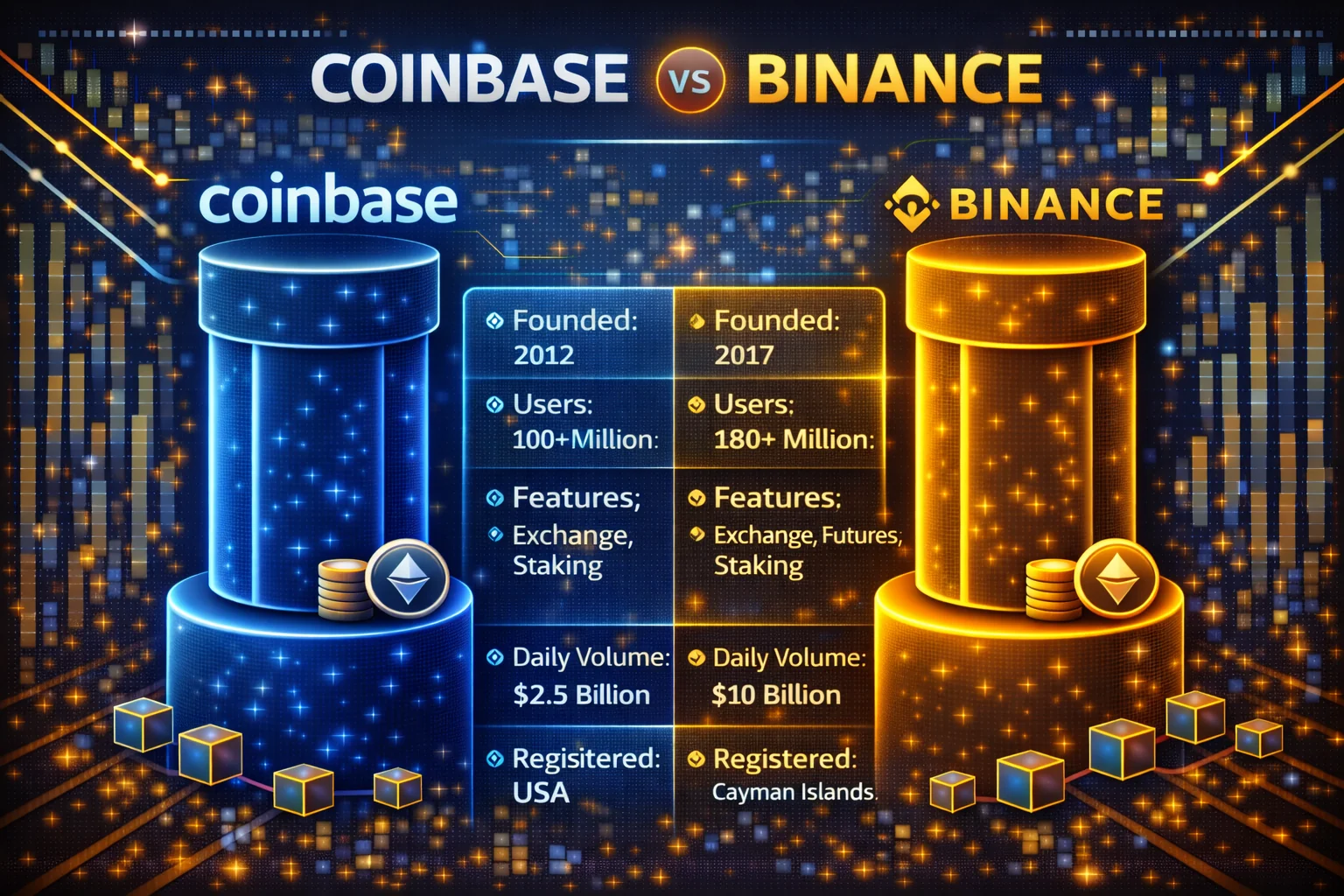
Coinbase is a publicly-traded US company (NASDAQ: COIN) founded in 2012. As the largest cryptocurrency exchange in the United States, it prioritises regulatory framework, user experience, and institutional adoption.
Key Strengths
- compliance standards: Fully licensed in the US and multiple countries
- User Experience: Intuitive interface perfect for beginners
- Security: 98% of funds in cold storage, FDIC insurance for USD
- Institutional Trust: Public company with transparent financials
- Educational Resources: Coinbase Earn program with free crypto
- Payment Options: Bank transfers, debit cards, PayPal, wire transfers
For complete analysis of Coinbase's capabilities and compliance standards, see our detailed Coinbase review.
- Security: 98% of funds in cold storage, FDIC insurance for USD
- Institutional Trust: Public company with transparent financials
- Educational Resources: Coinbase Earn program with free crypto
- Payment Options: Bank transfers, debit cards, PayPal, wire transfers
Limitations
- Higher trading costs compared to competitors
- Limited advanced trading capabilities
- Smaller selection of cryptocurrencies
- Geographic restrictions in some countries
Binance: The Feature-Rich Powerhouse
Company Overview
Binance is the world's largest cryptocurrency exchange by trading volume, founded in 2017. It offers the most complete suite of crypto services and supports the widest variety of cryptocurrencies and trading pairs.
Key Strengths
- Lowest Fees: 0.1% platform fees, further reduced with BNB token
- Massive Selection: 600+ cryptocurrencies and trading pairs
- Advanced Features: Futures, options, margin trading, DeFi, NFTs
- Global Reach: Available in most countries worldwide
- High Liquidity: Largest trading volumes guarantee best prices
- Innovation: Constantly adding new capabilities and services
For detailed analysis of Binance's capabilities and security measures, read our complete Binance review.
Limitations
- Complex interface can overwhelm beginners
- Regulatory uncertainty in some jurisdictions
- Customer support can be slow during high volume
- More technical knowledge required
Fee Comparison Analysis
transaction costs
Coinbase Fee Structure
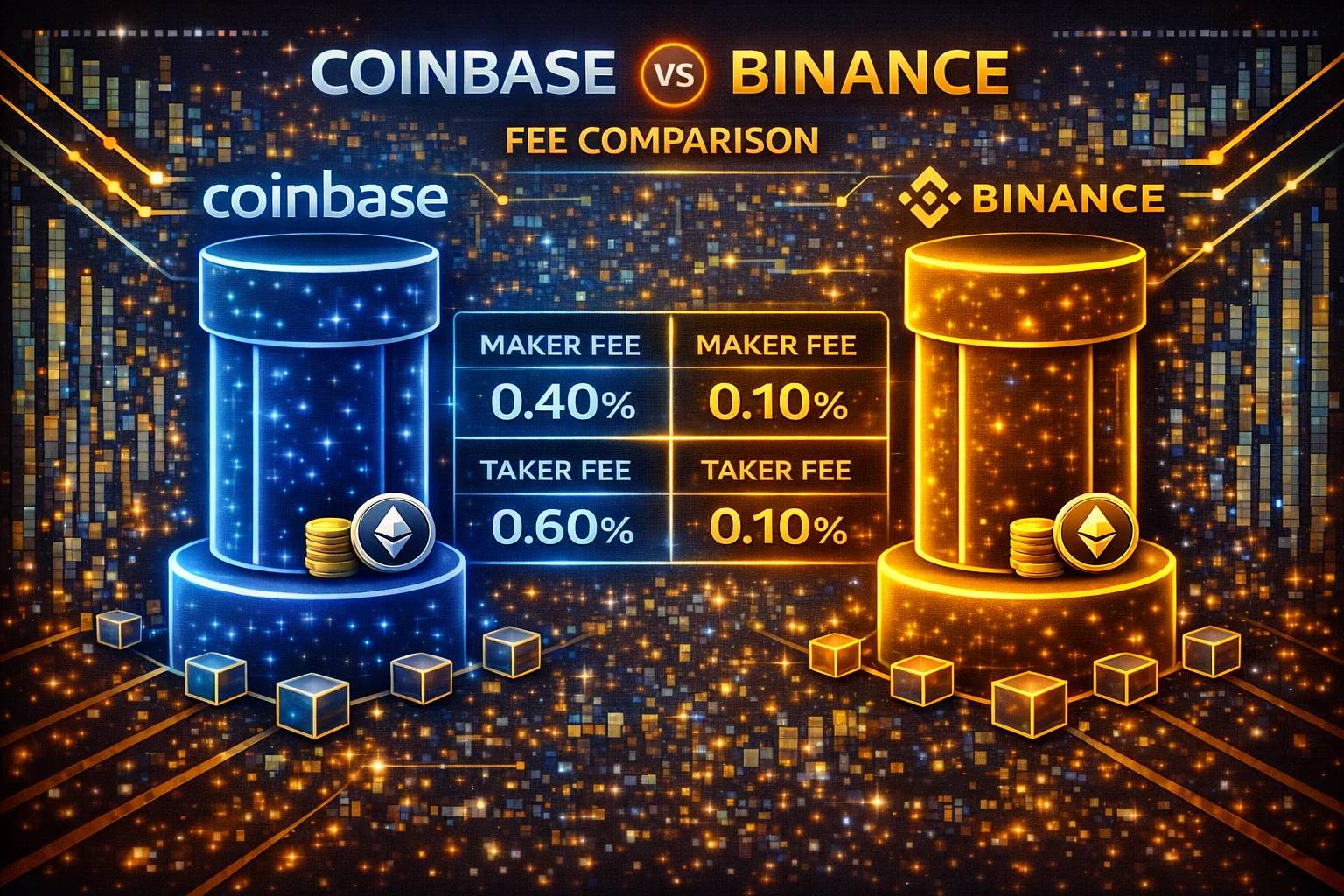
- Coinbase (Basic): 0.5% per transaction
- Coinbase Pro: 0.5% maker, 0.5% taker (reduces with volume)
- Instant Buy: 0.5% + spread (approximately 0.6% total)
- Debit Card: 3.99% additional fee
Binance Fee Structure
- Spot Trading: 0.1% maker and taker
- With BNB Discount: 0.075% (25% discount)
- VIP Levels: Fees as low as 0.02% for high-volume traders
- Credit Card: 1.8% fee
Deposit and Withdrawal Fees
Coinbase
- Bank Transfer: Free deposits and withdrawals
- Debit Card: 3.99% deposit fee
- Crypto Withdrawals: Network fees (varies by cryptocurrency)
- Wire Transfer: $10 deposit, $25 withdrawal
Binance
- Bank Transfer: Free deposits, small withdrawal fees
- Credit Card: 1.8% deposit fee
- Crypto Withdrawals: Fixed fees per cryptocurrency (generally competitive)
- P2P Trading: 0% fees for peer-to-peer transactions
Cost Example: $1,000 Bitcoin Purchase
- Coinbase: $5-6 in exchange fees
- Binance: $1 in trading fees
- Savings with Binance: $4-5 per transaction
Security Comparison
Coinbase Security Features
- Cold Storage: 98% of customer funds stored offline
- Insurance: FDIC insurance for USD deposits, crypto insurance for hot wallet
- Compliance: SOC 2 Type 2 certified, regular audits
- Two-Factor Authentication: SMS, authenticator app, hardware keys
- Biometric Login: Fingerprint and face recognition on mobile
- Address Whitelisting: Restrict withdrawals to approved addresses
Binance Security Features
- SAFU Fund: $1 billion emergency insurance fund
- Cold Storage: Majority of funds stored in offline wallets
- Multi-Signature: Multiple keys required for transactions
- Two-Factor Authentication: SMS, Google Authenticator, hardware keys
- Anti-Phishing: Code verification for email communications
- Withdrawal Whitelist: 24-hour delay for new addresses
Security Track Record
- Coinbase: No major security breaches, strong regulatory oversight
- Binance: 2019 hack ($40M stolen, fully reimbursed from SAFU fund)
- Overall: Both platforms have excellent current security measures
User Experience Comparison
Interface Design
Coinbase
- Simplicity: Clean, intuitive design perfect for beginners
- Mobile App: Highly rated, easy-to-use mobile interface
- Learning Curve: Minimal - can start trading immediately
- Advanced Features: Limited but sufficient for most clients
Binance
- Complexity: Feature-rich but can overwhelm newcomers
- customisation: Highly customizable trading interface
- Learning Curve: Steeper - requires time to master
- Advanced Features: Extensive tools for professional traders
Mobile Applications
Coinbase Mobile
- Rating: 4.5+ stars on app stores
- Features: Full trading, portfolio tracking, price alerts
- Performance: Fast, reliable, rarely crashes
- Design: Consistent with web platform
Binance Mobile
- Rating: 4.3+ stars on app stores
- Features: Complete exchange functionality, advanced charts
- Performance: Generally good, occasional slowdowns during high volume
- Design: Dense with information, powerful but complex
Available Features Comparison
Trading Options
Coinbase
- Spot Trading: Buy and sell cryptocurrencies
- Coinbase Pro: Advanced trading with limit orders
- Recurring Buys: Dollar-cost averaging automation
- Instant Trading: Immediate purchases with debit card
Binance
- Spot Trading: Standard cryptocurrency trading
- Margin Trading: Trade with borrowed funds (up to 10x leverage)
- Futures Trading: Derivatives with up to 125x leverage
- Options Trading: Cryptocurrency options contracts
- P2P Trading: Direct peer-to-peer transactions
Additional Services
Coinbase Ecosystem
- Coinbase Earn: Learn about crypto and earn rewards
- Coinbase Card: Spend crypto with a debit card
- Coinbase Wallet: Self-custody wallet for DeFi
- Coinbase Prime: Institutional trading platform
Binance Ecosystem
- Binance Earn: Staking, savings, and lending products
- Binance NFT: NFT marketplace and trading
- Binance Smart Chain: Blockchain network for DeFi
- Binance Academy: Educational resources and courses
- Binance Labs: Venture capital and incubation
Regulatory Status and Compliance
Coinbase Regulation
- US Compliance: Fully regulated by multiple US agencies
- Public Company: Listed on NASDAQ with SEC oversight
- Licenses: Money transmitter licenses in all US states
- International: Licensed in UK, EU, Canada, Japan
- Transparency: Public financial reporting and audits
Binance Regulation
- Global Approach: Seeking licenses in major jurisdictions
- Recent Progress: Licensed in France, Italy, Spain, UAE
- US Operations: Separate Binance.US entity for American clients
- Challenges: Regulatory scrutiny in some countries
- Compliance Investment: Significant resources dedicated to regulation
Customer Support Comparison
Coinbase Support
- Channels: Email, phone, live chat, help centre
- Response Time: 24-48 hours for most issues
- Quality: Generally helpful and knowledgeable
- Languages: Multiple language support
- Availability: 24/7 for urgent issues
Binance Support
- Channels: Live chat, email, community forums
- Response Time: Varies widely, can be slow during high volume
- Quality: Improving but inconsistent
- Languages: Extensive multilingual support
- Community: Active user community and forums
Which Platform Should You Choose?
Choose Coinbase If You:
- Are a beginner to cryptocurrency trading
- prioritise simplicity and ease of use
- Value compliance standards and institutional backing
- Live in the United States and want full legal protection
- Don't mind paying higher fees for better user experience
- Want reliable customer support when needed
- Prefer established, traditional companies
Choose Binance If You:
- Want the lowest trading fees available
- Need access to hundreds of cryptocurrencies
- Are an experienced trader who uses advanced capabilities
- Trade frequently and fees significantly impact profits
- Want cutting-edge capabilities like futures and margin trading
- Are comfortable with complexity in exchange for more options
- Live outside the US or in regions with limited Coinbase access
Consider Using Both If You:
- Want the best of both worlds - simplicity and advanced capabilities
- Can benefit from diversification throughout platforms
- Have different needs for different types of trading
- Want to compare prices and liquidity throughout exchanges
Final Verdict
For Beginners: Coinbase Wins
Coinbase's superior user experience, regulatory adherence, and educational resources make it the clear choice for cryptocurrency newcomers. The higher fees are worth paying for the peace of mind and ease of use.
For Advanced Traders: Binance Wins
Binance's low fees, extensive capabilities, and massive cryptocurrency selection make it ideal for experienced traders who can navigate its complexity and want maximum trading options.
For Most Users: Start with Coinbase, Graduate to Binance
The optimal strategy for many clients is to start with Coinbase to learn the basics, then gradually incorporate Binance for lower fees and advanced capabilities as their knowledge and trading volume increase.
Getting Started Guide
Setting Up Coinbase
- Visit coinbase.com and create an account with a strong password
- Complete identity verification (KYC) by uploading government ID and proof of address
- Link your bank account or debit card for funding your account
- Start with small purchases ($25-100) to familiarise yourself with the platform
- Enable two-factor authentication using Google Authenticator or SMS for enhanced security
- Explore Coinbase Earn to learn about different cryptocurrencies whilstearning free tokens
- Consider upgrading to Coinbase Pro for lower fees once comfortable with basic trading
Setting Up Binance
- Visit binance.com (or binance.us for US clients) and register with email verification
- Create account and complete intermediate verification for higher withdrawal limits
- Deposit funds via bank transfer, P2P trading, or crypto transfer from another exchange
- Start with spot trading in the "Classic" interface before exploring advanced capabilities
- Consider getting BNB tokens for 25% fee discounts on all trading activities
- Familiarize yourself with the extensive dashboard and customise your trading interface
- Use the "Lite" version initially if the full interface feels overwhelming
Strategic Usage Approaches
The Hybrid Strategy
Many experienced clients employ both platforms strategically. Use Coinbase as your primary fiat gateway due to its legal compliance and ease of use, then transfer cryptocurrencies to Binance for active trading to benefit from lower fees. This approach maximises the strengths of both platforms while minimising their respective weaknesses.
Dollar-Cost Averaging Setup
For long-term investors, Coinbase's recurring buy feature makes dollar-cost averaging simple and automated. Set up weekly or monthly purchases of Bitcoin or Ethereum to build your portfolio gradually. Once you accumulate larger amounts, consider transferring to Binance for staking rewards or yield farming opportunities.
Risk Management Considerations
Never keep all your cryptocurrency on a single exchange, regardless of which platform you choose. Consider using both exchanges to diversify counterparty risk, and always withdraw larger amounts to a hardware wallet for long-term storage. Both Coinbase and Binance offer withdrawal options to external wallets for enhanced security.
Ecosystem Integration and Future Development Strategies
Both Coinbase and Binance are expanding beyond traditional exchange services to create complete cryptocurrency ecosystems that serve diverse user needs and market segments. Coinbase ecosystem development includes integration with traditional finance, development of institutional services, and expansion into emerging markets via strategic partnerships and regulatory engagement that positions the platform for long-term growth and market leadership in regulated cryptocurrency services.
Binance ecosystem expansion includes development of blockchain infrastructure, complete DeFi integration, and expansion of financial services that create a complete cryptocurrency ecosystem. The service's strategic development includes investment in emerging technologies, expansion of global services, and development of innovative products that maintain its competitive advantages while addressing evolving user needs and market opportunities via complete ecosystem development and strategic innovation initiatives.
Future development strategies for both platforms focus on compliance standards, technological innovation, and user experience enhancement that guarantee continued competitiveness in the evolving cryptocurrency market. These strategic initiatives include expansion of institutional services, development of new products, and enhancement of existing capabilities that maintain platform leadership while addressing changing market conditions and user requirements via systematic innovation and strategic development programs.
Institutional Services and Professional Trading Comparison
Corporate Account Management and Business Solutions
Both Coinbase and Binance provide advanced institutional services, but with different approaches to corporate account management and business integration. Coinbase Prime offers complete institutional custody, advanced trading tools, and compliance standards frameworks specifically designed for institutional investors, hedge funds, and corporate treasuries. The service offers dedicated account management, complete reporting, and advanced risk management tools that meet institutional requirements while maintaining compliance standards and fiduciary standards.
Binance institutional services include complete corporate account management, advanced trading infrastructure, and advanced liquidity solutions that serve professional traders and institutional investors. The service offers dedicated institutional support, customised trading solutions, and complete analytics that enable professional cryptocurrency operations while maintaining competitive fee structures and advanced functionality that supports advanced trading strategies and portfolio management requirements.
Regulatory Compliance and Geographic Availability
Regulatory compliance represents a significant differentiator between Coinbase and Binance, with each platform taking different approaches to regulatory engagement and geographic expansion. Coinbase maintains complete compliance standards throughout multiple jurisdictions, with particular strength in United States markets via extensive regulatory engagement and compliance frameworks that meet institutional requirements and regulatory standards for professional cryptocurrency operations.
Binance operates with a global approach to compliance standards, adapting to local requirements throughout different jurisdictions while maintaining complete service offerings and competitive advantages. The service's regulatory strategy includes proactive engagement with regulatory authorities, implementation of complete compliance frameworks, and continuous adaptation to evolving regulatory requirements that enable global operations while maintaining user protection and compliance standards standards.
Advanced Trading Infrastructure and Technology Comparison
The technological infrastructure underlying Coinbase and Binance represents different approaches to exchange architecture, with each platform optimising for different user requirements and operational priorities. Coinbase emphasises stability, security, and compliance standards via robust infrastructure that prioritises uptime, security, and user protection while maintaining complete compliance with regulatory requirements and institutional standards for professional cryptocurrency operations and asset management. Advanced infrastructure development includes implementation of cutting-edge security protocols, advanced monitoring systems, and complete backup procedures that guarantee operational continuity while maintaining the highest standards of user protection and compliance standards via systematic infrastructure optimisation and continuous technology enhancement initiatives that support long-term platform reliability and user satisfaction throughout diverse operational requirements and market conditions.
Binance focuses on performance, scalability, and feature completeness via advanced technological infrastructure that supports high-frequency trading, complex order types, and advanced trading strategies. The service's technology stack includes advanced matching engines, complete API infrastructure, and advanced risk management systems that enable professional trading operations while maintaining competitive performance and complete functionality for advanced clients and institutional clients.
Security Architecture and Asset Protection Frameworks
Security implementation differs significantly between Coinbase and Binance, with each platform utilising different approaches to asset protection, risk management, and security infrastructure. Coinbase implements complete security frameworks that include cold storage for the majority of user funds, complete insurance coverage, and advanced security monitoring that offers institutional-grade asset protection while maintaining compliance standards and user fund safety via advanced security protocols and risk management systems.
Binance utilises advanced security infrastructure that includes complete cold storage systems, advanced monitoring and detection capabilities, and complete risk management frameworks that protect user assets while maintaining operational efficiency and platform performance. The service's security approach includes advanced authentication systems, complete audit procedures, and advanced incident response capabilities that guarantee user asset protection while maintaining platform functionality and operational excellence.
Fee Structure Analysis and Cost optimisation Strategies
Fee structures represent a critical differentiator between Coinbase and Binance, with each platform implementing different pricing models that serve different user segments and trading patterns. Coinbase utilises a simplified fee structure that offers transparency and predictability for retail clients whilstoffering competitive institutional pricing for professional clients. The service's fee model includes straightforward percentage-based fees, transparent pricing disclosure, and complete fee optimisation for high-volume clients via institutional programs and professional trading services.
Binance implements a advanced tiered fee structure that rewards high-volume trading and platform engagement via competitive pricing that scales with user activity and platform utilisation. The service's fee model includes volume-based discounts, token-based fee reductions, and complete fee optimisation strategies that enable cost-effective trading for active clients while maintaining competitive advantages for professional traders and institutional clients via advanced fee structures and optimisation programs.
Customer Support and User Experience Comparison
Customer support approaches differ significantly between Coinbase and Binance, reflecting different operational philosophies and user service strategies. Coinbase emphasises complete customer support via multiple channels featuring phone support, email assistance, and complete help documentation that offers reliable user assistance while maintaining high service standards and response quality for both retail and institutional clients via professional customer service operations and support infrastructure.
Binance offers extensive customer support via complete help systems, community support, and professional assistance channels that serve the platform's diverse global user base. The service's support approach includes multilingual assistance, complete documentation, and advanced help systems that enable effective user support while maintaining operational efficiency and global service delivery via advanced support infrastructure and customer service optimisation programs.
Market Position and Competitive Analysis
The competitive positioning of Coinbase and Binance reflects different strategic approaches to market leadership and user acquisition in the evolving cryptocurrency exchange landscape. Coinbase maintains market leadership via compliance standards, institutional services, and user protection that appeals to conservative investors and institutional clients seeking regulatory certainty while maintaining competitive advantages via compliance excellence and institutional market penetration.
Binance achieves market dominance via extensive service offerings, competitive fee structures, and advanced functionality that serves active traders and clients seeking maximum capabilities and cost efficiency. The service's competitive strategy includes continuous innovation, global market expansion, and ecosystem development that maintains leadership while addressing diverse user requirements via strategic development initiatives.
Technology Infrastructure and Innovation Roadmap
Both platforms invest heavily in technology infrastructure development, with Coinbase focusing on enterprise-grade security systems, institutional custody solutions, and regulatory technology that supports compliance automation and risk management. The service's technology roadmap emphasises scalability improvements, enhanced user interfaces, and integration capabilities that serve institutional clients while maintaining retail user accessibility and operational reliability.
Binance prioritises high-performance trading engines, advanced order matching algorithms, and innovative product development that allows complex trading strategies and advanced financial instruments. The service's technology infrastructure includes distributed computing systems, real-time analytics capabilities, and automated risk management that support high-volume trading while maintaining system stability and operational excellence throughout global markets and diverse user requirements for professional cryptocurrency trading operations and institutional service delivery excellence.
Choosing between Coinbase and Binance requires careful evaluation of individual trading requirements, regulatory preferences, fee sensitivity, and desired feature complexity that align with specific investment strategies and risk tolerance levels. Successful exchange selection involves systematic comparison of security features, regulatory compliance, trading capabilities, and long-term platform stability that ensures optimal trading experience while maintaining appropriate risk management and operational efficiency through strategic platform selection and professional trading implementation excellence.
Conclusion
The choice between Coinbase and Binance ultimately depends on your experience level, trading frequency, and regulatory preferences. Coinbase excels as the premier choice for beginners and US-based investors who prioritise compliance standards, user-friendly interfaces, and institutional-grade security. Its public company status and FDIC insurance provide unmatched peace of mind for conservative investors.
Binance dominates in cost efficiency and feature breadth, making it ideal for experienced traders and international clients who need access to hundreds of cryptocurrencies and advanced trading tools. The service's 0.1% trading fees and complete DeFi integration create significant value for active traders and yield farmers.
Many advanced investors use both platforms strategically: Coinbase for secure fiat on-ramps and compliance standards, then transferring assets to Binance for lower-cost trading and advanced capabilities. This dual-platform approach maximises the benefits of both exchanges while minimising their respective limitations.
For 2025, both platforms continue evolving to meet changing market demands. Coinbase is expanding its international presence and adding more cryptocurrencies, whilstBinance focuses on compliance standards and institutional services. Regardless of your choice, both exchanges provide secure, reliable access to the cryptocurrency ecosystem with their own distinct advantages.
The key to success lies in understanding your own needs and choosing the platform that aligns with your investment strategy, risk tolerance, and technical expertise. Whether you prioritise regulatory safety with Coinbase or cost efficiency with Binance, both platforms offer legitimate pathways to cryptocurrency investment success when used appropriately for optimal results.
Sources & References
Frequently Asked Questions
- Is Coinbase safer than Binance?
- Both platforms are secure, but Coinbase offers stronger compliance standards and FDIC insurance for USD balances. Binance has a larger SAFU insurance fund ($1B+) but faces more regulatory scrutiny. For US clients prioritising regulatory protection, Coinbase is safer. For international clients, both are secure with proper 2FA enabled.
- Which has lower fees: Coinbase or Binance?
- Binance has significantly lower fees (0.1% vs 0.5-4% on Coinbase). For a $1000 trade, Binance charges $1 while Coinbase charges $5-40 depending on payment method. Coinbase Pro offers lower fees (0.5%) but still higher than Binance. For frequent traders, Binance saves substantial money on transaction costs.
- Can I use both Coinbase and Binance?
- Yes, many clients leverage both platforms strategically for optimal trading outcomes. Use Coinbase for easy fiat on-ramps and compliance standards, then transfer crypto to Binance for lower trading fees and advanced capabilities. This approach combines the best aspects of both exchanges while managing platform-specific risks effectively.
- Which exchange has more cryptocurrencies?
- Binance offers 600+ cryptocurrencies compared to Coinbase's 200+. Binance lists new tokens faster and supports more altcoins. However, Coinbase's selective listing process means higher quality projects. Choose Binance for altcoin diversity, Coinbase for vetted mainstream cryptocurrencies.
- Is Binance legal in the US?
- Binance.com is not available to US clients. US residents must use Binance.US, a separate entity with limited capabilities and fewer cryptocurrencies. Coinbase operates fully in all 50 states with complete compliance standards. For US clients, Coinbase offers more capabilities and better legal protection.
- Which is better for beginners?
- Coinbase is significantly better for beginners due to its intuitive interface, educational resources, and straightforward buying process. Binance's complexity can overwhelm newcomers despite lower fees. Start with Coinbase to learn basics, then consider Binance once comfortable with cryptocurrency trading fundamentals.