Impermanent Loss 2025: Complete Guide
Master the concept of price divergence in DeFi. Learn what causes it, how to calculate potential losses, and proven strategies to minimise risk while earning yield from liquidity providing.
Introduction
Impermanent loss is one of the most misunderstood concepts in DeFi. It affects millions of liquidity providers who want to earn yield from their crypto holdings. This happens when the price ratio between two assets in a pool changes. The change is measured from when you first deposited them. You might end up with fewer total assets than if you had simply held them. The term "impermanent" can mislead people. Losses become permanent when you withdraw at unfavourable price ratios. Understanding this is crucial for anyone considering liquidity provision.
The DeFi ecosystem has evolved significantly since early AMMs. Sophisticated protocols now offer various ways to reduce impermanent loss. These include innovative tokenomics, insurance protocols, and alternative models. However, the basic maths of impermanent loss remains unchanged. Education and risk management are essential for successful yield farming. In 2025, you can choose from traditional AMM pools or advanced strategies. Options include concentrated liquidity, single-sided staking, and protection protocols. Each presents a different risk-reward profile that requires careful analysis.
This guide examines impermanent loss from theory and practice. We provide real-world examples, calculation methods, and proven strategies. These help you minimise risk whilst maximising yield. Whether you're new to DeFi or an experienced farmer, these concepts are essential. They protect your capital whilst you provide liquidity. We'll explore the mathematical foundations and analyse case studies from major protocols. You'll get actionable strategies tested across multiple market cycles.
The complexity of calculations often deters newcomers from providing liquidity. Yet the rewards can be lucrative through trading fees and mining programs. Modern protocols have introduced sophisticated tools and calculators. These help you understand exposure before committing funds. This makes safe participation easier than ever. Market volatility plays a crucial role in loss severity. Highly correlated asset pairs typically experience lower loss than uncorrelated pairs. Understanding these correlations is essential for long-term success.
By the end of this guide, you'll have the knowledge and tools necessary to make informed decisions about liquidity provision while understanding and managing the associated risks. The strategies and insights presented here have been developed through extensive analysis of DeFi protocols, market data, and real-world experiences of successful liquidity providers who have navigated multiple market cycles while maintaining profitable operations despite the inherent challenges of impermanent loss in volatile cryptocurrency markets.
Understanding the mathematical relationship between price divergence and impermanent loss is fundamental to successful DeFi participation, as even small price movements can significantly impact returns when compounded over time. Professional liquidity providers employ sophisticated risk assessment frameworks that quantify potential losses under various market scenarios, enabling more precise position sizing and strategic decision-making that balances yield generation with capital preservation objectives in the dynamic cryptocurrency ecosystem.
In 2025, the landscape of liquidity provision has matured considerably with institutional-grade tools and analytics platforms becoming accessible to retail participants. Advanced protocols now integrate real-time impermanent loss tracking, automated rebalancing mechanisms, and sophisticated hedging strategies that were previously available only to professional market makers. This democratisation of DeFi infrastructure enables informed decision-making whilst maintaining competitive yields across diverse market conditions and asset correlations.
What Is Impermanent Loss?
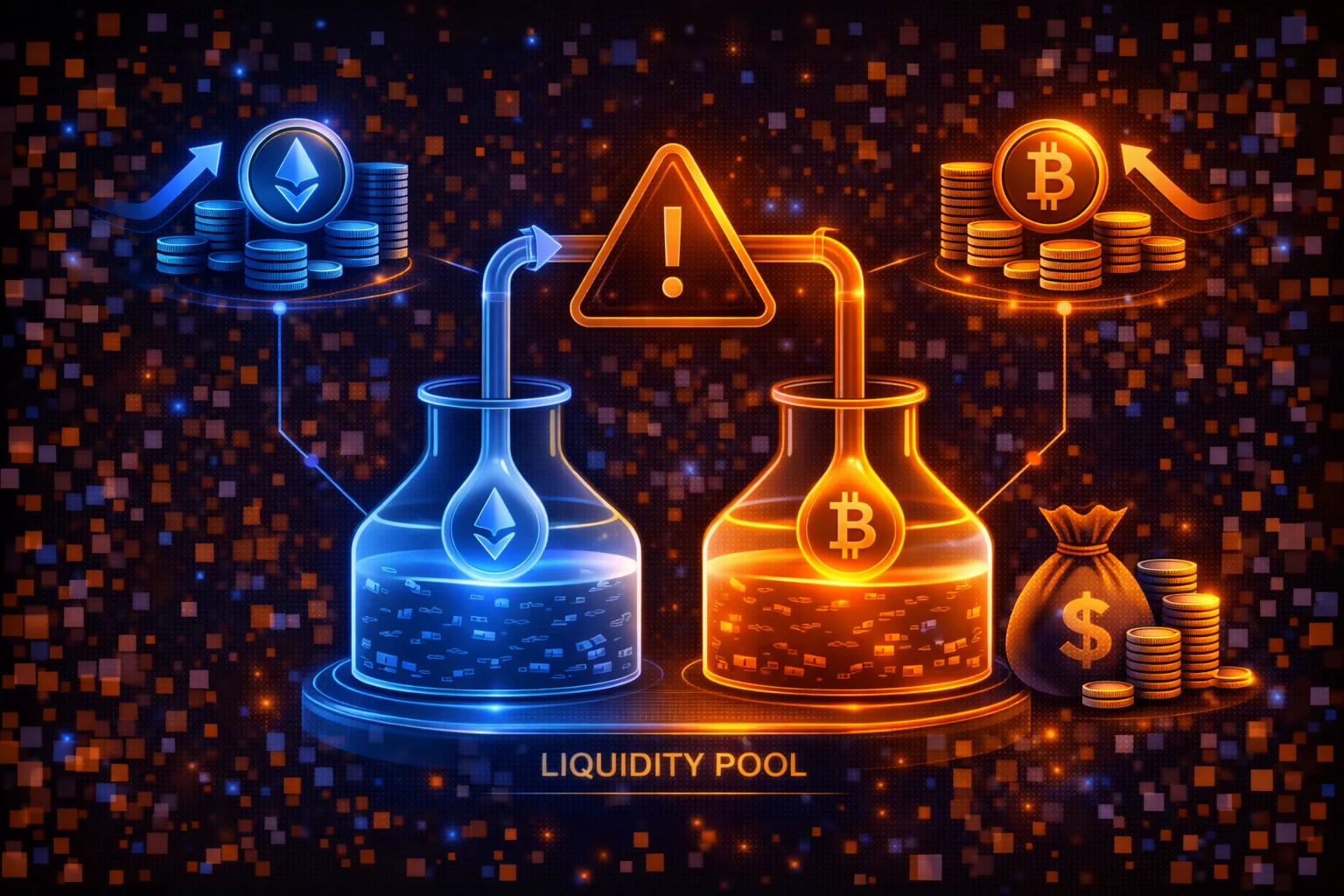
price divergence is a temporary decrease in the dollar value of your cryptocurrency holdings when you provide liquidity to automated market makers (AMMs) like Uniswap, SushiSwap, or PancakeSwap, compared to simply holding the tokens in your wallet.
The term "impermanent" is somewhat misleading because:
- The loss only becomes "permanent" when you withdraw your liquidity
- If token prices return to their original ratio, the loss disappears
- However, in practice, prices rarely return to exact original ratios
Why Does IL Occur?
IL happens because AMMs use mathematical formulas to maintain token ratios in liquidity pools. When external market prices change, arbitrageurs trade against your pool to profit from price differences, effectively buying your cheaper tokens and selling you more expensive ones.
This mechanism ensures pools stay balanced, but means liquidity providers experience losses when token prices diverge significantly from their deposit ratios.
How LP provision risk Works
The Mechanics
Let's understand IL through a simple example:
Initial Deposit:
- You deposit $1,000 worth of ETH and $1,000 worth of USDC
- ETH price: $2,000, so you deposit 0.5 ETH + 1,000 USDC
- Total deposit: $2,000
Price Change Scenario:
- ETH price doubles to $4,000
- Arbitrageurs buy ETH from your pool until prices balance
- Your pool now contains approximately 0.354 ETH + 1,414 USDC
- Total value: $2,828 (0.354 × $4,000 + $1,414)
Comparison:
- If you had just held: 0.5 ETH + 1,000 USDC = $3,000
- Pool value: $2,828
- impermanent loss: $172 (5.7%)
The Mathematical Formula
For a 50/50 pool, IL can be calculated as:
IL = 2 × √(price_ratio) / (1 + price_ratio) - 1
Where price_ratio is the new price divided by the original price of one token relative to the other.
Calculating IL risk
price divergence at Different Price Changes
| Price Change | price divergence | Example |
|---|---|---|
| 1.25x (25% increase) | 0.6% | ETH: $2,000 → $2,500 |
| 1.5x (50% increase) | 2.0% | ETH: $2,000 → $3,000 |
| 2x (100% increase) | 5.7% | ETH: $2,000 → $4,000 |
| 5x (400% increase) | 25.5% | ETH: $2,000 → $10,000 |
| 10x (900% increase) | 42.3% | ETH: $2,000 → $20,000 |
Online Calculators
Several tools can help you calculate LP provision risk:
- DeFiPulse IL Calculator: Simple interface for quick calculations
- CoinGecko IL Calculator: Supports multiple pool types
- APY.vision: Real-time tracking of your positions
- Zapper.fi: Portfolio tracking with IL monitoring
Factors Affecting IL
- Price Volatility: Higher volatility increases potential loss
- Pool Ratio: 50/50 pools have different IL than 80/20 pools
- Time Duration: Longer exposure increases risk
- Token Correlation: Correlated tokens have lower IL risk
Real-World Examples
Example 1: ETH/USDC Pool During Bull Market
Scenario: You provide liquidity to the ETH/USDC pool in September 2024
- Initial deposit: 1 ETH ($2,400) + 2,400 USDC
- ETH rises to $4,000 by March 2024
- Your pool position: ~0.775 ETH + 3,098 USDC = $6,198
- Holding strategy: 1 ETH + 2,400 USDC = $6,400
- impermanent loss: $202 (3.2%)
- platform fees earned: ~$150 over 2 months
- Net result: -$52 compared to holding
Example 2: Stablecoin Pool Success
Scenario: USDC/USDT pool on Curve Finance
- Initial deposit: $5,000 USDC + $5,000 USDT
- Price stability: Minimal price divergence over 6 months
- IL risk: 0.1%
- transaction costs + CRV rewards: ~8% APY
- Result: Significant outperformance vs. holding
Example 3: High-Risk Altcoin Pool
Scenario: DOGE/ETH pool during meme coin rally
- Initial deposit: $1,000 DOGE + $1,000 ETH
- DOGE pumps 500% while ETH stays stable
- price divergence: ~25%
- High exchange fees: 15% over 1 month
- Net result: Still significant loss vs. holding DOGE
Strategies to minimise IL
1. Choose Stable or Correlated Pairs
- Stablecoin pairs: USDC/USDT, DAI/USDC
- Correlated assets: ETH/stETH, BTC/WBTC
- Same-protocol tokens: UNI/SUSHI (both DEX tokens)
2. Use Weighted Pools
Instead of 50/50 pools, consider 80/20 or other weighted ratios:
- Balancer offers various weight combinations
- 80/20 pools have significantly lower IL
- You maintain more exposure to your preferred asset
3. Focus on High-Fee Pools
- Target pools with 0.3% or higher trading costs
- Volatile pairs often generate more trading volume
- Fee income can offset IL
4. Single-Asset Staking
Consider alternatives that don't involve IL:
- Ethereum staking (no IL risk)
- Single-asset lending on Aave
- centralised staking on OKX Review
5. Time Your Entry and Exit
- Enter during high volatility periods (more fees)
- Exit before major price movements if predictable
- Monitor market conditions and news
6. Use IL Protection
Some protocols offer IL protection:
- Bancor: 100% IL protection after 100 days
- Thorchain: Asymmetric providing liquidity
- Balancer: Smart pool strategies
When Liquidity Providing Is Worth It
Favorable Conditions
- High trading volume: More fees to offset IL
- Stable price ratios: Minimal divergence expected
- Additional rewards: Governance tokens, farming incentives
- Short-term strategy: Quick entry/exit during high-fee periods
Risk/Reward Analysis
Before providing liquidity, calculate:
- Expected platform fees (historical data)
- Additional reward tokens and their value
- Potential IL scenarios
- Gas costs for entry and exit
Break-Even Analysis
For a position to be profitable, total rewards must exceed:
- IL
- Gas fees for transactions
- Opportunity cost of holding
Use this formula: Profit = (transaction costs + Rewards) - (IL + Gas Costs)
IL Protection Protocols
Bancor V3
- Protection: 100% IL protection after 100 days
- Mechanism: Protocol mints/burns BNT to compensate
- Supported tokens: Major assets like ETH, WBTC, LINK
- Trade-off: Lower yields compared to unprotected pools
Thorchain
- Protection: Asymmetric market making
- Mechanism: Provide single assets, protocol handles pairing
- Coverage: Cross-chain assets (BTC, ETH, BNB)
- Consideration: Protocol risk and complexity
Balancer Smart Pools
- Protection: Dynamic weight adjustment
- Mechanism: Automated rebalancing reduces IL
- Flexibility: Custom strategies and parameters
- Requirement: Higher technical knowledge
Insurance Options
- Nexus Mutual: DeFi protocol coverage
- Cover Protocol: Specific IL insurance products
- InsurAce: Comprehensive DeFi insurance
Tax Implications
Tax Events in Liquidity Providing
- Deposit: May be taxable swap in some jurisdictions
- Fee earnings: Usually taxable as income
- Reward tokens: Taxable at fair market value when received
- Withdrawal: Capital gains/losses on token amounts
- IL: May be deductible capital loss
Record Keeping
Maintain detailed records of:
- Initial deposit amounts and values
- All fee earnings and reward distributions
- Token prices at deposit and withdrawal
- Gas fees for all transactions
- Final withdrawal amounts and values
Tax Tools
- Koinly: DeFi transaction tracking
- CoinTracker: Comprehensive crypto tax software
- TokenTax: specialised DeFi tax calculations
- Accointing: Portfolio and tax management
Important: Tax laws vary by jurisdiction and are constantly evolving. Consult with a qualified tax professional familiar with cryptocurrency regulations in your area.
Best Practices for Liquidity Providers
Risk Management
- Start small: Test with small amounts first
- Diversify: Don't put all funds in one pool
- Monitor actively: Track positions and market conditions
- Set limits: Define maximum acceptable loss levels
Pool Selection Criteria
- Total Value Locked (TVL): Higher TVL indicates stability
- Trading volume: Consistent volume generates fees
- Protocol reputation: Stick to established platforms
- Smart contract audits: Verify security assessments
Monitoring Tools
- APY.vision: Real-time IL tracking
- Zapper.fi: Portfolio overview and analytics
- DeBank: Multi-protocol position tracking
- Dune Analytics: Custom dashboards and metrics
Exit Strategies
- Profit targets: Set specific return goals
- Loss limits: Define maximum acceptable losses
- Time limits: Set maximum position duration
- Market conditions: Exit before major volatility
Platform Recommendations
- Beginners: Uniswap (simple interface)
- Stablecoins: Curve Finance (low IL risk)
- Advanced users: Uniswap V3 (flexible ratios)
Advanced IL Mitigation Strategies
Delta-Neutral providing liquidity
Advanced liquidity providers use delta-neutral strategies to earn transaction costs while minimising IL exposure. This involves providing liquidity to a pool while simultaneously hedging the position using derivatives or other instruments to maintain a neutral exposure to price movements.
For example, when providing ETH/USDC liquidity, you might short an equivalent amount of ETH using perpetual futures. This hedges against ETH price movements while allowing you to earn exchange fees from the liquidity pool. The strategy requires careful position management and understanding of funding rates, but can significantly reduce IL risk.
Concentrated Liquidity Management
Uniswap V3's concentrated liquidity feature allows liquidity providers to specify price ranges for their positions, potentially earning higher fees but also increasing IL risk if prices move outside the specified range. Advanced strategies involve actively managing these ranges based on market conditions and volatility expectations.
Successful concentrated liquidity management requires understanding market microstructure, volatility patterns, and gas cost optimisation. Tools like Revert Finance and Gamma Strategies provide automated range management, but manual management can be more profitable for experienced users who can time range adjustments effectively.
Multi-Protocol Yield optimisation
Sophisticated liquidity providers diversify across multiple protocols and chains to optimise risk-adjusted returns. This involves analysing yield opportunities across Ethereum, Polygon, Arbitrum, and other networks while considering IL risks, gas costs, and protocol-specific risks.
Cross-chain strategies require understanding bridge risks, transaction costs, and timing considerations for moving liquidity between networks. Yield aggregators like Yearn Finance and Beefy automate some of these strategies, but manual optimisation can provide better returns for users willing to actively manage positions.
IL Insurance Strategies
Emerging insurance protocols offer coverage against IL, allowing liquidity providers to maintain exposure to trading costs while limiting downside risk. These insurance products typically charge premiums that must be weighed against potential IL protection benefits.
Insurance strategies work best for large positions where premium costs are justified by the protection provided. Understanding insurance terms, coverage limits, and claim procedures is essential for effectively using these products as part of a comprehensive market making strategy.
Market Conditions and IL Analysis
Volatility Impact Assessment
Market volatility directly correlates with IL magnitude, making volatility analysis crucial for liquidity providers. High volatility periods can quickly erode trading fee gains through increased IL, while low volatility periods may provide steady returns with minimal IL risk.
Historical analysis shows that IL becomes significant when asset prices diverge by more than 25% from initial ratios. During major market movements like the March 2020 crash or the May 2021 correction, many liquidity providers experienced substantial temporary losses that exceeded months of accumulated platform fees.
Correlation Analysis for Pool Selection
Asset correlation plays a crucial role in IL risk assessment. Highly correlated assets like ETH/stETH or different stablecoins typically experience lower IL, while uncorrelated or negatively correlated assets can generate significant IL during market stress.
Understanding correlation patterns helps in pool selection and position sizing. Stablecoin pools generally offer the lowest IL risk but also lower yields, while exotic token pairs may offer high yields but carry substantial IL risk during market volatility. analysing historical correlation data helps predict potential IL scenarios.
Market Cycle Considerations
Different market cycles present varying opportunities and risks for liquidity providers. Bull markets often favor holding assets over providing liquidity due to strong directional moves, while sideways markets may favor liquidity provision due to consistent trading activity without significant price divergence.
Bear markets present unique challenges as declining asset values can compound IL effects. However, increased volatility during bear markets can generate higher transaction costs, potentially offsetting some temporary loss if positions are managed carefully and exited before major downturns.
Seasonal and Event-Driven Patterns
Cryptocurrency markets exhibit seasonal patterns and event-driven volatility that affect IL dynamics. Major events like protocol upgrades, regulatory announcements, or macroeconomic developments can trigger significant price movements that impact liquidity providers.
Successful liquidity providers monitor event calendars and adjust positions accordingly. For example, reducing exposure before major protocol upgrades or regulatory decisions can help avoid IL from event-driven volatility while maintaining positions during stable periods to accumulate transaction costs.
Protocol-Specific IL Characteristics
Uniswap V2 vs V3 Analysis
Uniswap V2's constant product formula creates predictable IL patterns that can be calculated precisely based on price movements. V3's concentrated liquidity introduces additional complexity as positions can go "out of range," effectively converting to single-asset exposure with different risk characteristics.
V3 positions require more active management but can generate higher fees when properly managed. The trade-off between higher potential returns and increased management complexity makes V3 more suitable for experienced users, while V2 remains accessible for passive liquidity providers willing to accept lower but more predictable returns.
Curve Finance Stablecoin Mechanics
Curve's StableSwap algorithm is specifically designed to minimise IL for assets that should trade at similar values, such as different stablecoins or liquid staking derivatives. The algorithm's design significantly reduces IL compared to constant product AMMs for these asset types.
However, Curve pools can still experience IL during depeg events or when one asset in the pool experiences a significant deviation from its expected value. The 2022 UST depeg event demonstrated how even stablecoin pools can experience substantial losses when underlying assumptions about asset stability prove incorrect.
Balancer Weighted Pool Advantages
Balancer's weighted pools allow for non-50/50 asset ratios, which can reduce IL for users who want to maintain larger exposure to one asset while still earning exchange fees. An 80/20 ETH/USDC pool, for example, experiences less IL than a 50/50 pool when ETH appreciates.
The flexibility of weighted pools makes them attractive for users who have strong convictions about one asset's direction but still want to earn yield through liquidity provision. However, this flexibility comes with increased complexity in calculating potential returns and IL scenarios.
Layer 2 and Alternative Chain Considerations
Layer 2 solutions like Arbitrum, Optimism, and Polygon offer lower transaction costs for liquidity provision, making it economically viable to provide smaller amounts of liquidity and adjust positions more frequently. This can help mitigate IL through more active position management.
However, Layer 2 solutions also introduce additional risks, including bridge security, sequencer uptime, and potential differences in liquidation mechanisms. Understanding these trade-offs is essential for liquidity providers considering multi-chain strategies to optimise their risk-adjusted returns while managing IL exposure.
Institutional Approaches to Impermanent Loss Management
Professional Risk Assessment Frameworks
Institutional liquidity providers employ sophisticated risk assessment frameworks that quantify impermanent loss exposure using advanced mathematical models and scenario analysis. These frameworks incorporate volatility forecasting, correlation analysis, and stress testing to evaluate potential losses under various market conditions, enabling more precise risk budgeting and position sizing decisions that align with institutional risk management requirements.
Professional traders utilise Monte Carlo simulations and historical backtesting to model impermanent loss scenarios across different market regimes, helping them understand the probability distributions of potential outcomes and optimise their liquidity provision strategies accordingly. This quantitative approach enables institutional participants to make data-driven decisions about pool selection, position sizing, and hedging strategies that maximise risk-adjusted returns.
Hedging Strategies and Derivatives Integration
Sophisticated liquidity providers often employ derivatives markets to hedge against impermanent loss exposure, using options strategies, perpetual swaps, and other financial instruments to offset potential losses from price divergence. These hedging approaches can significantly reduce the risk profile of liquidity provision while maintaining exposure to trading fees and liquidity mining rewards.
Delta-neutral strategies combine liquidity provision with short positions in underlying assets, creating market-neutral exposure that captures trading fees while minimising directional risk. However, these strategies require active management and sophisticated understanding of derivatives markets, making them more suitable for professional traders and institutional participants with appropriate risk management infrastructure.
Portfolio-Level optimisation
Institutional approaches to impermanent loss management often involve portfolio-level optimisation that considers correlations between different liquidity positions, overall portfolio risk, and strategic asset allocation objectives. This holistic approach enables more effective risk management through diversification across multiple pools, protocols, and asset classes that can reduce overall portfolio volatility.
Advanced portfolio construction techniques include factor-based allocation models that consider impermanent loss sensitivity alongside traditional risk factors such as market beta, volatility, and correlation patterns. These approaches enable institutional investors to construct liquidity provision portfolios that align with their broader investment mandates while managing downside risk through systematic diversification and risk budgeting processes.
Future Developments in Impermanent Loss Solutions
Next-Generation AMM Designs
The evolution of automated market maker designs continues advancing towards solutions that minimise or eliminate impermanent loss while maintaining efficient price discovery and deep liquidity. Concentrated liquidity models, dynamic fee structures, and algorithmic rebalancing mechanisms represent significant improvements over traditional constant product AMMs, offering liquidity providers more sophisticated tools for managing risk and optimising returns.
Emerging AMM designs incorporate machine learning algorithms, real-time volatility adjustments, and predictive rebalancing mechanisms that can anticipate and respond to market movements more effectively than static models. These innovations promise to make liquidity provision more attractive to risk-averse participants while maintaining the decentralised and permissionless nature that makes DeFi protocols valuable for global financial inclusion.
Insurance and Protection Mechanisms
The development of comprehensive insurance solutions for impermanent loss represents a significant opportunity to expand participation in DeFi liquidity provision. Parametric insurance products, mutual insurance pools, and protocol-native protection mechanisms are evolving to provide more accessible and cost-effective coverage against impermanent loss, making liquidity provision viable for conservative investors and institutional participants.
Future protection mechanisms may incorporate real-time risk assessment, dynamic premium pricing, and automated claim settlement processes that provide seamless protection against impermanent loss while maintaining competitive yields for liquidity providers. These innovations could significantly expand the addressable market for DeFi liquidity provision by reducing barriers to entry and providing institutional-quality risk management tools.
Advanced Impermanent Loss Strategies and Professional Management
Institutional Liquidity Provision and Professional IL Management
Professional liquidity providers utilise sophisticated impermanent loss management strategies, including advanced hedging techniques, comprehensive portfolio diversification, and systematic risk assessment that minimise IL exposure whilstmaximising yield opportunities through professional DeFi participation. Institutional IL management incorporates advanced mathematical models, sophisticated correlation analysis, and comprehensive volatility forecasting that enable strategic liquidity provision while maintaining appropriate risk controls and operational excellence through professional impermanent loss optimisation and institutional-grade DeFi strategies.
Advanced IL management includes implementing dynamic hedging strategies, sophisticated position-sizing techniques, and comprehensive risk-monitoring systems that protect against adverse price movements while maintaining exposure to yield opportunities. Professional practitioners utilise advanced derivatives strategies, comprehensive portfolio optimisation, and sophisticated risk management frameworks that enable systematic IL mitigation whilstmaximising risk-adjusted returns through professional liquidity provision excellence and institutional impermanent loss management techniques designed for professional DeFi operations.
Quantitative IL Analysis and Mathematical optimisation
Sophisticated impermanent loss analysis utilises advanced mathematical models including options pricing theory, statistical volatility analysis, and comprehensive correlation modelling that provide precise IL calculations while enabling strategic decision-making and risk optimisation. Quantitative IL analysis incorporates advanced statistical techniques, sophisticated simulation models, and comprehensive backtesting frameworks that enable systematic IL assessment while optimising liquidity provision strategies through mathematical excellence and quantitative analysis designed for professional DeFi participation and IL optimisation.
Mathematical IL optimisation includes implementation of advanced algorithms for optimal pool selection, sophisticated timing strategies, and comprehensive risk-return analysis that maximise yield while minimising IL exposure through quantitative excellence. Professional quantitative approaches utilise advanced econometric models, comprehensive scenario analysis, and sophisticated optimisation techniques that enable systematic IL management while maintaining competitive returns through mathematical optimisation and quantitative excellence designed for institutional liquidity provision and professional impermanent loss management.
Advanced Hedging Strategies and Risk Mitigation Techniques
Professional impermanent loss hedging utilises sophisticated derivatives strategies including options contracts, futures positions, and comprehensive synthetic instruments that provide IL protection while maintaining exposure to yield opportunities through advanced risk management and professional hedging excellence. Advanced hedging strategies include implementation of delta-neutral positions, sophisticated volatility trading, and comprehensive correlation hedging that minimise IL risk while preserving upside potential through professional derivatives utilisation and institutional-grade risk management techniques.
Risk mitigation techniques include development of comprehensive hedging frameworks, sophisticated position management systems, and advanced monitoring capabilities that provide real-time IL protection while maintaining operational efficiency and yield optimisation. Professional hedging implementation requires advanced derivatives knowledge, comprehensive risk assessment capabilities, and sophisticated operational controls that ensure effective IL protection while maintaining competitive returns through professional risk management excellence and institutional hedging strategies designed for advanced DeFi participation and impermanent loss optimisation.
Technology Integration and Automated IL Management
Modern impermanent loss management utilises advanced technology including artificial intelligence, machine learning algorithms, and comprehensive automation systems that optimise IL strategies whilstimproving operational efficiency and risk management through technological excellence and innovation. Technology-enhanced IL management includes automated monitoring systems, sophisticated alert mechanisms, and comprehensive analytics platforms that enable real-time IL tracking while maintaining strategic positioning and risk optimisation through technological innovation and professional automation designed for advanced DeFi operations.
Automated IL management includes implementation of advanced algorithms for dynamic position adjustment, sophisticated rebalancing systems, and comprehensive performance optimisation that minimise IL exposure whilstmaximising yield opportunities through technological excellence. Professional technology integration requires advanced system architecture, comprehensive data management capabilities, and sophisticated analytical frameworks that enable continuous IL optimisation while maintaining security and operational excellence through technological innovation and professional automation designed for institutional impermanent loss management and DeFi excellence.
Future IL Management and Strategic Innovation
Impermanent loss management evolution includes anticipated developments in DeFi protocols, enhanced hedging instruments, and comprehensive risk management tools that will improve IL mitigation whilstexpanding yield opportunities through innovation and professional development. Future IL strategies include development of advanced insurance products, sophisticated hedging mechanisms, and comprehensive risk sharing protocols that will transform impermanent loss management while maintaining competitive returns through innovation and professional excellence in DeFi risk management.
Strategic IL innovation includes implementation of next-generation protocols, advanced risk management frameworks, and comprehensive optimisation tools that will enable more sophisticated IL management whilstexpanding professional DeFi participation opportunities. Professional strategic development requires comprehensive trend analysis, advanced innovation assessment, and sophisticated strategic planning that enable optimal positioning for future IL management developments while maintaining current operational excellence through professional innovation and strategic leadership in impermanent loss management and DeFi risk optimisation.
Professional Impermanent Loss Management and Institutional Strategies
Quantitative Risk Assessment and Mathematical modelling
Professional impermanent loss management requires sophisticated mathematical modelling that incorporates volatility forecasting, correlation analysis, and scenario planning to quantify potential losses under various market conditions. Advanced practitioners utilise Monte Carlo simulations, historical backtesting, and statistical analysis to develop comprehensive risk models that inform position sizing and hedging decisions for optimal risk-adjusted returns.
Quantitative IL analysis includes implementation of options pricing models adapted for liquidity provision, utilisation of Black-Scholes derivatives for hedging strategies, and development of proprietary algorithms that optimise entry and exit timing based on volatility patterns and market microstructure analysis. These sophisticated approaches enable professional liquidity providers to make data-driven decisions about pool selection and risk management strategies.
Delta-Neutral Liquidity Provision Strategies
Delta-neutral strategies enable liquidity providers to earn trading fees while minimising exposure to price movements through sophisticated hedging mechanisms. Professional implementation involves providing liquidity to AMM pools while simultaneously establishing offsetting positions using perpetual futures, options contracts, or other derivative instruments that neutralize directional price risk while maintaining fee generation potential.
Advanced delta-neutral approaches include dynamic hedging systems that automatically adjust hedge ratios based on changing market conditions, utilisation of multiple derivative instruments to optimise hedging costs, and implementation of systematic rebalancing procedures that maintain neutral exposure while maximising fee capture from liquidity provision activities across various market scenarios and volatility conditions.
Cross-Protocol Arbitrage and Yield optimisation
Sophisticated liquidity providers implement cross-protocol strategies that capitalise on yield differentials between different AMM platforms while managing impermanent loss exposure through diversification and hedging mechanisms. These strategies involve systematic monitoring of yield opportunities across multiple protocols and implementing automated systems that optimise allocation based on risk-adjusted returns and market conditions.
Professional arbitrage strategies include utilising flash loans for capital-efficient arbitrage, implementing automated systems that monitor price discrepancies between liquid staking tokens and underlying assets, and developing comprehensive frameworks that evaluate cross-chain opportunities while accounting for bridge risks, transaction costs, and potential regulatory implications that affect strategy implementation.
Institutional Risk Management Frameworks
Enterprise liquidity provision requires comprehensive risk management frameworks that address impermanent loss exposure while meeting institutional requirements for compliance, reporting, and risk control. Professional institutional strategies include implementation of position limits, diversification requirements, and systematic monitoring procedures that ensure liquidity provision activities align with investment mandates and fiduciary responsibilities.
Institutional IL management includes utilisation of professional custody solutions, implementation of comprehensive audit trails, and development of sophisticated reporting systems that provide detailed analysis of impermanent loss exposure and performance attribution. These systems enable traditional financial institutions to participate in DeFi liquidity provision while maintaining regulatory compliance and operational excellence standards.
Advanced DeFi Protocol Analysis and Impermanent Loss optimisation
AMM Design Impact on Impermanent Loss Characteristics
Different automated market maker designs create varying impermanent loss characteristics that significantly impact liquidity provider returns and risk exposure. Constant product AMMs like Uniswap V2 create predictable IL patterns based on mathematical formulas, while concentrated liquidity systems like Uniswap V3 introduce additional complexity through range-based positions that can amplify both returns and losses depending on price movements and range selection.
Curve Finance's StableSwap algorithm minimises impermanent loss for correlated assets through specialised mathematical formulas designed for assets that should trade at similar values. Understanding these design differences enables liquidity providers to select appropriate protocols based on their risk tolerance, asset characteristics, and market outlook while optimising their exposure to different types of impermanent loss scenarios.
Balancer Weighted Pool optimisation
Balancer's weighted pool mechanism enables non-50/50 asset ratios that can significantly reduce impermanent loss for liquidity providers who want to maintain larger exposure to one asset while still earning trading fees. An 80/20 ETH/USDC pool experiences substantially less impermanent loss than a 50/50 pool when ETH appreciates, making weighted pools attractive for users with strong directional convictions about specific assets.
Advanced Balancer strategies include utilising smart pools with dynamic weights that automatically adjust based on market conditions, implementing custom pool parameters that optimise for specific market scenarios, and developing systematic approaches to weight selection that balance impermanent loss reduction with fee generation potential while maintaining appropriate diversification and risk management standards.
Layer 2 and Cross-Chain optimisation Strategies
Layer 2 scaling solutions provide opportunities for more active impermanent loss management through reduced transaction costs that make frequent position adjustments economically viable. Arbitrum, Optimism, and Polygon enable liquidity providers to implement sophisticated strategies including regular rebalancing, tactical position adjustments, and dynamic hedging that would be prohibitively expensive on Ethereum mainnet due to high gas costs.
Cross-chain liquidity provision introduces additional risks including bridge security, sequencer uptime, and potential differences in liquidation mechanisms that must be carefully evaluated against potential benefits. However, these platforms often offer higher yields and innovative features that can offset additional risks for sophisticated users who understand and can effectively manage cross-chain complexities and associated operational requirements.
Emerging Protocol Innovations and Future Developments
Next-generation DeFi protocols are implementing innovative mechanisms to address impermanent loss including automated hedging systems, insurance integration, and novel AMM designs that reduce IL exposure while maintaining efficient price discovery and deep liquidity. These innovations represent significant improvements over traditional constant product AMMs and create new opportunities for sophisticated liquidity providers.
Emerging solutions include protocols with built-in impermanent loss protection, automated market makers that adjust parameters based on volatility conditions, and hybrid systems that combine traditional AMM functionality with derivatives-based hedging mechanisms. Understanding these innovations helps liquidity providers identify emerging opportunities and position themselves for the next generation of DeFi protocols that address current limitations while expanding functionality.
Market Dynamics and Impermanent Loss Correlation Analysis
Volatility Impact Assessment and Forecasting
Market volatility directly correlates with impermanent loss magnitude, making volatility analysis crucial for liquidity providers seeking to optimise their risk-return profiles. Historical analysis demonstrates that impermanent loss becomes significant when asset prices diverge by more than 25% from initial ratios, with exponential increases in loss magnitude as price divergence increases beyond this threshold.
Professional volatility analysis includes utilising implied volatility from options markets, implementing statistical models that forecast volatility patterns, and developing systematic approaches to position sizing based on expected volatility scenarios. These analytical frameworks enable more precise risk assessment and position management for liquidity providers while helping them understand the relationship between market conditions and impermanent loss exposure.
Correlation Patterns and Strategic Asset Selection
Asset correlation analysis plays a crucial role in impermanent loss risk assessment, with highly correlated assets like ETH/stETH typically experiencing lower impermanent loss compared to uncorrelated or negatively correlated asset pairs. Understanding correlation dynamics helps in optimal pool selection and position sizing decisions that balance yield generation with risk management objectives.
Advanced correlation analysis includes monitoring rolling correlation patterns, understanding how correlations change during market stress periods, and implementing systematic approaches to asset pair selection that optimise risk-adjusted returns. Professional practitioners utilise quantitative models that incorporate correlation forecasting into their liquidity provision strategies while accounting for changing market dynamics and regime shifts.
Market Cycle Considerations and Tactical Positioning
Different market cycles present varying opportunities and risks for liquidity providers, with bull markets often favouring holding strategies due to strong directional moves. In contrast, sideways markets may favour liquidity provision, as trading activity remains consistent without significant price divergence. Understanding these patterns helps optimise timing and strategy selection for different market environments.
Bear market dynamics create unique challenges as declining asset values can compound impermanent loss effects. Still, increased volatility can lead to higher trading fees, which may offset some losses if managed properly. Professional market cycle analysis involves understanding how different market conditions affect optimal liquidity-provisioning strategies and implementing adaptive approaches that respond to changing market dynamics while maintaining appropriate risk controls.
Advanced Liquidity Provision Strategies and Professional Techniques
Dynamic Range Management and Active Position optimisation
Professional liquidity providers implement sophisticated range management strategies that maximise fee collection while minimising impermanent loss exposure through active position monitoring and strategic range adjustments. Advanced techniques include utilising historical volatility data to optimise range width selection, implementing automated rebalancing systems, and developing predictive models that anticipate price movements and optimal range positioning.
Dynamic position management includes implementing stop-loss mechanisms through automated range adjustments, diversifying across multiple fee tiers to capture different trading behaviours, and utilising advanced analytics to optimise capital efficiency across various market conditions. Professional liquidity providers employ quantitative models that balance fee generation with impermanent loss risks to maximise risk-adjusted returns.
Cross-Protocol Liquidity optimisation and Yield Farming Integration
Sophisticated liquidity providers integrate their positions across multiple decentralised exchanges and yield farming protocols to maximise returns while managing exposure to impermanent loss and smart contract risks. Advanced strategies include utilising liquidity mining rewards to offset impermanent loss, implementing cross-protocol arbitrage opportunities, and developing comprehensive portfolio approaches that optimise returns across the entire DeFi ecosystem.
Professional cross-protocol strategies include monitoring yield opportunities across different AMM designs, understanding the relationship between trading fees and liquidity mining rewards, and implementing automated systems that optimise allocation across multiple protocols based on changing market conditions and reward structures that affect overall portfolio performance.
Institutional Liquidity Provision and Risk Management
Enterprise liquidity provision requires comprehensive risk management frameworks that address smart contract risks, impermanent loss exposure, and operational complexities while accessing institutional-grade DeFi opportunities. Professional implementation includes establishing governance procedures, implementing comprehensive audit trails, and developing risk management protocols that meet institutional standards for participation in decentralised finance.
Institutional risk management includes diversification across multiple protocols, implementation of position sizing limits, and utilisation of professional custody solutions that enable traditional financial institutions to participate in DeFi liquidity provision while maintaining fiduciary responsibilities and regulatory compliance standards required for institutional asset management operations.
Advanced Hedging Strategies and Derivative Integration
Professional liquidity providers utilise sophisticated hedging strategies that protect against impermanent loss while maintaining exposure to trading fees and liquidity mining rewards. Advanced hedging techniques include utilising perpetual futures to hedge price exposure, implementing options strategies to protect against adverse price movements, and developing comprehensive risk management approaches that optimise returns whilst protecting capital.
Derivative integration strategies include understanding the relationship between spot and derivative markets, implementing basis trading strategies that capture funding rate premiums, and utilising advanced financial instruments that provide protection against impermanent loss while maintaining exposure to DeFi yield opportunities across various market conditions and volatility scenarios.
Technology Innovation and Protocol Development
Automated market maker technology continues evolving with innovative designs that reduce impermanent loss, improve capital efficiency, and enhance user experience for liquidity providers. Emerging AMM innovations include dynamic fee structures that adjust based on volatility, concentrated liquidity mechanisms that optimise capital utilisation, and advanced algorithms that minimise impermanent loss through sophisticated mathematical models.
Protocol development focuses on addressing current limitations whilst expanding functionality to serve broader market segments, including institutional liquidity providers, retail users, and professional trading firms. These innovations ensure the continued evolution of decentralised exchange technology while maintaining the fundamental benefits of permissionless liquidity provision and decentralised price discovery mechanisms.
Educational Resources and Community Support
Successful impermanent loss management requires a comprehensive understanding of AMM mechanics, market dynamics, and risk management techniques that can be developed through educational resources, community engagement, and practical experience with different protocols and market conditions. Educational initiatives include detailed documentation, simulation tools, and community forums that help users understand complex concepts and implement effective strategies.
Professional development includes ongoing education about new protocols, participation in community governance, and continuous learning about market dynamics that affect liquidity provision strategies. Advanced users contribute to protocol development, share knowledge with the community, and help improve the overall DeFi ecosystem through active participation and knowledge sharing that benefits all participants in decentralised finance.
Regulatory Considerations and Compliance Framework
Decentralised finance liquidity provision operates within evolving regulatory frameworks that vary significantly across jurisdictions, requiring careful consideration of compliance requirements and potential regulatory changes that may affect DeFi participation. Understanding regulatory trends, tax implications, and compliance obligations is essential for long-term DeFi strategy development and risk management.
Professional compliance strategies include maintaining detailed transaction records, understanding tax treatment of DeFi activities, and staying informed about regulatory developments that may affect liquidity provision strategies. International DeFi participation requires additional consideration of cross-border regulations and reporting requirements that affect overall strategy implementation and tax optimisation.
Future of Automated Market Makers and DeFi Innovation
The decentralised finance ecosystem continues evolving with innovative AMM designs, enhanced security features, and improved user experiences that expand DeFi opportunities while addressing current limitations such as impermanent loss and capital inefficiency. Future innovations include advanced mathematical models to minimise impermanent loss, cross-chain liquidity solutions, and institutional-grade DeFi products for professional market participants.
Innovation trends include integration with traditional finance infrastructure, development of regulatory-compliant DeFi products, and creation of sophisticated risk management tools that enable broader adoption of decentralised finance while maintaining the fundamental benefits of permissionless innovation and decentralised governance that make DeFi attractive for financial innovation and portfolio optimisation strategies.
Impermanent Loss Mitigation Tools and Advanced Strategies
Emerging tools and strategies for impermanent loss mitigation include insurance products, hedging mechanisms, and sophisticated portfolio construction techniques that enable liquidity providers to participate in AMM protocols while minimising exposure to adverse price movements. Advanced mitigation strategies include utilising correlation analysis to select optimal token pairs, implementing dynamic hedging strategies, and leveraging derivative instruments to protect against impermanent loss.
Professional impermanent loss management includes developing comprehensive risk assessment frameworks, implementing systematic monitoring procedures, and utilising advanced financial instruments that optimise risk-adjusted returns from liquidity provision activities. These sophisticated approaches enable professional liquidity providers to maximise returns while maintaining appropriate risk management standards that protect capital and optimise long-term portfolio performance across various market conditions and volatility scenarios for sustainable DeFi participation and wealth building through decentralised finance opportunities.
Conclusion
Impermanent loss is a fundamental trade-off in DeFi liquidity provision. You can earn trading fees and rewards. But you risk losing value due to price divergence. Understanding this mechanism is crucial. It helps you make informed decisions about liquidity strategies. You can manage risk effectively in the dynamic DeFi ecosystem.
Impermanent loss is mathematically certain in volatile markets. This makes risk management essential for successful provision. However, DeFi protocols have evolved significantly. They now offer numerous strategies and tools for mitigating these risks. Options range from protection mechanisms to sophisticated portfolio approaches. These can help optimise your risk-adjusted returns.
Successful liquidity providers in 2025 use diversified strategies. They combine traditional AMM pools with newer innovations. These include concentrated liquidity, single-sided staking, and protected pools. The key is understanding the risk-reward profile of each approach. Select strategies that align with your risk tolerance and investment objectives.
Impermanent loss protection protocols and insurance mechanisms have emerged. These have significantly improved the liquidity-provision risk profile. This makes it more accessible to conservative investors. You can still earn attractive yields. However, these protections often come with trade-offs. You might see reduced rewards or additional complexity. These must be carefully evaluated.
The DeFi ecosystem continues to evolve. New solutions for managing impermanent loss will likely emerge. But the fundamental principles in this guide will remain relevant. The key to success lies in continuous education. You need careful risk assessment and adaptive strategies. These should respond to changing market conditions and protocol innovations. Maintain appropriate diversification and position sizing.
Looking forwards, the DeFi space continues to innovate. New approaches to liquidity provision aim to minimise or eliminate impermanent loss. They maintain competitive yields while doing so. From algorithmic rebalancing to novel AMM designs, the future looks promising. Liquidity provision is becoming increasingly sophisticated and user-friendly. This benefits both retail and institutional participants.

Sources & References
Frequently Asked Questions
- What is IL in simple terms?
- Temporary loss is the temporary loss of funds that liquidity providers experience when the price ratio of their deposited tokens changes compared to when they deposited them. It's called 'impermanent' because the loss only becomes permanent if you withdraw your liquidity.
- How much IL can I expect?
- IL depends on price changes. A 25% price change results in about 0.6% loss, a 50% change causes 2% loss, a 100% change leads to 5.7% loss, and a 500% change results in 25.5% temporary loss.
- Can I avoid IL altogether?
- You can minimise but not altogether avoid IL. Strategies include choosing stable pairs, using single-asset staking, selecting pools with high trading costs, and using IL protection protocols.
- Is IL tax deductible?
- Tax treatment varies by jurisdiction. In many countries, IL may be treated as a capital loss when you withdraw liquidity; however, it is recommended to consult a tax professional familiar with cryptocurrency regulations in your area.
- Which pools have the lowest IL risk?
- Stablecoin pairs (USDC/USDT) and highly correlated assets (ETH/stETH) have the lowest IL risk. Weighted pools (80/20) also reduce IL compared to 50/50 pools.
- How do trading fees offset IL?
- Trading fees are distributed to liquidity providers proportionally. High-volume pools generate more fees, which can offset IL. However, high volume often correlates with high volatility and higher IL risk.
- What's the difference between IL and permanent loss?
- Temporary loss is unrealised and can be recovered if token prices return to original ratios. Permanent loss occurs when you withdraw liquidity, crystallising the loss. Smart contract failures or rug pulls cause permanent, unrecoverable losses.
- Should beginners provide liquidity to DeFi pools?
- Beginners should start with small amounts in stable pairs or use single-asset staking first. Understanding IL mechanics is crucial before providing liquidity to volatile pairs.
← Back to Crypto Investing Blog Index
Financial Disclaimer
This content is not financial advice. All information provided is for educational purposes only. Cryptocurrency investments carry significant investment risk, and past performance does not guarantee future results. Always do your own research and consult a qualified financial advisor before making investment decisions.