What is Bitcoin? Technology & Investment
Discover everything about BTC - the revolutionary digital currency that started the cryptocurrency revolution. This comprehensive guide covers this digital asset's technology, investment potential, security considerations, and future outlook in 2025. You should learn about Bitcoin. You will understand how it works. This is important for your future.
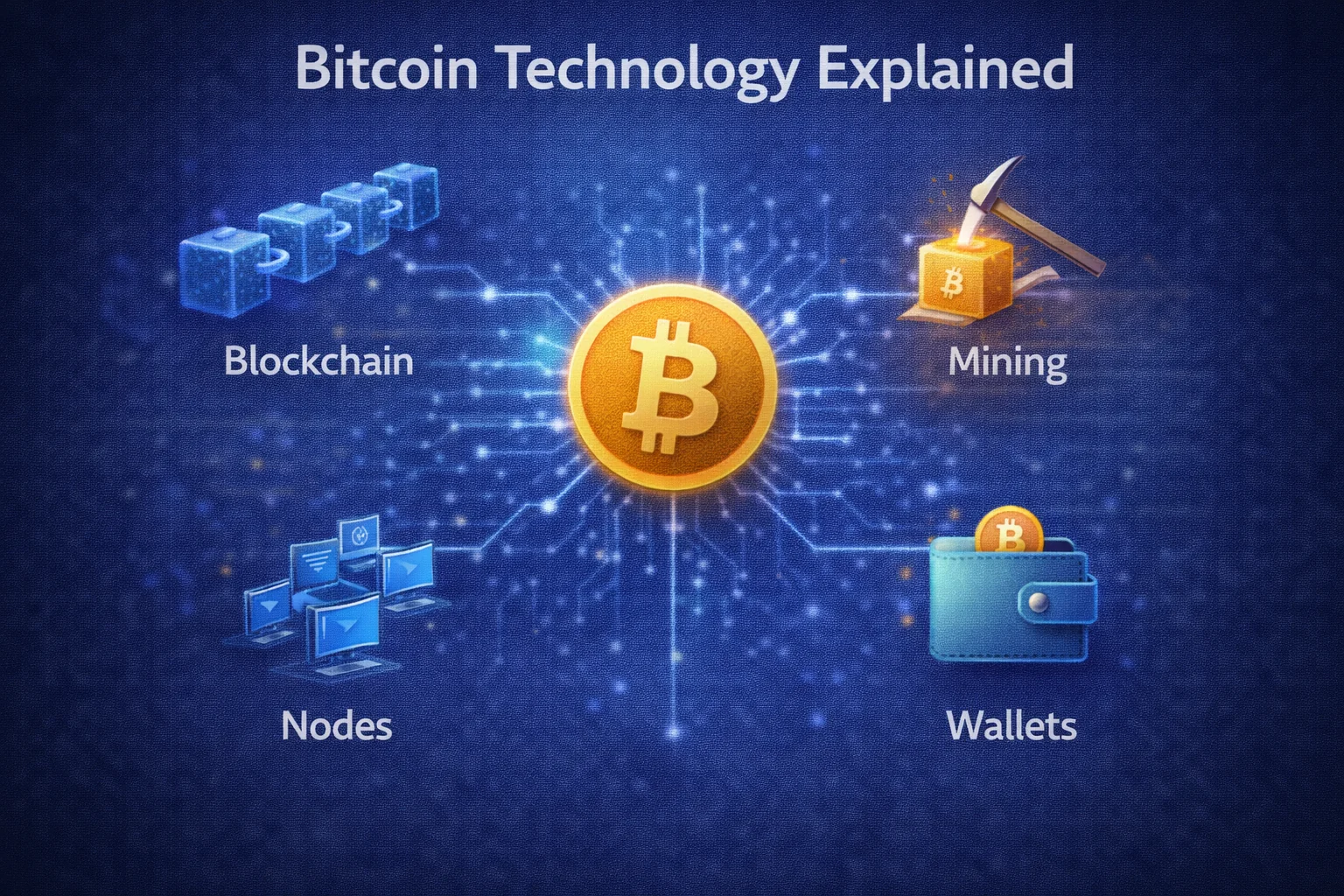
Introduction
Bitcoin is the world's first successful cryptocurrency—a revolutionary form of digital money that operates without banks, governments, or any central authority. Created in 2009 by the mysterious Satoshi Nakamoto, this digital currency has grown from an experimental technology to a globally recognised store of value. It is now worth over $1 trillion in market capitalisation. You should know this is huge. You will see why this matters.
At its core, Bitcoin is a peer-to-peer electronic cash system. It enables direct transactions between parties without intermediaries. Unlike traditional currencies controlled by central banks, this cryptocurrency operates on a decentralised network. This network is maintained by thousands of computers worldwide. This makes it censorship-resistant and globally accessible 24/7. You should understand this is revolutionary. You will appreciate the freedom it provides.
The significance of Bitcoin extends far beyond its role as digital money. It represents a fundamental shift in how we think about value, ownership, and financial sovereignty. For the first time in human history, individuals can store and transfer value without relying on trusted third parties. These include banks, payment processors, or governments. This breakthrough has profound implications for financial inclusion, monetary policy, and economic freedom worldwide. You should recognise this is historic. You will benefit from understanding this change.
Bitcoin's emergence came in response to the 2008 financial crisis. This crisis exposed the fragility of traditional banking systems. It also showed the risks of centralised economic control. Satoshi Nakamoto's whitepaper, "Bitcoin: A Peer-to-Peer Electronic Cash System," proposed a solution. It addressed the double-spending problem in digital currencies without requiring a trusted central authority. This innovation laid the foundation for the entire cryptocurrency ecosystem we see today. You should know this history. You will understand why Bitcoin matters.
The technology underlying Bitcoin—blockchain—has become one of the most significant technological innovations of the 21st century. This distributed ledger technology ensures transparency, immutability, and security without central oversight. Every Bitcoin transaction is recorded on this public ledger. This creates an auditable trail that anyone can verify. It maintains user privacy through cryptographic addresses. You should learn about blockchain. You will understand how it protects your money.
In 2025, Bitcoin has evolved from a niche digital experiment to a mainstream financial asset. It is now recognised by institutions, governments, and millions of individual investors worldwide. Major corporations such as Tesla, MicroStrategy, and Square have added Bitcoin to their treasury reserves. Countries such as El Salvador have adopted it as legal tender. This institutional adoption has validated Bitcoin's role as a legitimate store of value and hedge against inflation. You should know institutions trust Bitcoin. You will see why this matters for your investments.
Understanding Bitcoin requires grasping several key concepts. These include decentralisation, cryptographic security, proof-of-work consensus, and digital scarcity. These elements work together to create a monetary system. This system operates independently of traditional financial infrastructure. It maintains security and trust through mathematical certainty rather than institutional promises. This guide will explore each of these concepts in detail. It will provide you with a comprehensive understanding of how Bitcoin works and why it matters. You should learn these concepts. You will become a Bitcoin expert.
Whether you're considering Bitcoin as an investment, curious about its technology, or interested in its potential to reshape global finance, this comprehensive guide will provide you with the knowledge needed. You need to understand and navigate the world of Bitcoin. From its technical foundations to practical considerations for buying and storing Bitcoin, we'll cover everything you need to know about the world's first and most important cryptocurrency. You should read this guide carefully. You will gain valuable knowledge. This will help you make smart decisions.
The journey of understanding Bitcoin begins with recognising its dual nature. It is both a technological innovation and a monetary revolution. As we explore Bitcoin's history, technology, and future potential, you'll discover why this digital currency has captured the attention of investors, technologists, and policymakers worldwide. It has fundamentally changed how we think about money in the digital age. You should understand this revolution. You will see how it affects your financial future.
Bitcoin's Revolutionary Features
Digital Scarcity and Monetary Innovation
Bitcoin introduces the concept of digital scarcity through its fixed supply cap of 21 million coins, creating a deflationary monetary system that contrasts sharply with traditional fiat currencies subject to unlimited printing by central banks. This mathematical scarcity is enforced by the Bitcoin protocol itself, making it impossible for any authority to increase the supply beyond the predetermined limit. The scarcity mechanism operates through a process called "halving," which occurs approximately every four years and reduces the rate of new Bitcoin creation by half, gradually decreasing inflation until all coins are mined around the year 2140.
The implications of digital scarcity extend beyond simple supply economics to fundamental questions about monetary policy and value preservation. Unlike gold, which can theoretically be mined indefinitely as technology improves and new deposits are discovered, Bitcoin's scarcity is absolute and verifiable through mathematical proof. This characteristic has led many economists and investors to view Bitcoin as "digital gold," a store of value that can preserve purchasing power over time without the risks associated with physical storage, transportation, and verification that plague precious metals.
decentralised Consensus and Network Security
Bitcoin's security model relies on a decentralised network of miners who compete to validate transactions and secure the blockchain through computational work. This proof-of-work consensus mechanism ensures that no single entity can control the network or manipulate transaction history without expending enormous computational resources that would cost more than any potential benefit from such an attack. The network's security increases proportionally with the amount of computational power (hash rate) dedicated to mining, creating a self-reinforcing security model that becomes stronger as Bitcoin's value and adoption grow.
The decentralised nature of Bitcoin's consensus mechanism eliminates single points of failure that plague traditional financial systems. Whilst banks can be shut down, payment processors can be compromised, and governments can freeze accounts, Bitcoin's distributed network continues operating as long as any miners remain active anywhere in the world. This resilience has been demonstrated repeatedly during various attempts to ban or restrict Bitcoin in different jurisdictions, with the network continuing to function normally despite regulatory pressures.
Programmable Money and Smart Contracts
Beyond simple peer-to-peer transactions, Bitcoin enables programmable money through its scripting language, allowing for complex transaction conditions and automated execution of financial agreements. Whilst Bitcoin's scripting capabilities are more limited than newer blockchain platforms, they still enable sophisticated financial instruments such as multi-signature wallets, time-locked transactions, and atomic swaps that facilitate trustless exchanges between different cryptocurrencies. These programmable features lay the groundwork for decentralised finance (DeFi) applications and automated financial services that operate without traditional intermediaries.
The Lightning Network, a second-layer solution built on top of Bitcoin, extends these programmable money capabilities to enable instant, low-cost micropayments and complex payment routing through a network of payment channels. This innovation addresses Bitcoin's scalability limitations while preserving its security guarantees, enabling use cases such as streaming payments, micropayments for digital content, and instant cross-border remittances that were previously impractical with traditional payment systems.
Digital Scarcity
Bitcoin introduces the concept of digital scarcity through its fixed supply cap of 21 million coins. This mathematical certainty creates deflationary pressure. No more Bitcoin can ever be created beyond this limit. Unlike fiat currencies that can be printed infinitely, Bitcoin's scarcity is enforced by code and consensus. This makes it potentially more valuable over time as demand increases. You should understand this scarcity. You will see why Bitcoin is called digital gold.
decentralisation
No single entity controls Bitcoin. The network operates through consensus amongst thousands of nodes (computers) worldwide. This decentralisation makes Bitcoin resistant to censorship, seizure, and manipulation by governments or corporations. Even if some nodes go offline, the network continues operating. It has maintained 99.98% uptime since its inception. You should appreciate this reliability. You will trust Bitcoin's stability.
Transparency and Immutability
Every Bitcoin transaction is recorded on a public ledger called the blockchain. Anyone can verify transactions and account balances. This creates unprecedented transparency. Once confirmed, transactions become practically immutable. This provides certainty and finality that traditional payment systems cannot match. You should know this is revolutionary. You will trust Bitcoin's transparency.
Global Accessibility
Bitcoin works identically everywhere in the world. Whether you're in New York or Nigeria, the Bitcoin network operates the same way. It provides financial access to anyone with an internet connection. This works regardless of their banking status or government restrictions. This global accessibility has made Bitcoin particularly valuable in countries with unstable currencies or restrictive financial systems. You should know Bitcoin is borderless. You will appreciate this freedom.
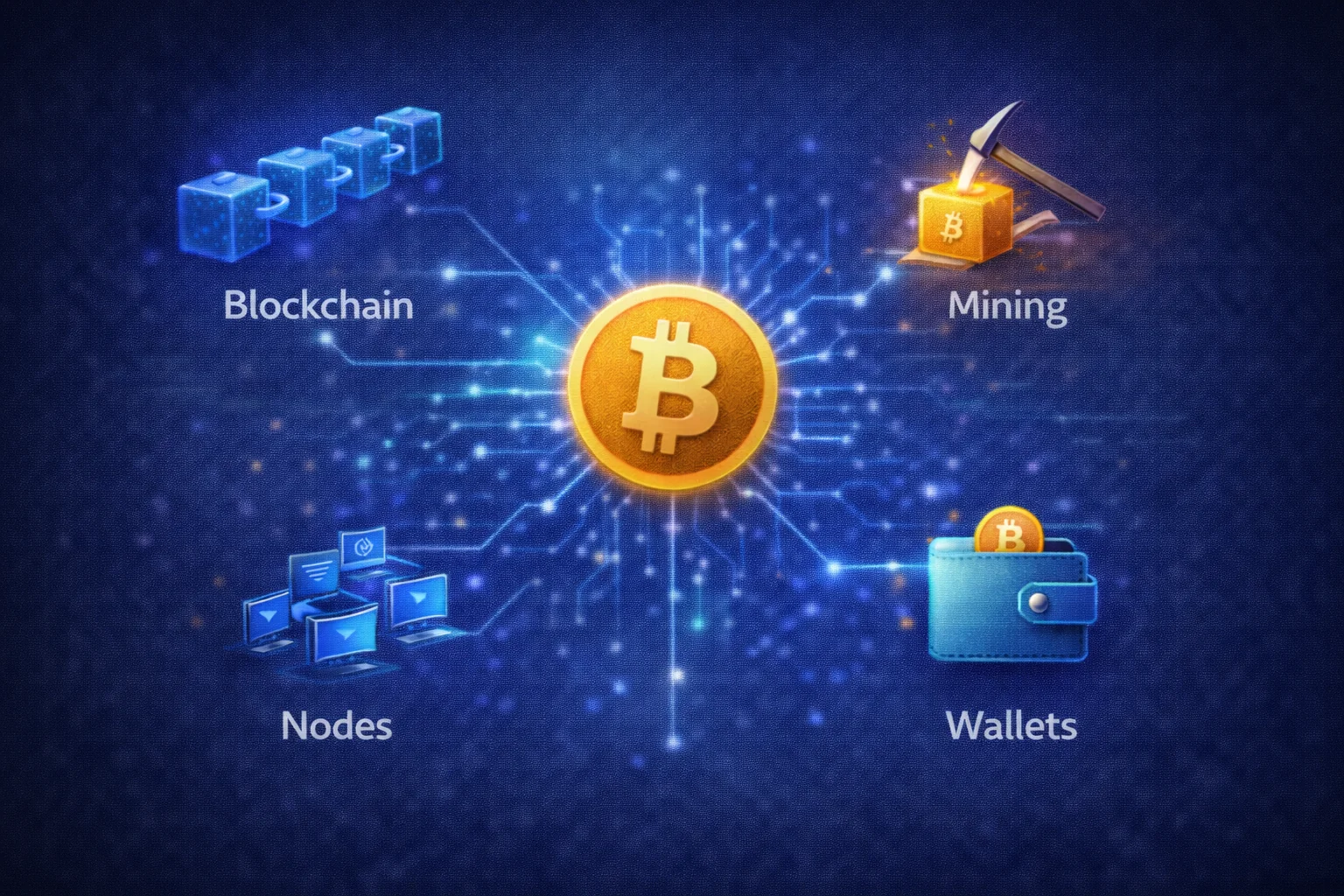
Bitcoin History: From Whitepaper to Digital Gold
The Pre-Bitcoin Era
Before BTC, numerous attempts at digital currency failed due to the "double-spending problem". This prevented digital money from being copied and spent multiple times. Previous solutions required trusted third parties. This reintroduced centralisation and single points of failure. You should understand this history. You will see why Bitcoin was revolutionary.
The 2008 Financial Crisis Context
BTC emerged during the 2008 global financial crisis. Trust in traditional financial institutions reached an all-time low. Banks required taxpayer bailouts while millions lost their homes and savings. This crisis highlighted the need for an alternative monetary system. This system should not depend on fallible institutions. You should remember this crisis. You will understand why Bitcoin was needed.
Satoshi Nakamoto's Innovation
On October 31, 2008, an anonymous person or group using the pseudonym Satoshi Nakamoto published the BTC white paper. It was titled "Bitcoin: A Peer-to-Peer Electronic Cash System." This nine-page document addressed the double-spending problem without relying on trusted third parties. It utilised a novel combination of cryptography, game theory, and distributed consensus. You should read this whitepaper. You will understand Bitcoin's genius design.
Bitcoin's Major Milestones
Genesis Block (January 3, 2009)
Satoshi mined the first BTC block. He embedded the message: "The Times 03/Jan/2009 Chancellor on brink of second bailout for banks." This timestamp proved this cryptocurrency's creation date. It also referenced the ongoing financial crisis that motivated its development. You should know this historic moment. You will appreciate Bitcoin's origin story.
First Transaction (January 12, 2009)
The first BTC transaction occurred between Satoshi Nakamoto and cryptographer Hal Finney. This demonstrated the network's functionality. It marked the beginning of this digital currency's journey as a functional electronic cash system. You should remember Hal Finney. You will honor this Bitcoin pioneer.
Bitcoin Pizza Day (May 22, 2010)
Programmer Laszlo Hanyecz paid 10,000 Bitcoin for two Papa John's pizzas. This established Bitcoin's first real-world exchange rate of approximately $0.0025 per Bitcoin. This day is now celebrated annually as Bitcoin Pizza Day. You should celebrate this day. You will remember Bitcoin's humble beginnings.
First Exchange and Price Discovery (2010-2011)
The first Bitcoin exchanges launched. This enabled price discovery and easier trading. Bitcoin reached parity with the US dollar in February 2011. This marked a significant psychological milestone. You should know this was huge news. You will understand Bitcoin's growth story.
Institutional Adoption (2020-2025)
Major corporations, including Tesla, MicroStrategy, and Square, have added Bitcoin to their balance sheets. El Salvador adopted Bitcoin as legal tender in 2021. Bitcoin ETFs received approval in major markets. This has gained institutional legitimacy and increased accessibility. You should follow institutional adoption. You will see Bitcoin's mainstream acceptance growing.
How Bitcoin Technology Works
You should learn how Bitcoin works. You will understand its power. This knowledge is essential. This will help you make smart decisions. Bitcoin is amazing technology. You need to know this. This is your future.
BTC's revolutionary technology combines several computer science innovations to create a trustless, decentralised monetary system. Understanding these technical foundations helps explain why this digital currency is regarded as a groundbreaking innovation.
The BTC Blockchain
This cryptocurrency's blockchain is a chronological chain of blocks, each containing a batch of transactions. Think of it as a digital ledger book where each page (block) is cryptographically linked to the previous page, creating an unbreakable chain of transaction history.
Block Structure
Each BTC block contains:
- Block Header: Metadata including timestamp, previous block hash, and Merkle root
- Transaction Data: All transactions included in the block
- Merkle Tree: Efficient structure for verifying transaction integrity
- Nonce: Number used in the proof-of-work mining process
Cryptographic Hashing
This digital currency uses the SHA-256 cryptographic hash function to create unique digital fingerprints for blocks and transactions. Any change to transaction data produces an entirely different hash, making tampering immediately detectable.
BTC Addresses and Keys
Public Key Cryptography
This cryptocurrency uses elliptic curve cryptography to generate key pairs:
- Private Key: A 256-bit random number that controls BTC ownership
- Public Key: Mathematically derived from the private key, used to verify signatures
- BTC Address: A hash of the public key, used to receive this digital currency
Digital Signatures
When spending this digital currency, the private key generates a digital signature that proves ownership without revealing the private key itself. This signature can be verified by anyone using the corresponding public key, ensuring transaction authenticity.
Transaction Process
Creating a Transaction
- User specifies recipient address and amount
- Wallet software creates transaction referencing previous unspent outputs
- Transaction is signed with the sender's private key
- Signed transaction is broadcast to the BTC network
Transaction Verification
Network nodes verify transactions by checking:
- Digital signature validity
- Sufficient balance in referenced inputs
- Proper transaction format and structure
- Compliance with network rules and consensus
UTXO Model
This cryptocurrency utilises an Unspent Transaction Output (UTXO) model, where each transaction consumes previously spent outputs and creates new ones. This model enables efficient verification and prevents double-spending without requiring account balances.
BTC Mining: Securing the Network Through Proof of Work
Cryptocurrency mining is the process by which new BTC is created, and transactions are confirmed. Miners compete to solve cryptographic puzzles, with the winner earning the right to add the next block and receive newly minted digital currency as a reward.
The Mining Process
Proof of Work Consensus
This digital currency uses Proof of Work (PoW) to achieve consensus without a central authority. Miners must expend computational energy to find a hash that meets specific criteria, proving they've done the work required to propose a new block.
Hash Rate and Difficulty
The BTC network automatically adjusts mining difficulty every 2,016 blocks (approximately two weeks) to maintain a consistent 10-minute block time. As more miners join the network, difficulty increases to preserve this timing.
Mining Rewards
Miners receive two types of rewards:
- Block Subsidy: New Bitcoin created with each block (currently 6.25 BTC, halving every 4 years)
- Transaction Fees: Fees paid by users to prioritise their transactions
- MEV Opportunities: Additional value from transaction ordering and block construction optimisation
The Halving Mechanism
Every 210,000 blocks (approximately 4 years), the block subsidy is halved. This mechanism ensures Bitcoin's supply approaches its 21 million limit asymptotically, creating predictable scarcity and deflationary pressure.
Historical Halvings:
- 2009-2012: 50 BTC per block
- 2012-2016: 25 BTC per block
- 2016-2020: 12.5 BTC per block
- 2020-2024: 6.25 BTC per block
- 2024-2028: 3.125 BTC per block
Mining Hardware Evolution
CPU Mining (2009-2010)
Early Bitcoin mining used regular computer processors. Satoshi Nakamoto envisioned "one CPU, one vote," but this phase was short-lived as more efficient hardware emerged.
GPU Mining (2010-2013)
Graphics cards proved much more efficient for Bitcoin's SHA-256 calculations, leading to the first mining arms race and an increase in network security.
ASIC Mining (2013-Present)
Application-Specific Integrated Circuits (ASICs) designed specifically for Bitcoin mining now dominate the network. Modern ASICs are millions of times more efficient than early CPUs.
Mining Economics and Security
Bitcoin's security model relies on the economic incentive for miners to act honestly. The cost of attacking the network (51% attack) far exceeds potential gains, making Bitcoin increasingly secure as the hash rate grows.
Why BTC Has Value: Digital Gold in the Modern Era
This cryptocurrency's value proposition stems from its unique combination of properties that make it superior to traditional money in many contexts. Understanding these value drivers helps explain BTC's adoption and price appreciation.
Store of Value Properties
Digital Scarcity
This digital currency's fixed supply of 21 million coins creates absolute scarcity in the digital realm. Unlike gold, which can theoretically be mined from asteroids, BTC's scarcity is mathematically guaranteed and cannot be inflated away.
Durability
Bitcoin exists as information on a distributed network. As long as the internet exists and people value Bitcoin, it remains durable. Unlike physical assets, Bitcoin cannot be degraded, rusted, or destroyed by natural disasters.
Portability
Bitcoin can be transmitted anywhere in the world instantly, making it infinitely more portable than gold or other physical stores of value. A billion dollars' worth of' Bitcoin can be stored on a small hardware device or even memorised as a seed phrase.
Divisibility
Each Bitcoin can be divided into 100 million units called satoshis, enabling precise transactions of any size. This divisibility makes Bitcoin practical for both small purchases and large transfers.
Medium of Exchange Properties
Borderless Transactions
Bitcoin enables direct, peer-to-peer transactions across borders without intermediaries. This capability is particularly valuable for international remittances, where traditional systems charge high fees and take days to settle.
Censorship Resistance
No government or institution can prevent Bitcoin transactions between willing parties. This property makes Bitcoin valuable in countries with capital controls, authoritarian governments, or unstable banking systems.
Programmable Money
Bitcoin's scripting language enables complex transaction conditions, multi-signature security, and time-locked payments. These features make Bitcoin more flexible than traditional payment systems.
Network Effects and Adoption
Metcalfe's Law
Bitcoin's value increases with the square of its users, following Metcalfe's Law. As more people, institutions, and applications adopt Bitcoin, its utility and value proposition strengthen.
Infrastructure Development
Growing infrastructure, including exchanges, wallets, payment processors, and Lightning Network solutions, increases Bitcoin's accessibility and utility, driving further adoption.
Institutional Adoption
Major corporations, investment funds, and even nation-states now hold Bitcoin as a treasury asset, providing legitimacy and reducing volatility through the presence of larger, more stable holders.
Hedge Against Monetary Debasement
Bitcoin serves as a hedge against currency debasement and inflation. As central banks expand money supplies, Bitcoin's fixed supply becomes increasingly attractive to investors seeking to preserve purchasing power.
Comparison with Traditional Assets
| Property | Bitcoin | Gold | Real Estate | Stocks |
|---|---|---|---|---|
| Scarcity | Absolute (21M limit) | High but unknown | Location dependent | Variable |
| Portability | Perfect | Poor | None | High (digital) |
| Divisibility | Perfect (8 decimals) | Good | Poor | Good |
| Durability | Perfect (digital) | Excellent | Good | Depends on company |
| Censorship Resistance | Excellent | Good | Poor | Poor |
Bitcoin as an Investment
Bitcoin has evolved from an experimental digital currency to a recognised investment asset class. Understanding Bitcoin's investment characteristics, potential returns, and associated risks is crucial for making informed decisions about incorporating Bitcoin into your portfolio.
Bitcoin's Investment Performance
Historical Returns
Bitcoin has been one of the best-performing assets over the past decade, despite significant volatility:
- 2010-2020: Compound Annual Growth Rate (CAGR) of approximately 200%
- 2015-2025: Outperformed most traditional asset classes, including stocks, bonds, and gold
- Institutional Era (2020+): Reduced volatility as larger players entered the market
Market Cycles and Patterns
Bitcoin exhibits cyclical behaviour often correlated with halving events:
- Accumulation Phase: Sideways price action after major corrections
- Bull Market: Rapid price appreciation driven by adoption and speculation
- Peak and Correction: Overextension followed by significant drawdowns
- Bear Market: Extended periods of declining prices and reduced interest
Investment Strategies for Bitcoin
Dollar-Cost Averaging (DCA)
DCA involves purchasing a fixed dollar amount of Bitcoin regularly, regardless of the price. This strategy reduces the impact of volatility and removes emotional decision-making from the investment process.
Benefits of Bitcoin DCA:
- Smooths out price volatility over time
- Reduces risk of buying at market peaks
- Builds discipline and removes emotion from investing
- Accessible to investors with limited capital
Lump Sum Investment
Investing a large amount at once can be effective during market downturns or when you have high conviction about Bitcoin's long-term prospects. However, this approach carries a higher risk due to timing sensitivity.
HODLing Strategy
"HODL" (Hold On for Dear Life) refers to the practice of buying Bitcoin and holding it for years, regardless of short-term price fluctuations. This strategy has historically been very profitable for patient investors.
Trading and Active Management
Active trading seeks to capitalise on Bitcoin's volatility through technical analysis and market timing. Whilst potentially profitable, this approach requires significant time and expertise and carries a higher risk of losses.
Portfolio Allocation Considerations
Risk-Adjusted Allocation
Financial advisors typically recommend allocating 1-10% of investment portfolios to Bitcoin, depending on risk tolerance and investment goals:
- Conservative (1-3%): Minimal exposure for portfolio diversification
- Moderate (3-7%): Balanced approach for growth-oriented investors
- Aggressive (7-15%): Higher allocation for risk-tolerant investors
Correlation with Traditional Assets
Bitcoin's correlation with traditional assets varies over time but generally remains low, providing diversification benefits. During market stress, correlations may temporarily increase as all risk assets decline together.
Investment Risks and Mitigation
Volatility Risk
Bitcoin experiences significant price fluctuations, with daily price swings of 5-10% being common. Mitigation strategies include:
- Position sizing appropriate to risk tolerance
- Long-term investment horizon
- Dollar-cost averaging to smooth volatility
- Emotional discipline during market extremes
Regulatory Risk
Government regulations can impact Bitcoin's price and accessibility. However, the trend towards regulatory clarity and institutional adoption reduces this risk over time.
Technology Risk
Whilst Bitcoin's core protocol has proven robust, potential risks include quantum computing threats, software bugs, or network attacks. The Bitcoin development community actively addresses these concerns.
Custody Risk
Losing access to Bitcoin due to forgotten passwords, hardware failures, or exchange hacks poses a significant risk. Proper security practices and backup procedures are essential.
Bitcoin Security and Storage: Protecting Your Digital Gold
Bitcoin security is paramount because transactions are irreversible, and there's no customer service to recover lost funds. Understanding proper security practices and storage methods is essential for safely holding Bitcoin.
Bitcoin Wallet Types and Security
Hot Wallets (Online Storage)
Hot wallets are connected to the internet, providing convenience for frequent transactions but increased security risks:
- Exchange Wallets: Convenient but you don't control private keys
- Mobile Wallets: Good for daily use and small amounts
- Desktop Wallets: More secure than web wallets, suitable for moderate amounts
Cold Wallets (Offline Storage)
Cold wallets store private keys offline, providing maximum security for long-term storage:
- Hardware Wallets: Dedicated devices like Ledger or Trezor
- Paper Wallets: Private keys printed on paper (advanced users only)
- Air-Gapped Computers: Computers never connected to the internet
Private Key Management
Seed Phrase Security
Your seed phrase (recovery phrase) is the master key to your Bitcoin. Proper seed phrase security includes:
- Physical Backup: Write down on paper or metal, never store digitally
- Multiple Copies: Store in separate secure locations
- Verification: Test recovery process with small amounts
- Privacy: Never share or photograph your seed phrase
Multi-Signature Security
Multi-signature (multisig) wallets require multiple private keys to authorise transactions, providing enhanced security for large amounts:
- 2-of-3 Setup: Three keys created, any two required to spend
- Geographic Distribution: Keys stored in different locations
- Shared Custody: Keys held by different trusted parties
Security Best Practices
Operational Security (OpSec)
- Use dedicated devices for Bitcoin activities
- Keep software updated and use reputable wallets
- Verify wallet software authenticity and signatures
- Use strong, unique passwords and two-factor authentication
- Be cautious about public WiFi and shared computers
Privacy Considerations
- Understand Bitcoin's pseudonymous nature
- Use new addresses for each transaction
- Consider privacy-enhancing techniques like CoinJoin
- Be mindful of transaction analysis and chain surveillance
Inheritance and Estate Planning
Plan for Bitcoin inheritance to prevent permanent loss:
- Document wallet locations and access methods
- Consider time-locked transactions or dead man's switches
- Educate beneficiaries about Bitcoin security
- Work with estate planning professionals familiar with cryptocurrency
How to Buy Bitcoin in 2025: Complete Step-by-Step Guide
Buying Bitcoin has become increasingly accessible through various platforms and methods. This guide outlines the most popular and secure techniques for acquiring Bitcoin in 2025.
Cryptocurrency Exchanges
centralised Exchanges (CEX)
Centralised exchanges are the most popular way to buy Bitcoin, offering user-friendly interfaces and various payment methods:
Top Recommended Exchanges:
- Coinbase: Best for beginners, regulated in the US, high fees but excellent security
- Binance: Largest exchange globally, low fees, extensive features
- Kraken: Strong security record, good for advanced users, lower fees
- OKX: Global exchange with competitive fees and features
Step-by-Step Exchange Purchase
- Choose a reputable exchange based on your location and needs
- Create an account with a strong password and enable 2FA
- Complete identity verification (KYC) as required by regulations
- Add a payment method (bank account, debit card, credit card)
- Place a buy order for Bitcoin using market or limit orders
- Transfer Bitcoin to your personal wallet for security
Alternative Purchase Methods
Bitcoin ATMs
Bitcoin ATMs allow cash purchases of Bitcoin with minimal identity verification:
- Higher fees (5-20%) but increased privacy
- Instant purchases with cash
- Growing network of locations worldwide
- Useful for small amounts and privacy-conscious users
Peer-to-Peer (P2P) Trading
P2P platforms connect buyers and sellers directly:
- Bisq: decentralised P2P exchange
- LocalBitcoins: Popular P2P platform with escrow
- Paxful: P2P marketplace with various payment methods
Bitcoin ETFs and Investment Products
For traditional investors, Bitcoin ETFs provide exposure without direct custody:
- Available through traditional brokerages
- No need for wallet management
- Regulated investment products
- Management fees but professional custody
Payment Methods and Considerations
Bank Transfers (ACH/Wire)
- Pros: Lowest fees, large amounts, secure
- Cons: Slower processing (1-5 days), requires a bank account
- Best for: Large purchases and regular dollar-cost averaging
Debit Cards
- Pros: Instant purchases, widely accepted
- Cons: Higher fees (2-4%), lower limits
- Best for: Small amounts and immediate purchases
Credit Cards
- Pros: Instant purchases, buyer protection
- Cons: Highest fees (3-8%), cash advance charges, not recommended
- Best for: Emergency purchases only, generally not recommended due to high fees
For detailed exchange comparisons and setup guides, check our comprehensive best crypto exchanges 2025 guide.
Bitcoin's Future Outlook: Trends and Developments in 2025
Bitcoin continues to evolve through technological improvements, regulatory developments, and growing adoption. Understanding these trends helps inform long-term investment and usage decisions
Technological Developments
Lightning Network Expansion
The Lightning Network enables instant, low-cost Bitcoin transactions through payment channels:
- Growing network capacity and liquidity
- Improved user experience and wallet integration
- Enabling micropayments and streaming money applications
- Potential for global payment network adoption
Taproot and Future Upgrades
Bitcoin's Taproot upgrade (activated in 2021) and future improvements enhance:
- Privacy through signature aggregation
- Smart contract capabilities
- Transaction efficiency and cost reduction
- Foundation for more complex applications
Quantum Resistance
Bitcoin developers are preparing for quantum computing threats:
- Research into quantum-resistant cryptography
- Gradual migration strategies for address formats
- Timeline aligned with quantum computing development
Institutional and Regulatory Trends
Corporate Treasury Adoption
More corporations are adding Bitcoin to their balance sheets:
- Hedge against currency debasement
- Superior store of value properties
- Shareholder value creation through Bitcoin appreciation
- Accounting standards becoming clearer
Central Bank Digital Currencies (CBDCs)
Government digital currencies may coexist with Bitcoin:
- CBDCs provide government control and surveillance
- Bitcoin offers decentralisation and censorship resistance
- Different use cases and value propositions
- Potential for complementary adoption
Regulatory Clarity
Clearer regulations are emerging globally:
- Bitcoin ETF approvals in major markets
- Taxation frameworks becoming standardised
- Banking integration and custody solutions
- Reduced regulatory uncertainty
Adoption and Use Case Evolution
Nation-State Adoption
Countries are exploring Bitcoin adoption:
- El Salvador's Bitcoin legal tender experiment
- Other nations considering similar moves
- Strategic Bitcoin reserves for central banks
- Geopolitical implications of Bitcoin adoption
Financial Infrastructure
Bitcoin is becoming integrated into traditional finance:
- Custodial services for institutions
- Bitcoin-backed lending and derivatives
- Integration with existing payment systems
- Professional trading and market-making
Challenges and Considerations
Scalability Solutions
Bitcoin continues addressing scalability through:
- Layer 2 solutions like Lightning Network
- Sidechains and alternative scaling approaches
- Improved transaction batching and efficiency
- Balance between decentralisation and throughput
Environmental Concerns
Bitcoin mining's environmental impact is being addressed:
- Increasing use of renewable energy sources
- Mining efficiency improvements
- Waste heat utilisation projects
- Carbon-neutral mining initiatives
Competition and Innovation
Bitcoin faces competition but maintains advantages:
- Network effects and first-mover advantage
- Proven security and decentralisation
- Conservative development approach
- Focus on monetary properties over features
Professional Implementation Strategies and Best Practices
Strategic Planning and Risk Assessment Framework
Bitcoin investors employ allocation diversification strategies across multiple acquisition methods, storage solutions, and holding periods to minimise custody risks while maintaining long-term exposure. Regular security reviews, storage optimisation, and acquisition planning ensure optimal Bitcoin accumulation strategies.
Advanced Security and Operational Excellence
Bitcoin security protocols include network consensus mechanisms, cryptographic protection systems, and comprehensive transaction verification procedures that ensure the integrity and immutability of the Bitcoin blockchain. Professional Bitcoin users implement secure storage practices including hardware wallets and proper backup procedures to protect their holdings.
Market Intelligence and Competitive Analysis
Bitcoin fundamentals involve understanding decentralised digital currency principles, blockchain technology implementation, and monetary policy through algorithmic scarcity. Professional investors utilise network metrics, adoption indicators, and macroeconomic analysis to evaluate Bitcoin's long-term value proposition.
Bitcoin fundamentals encompass decentralised digital currency principles, blockchain technology implementation, and monetary policy through algorithmic scarcity. Understanding Bitcoin's proof-of-work consensus mechanism, fixed supply schedule, and network effects provides essential foundation for cryptocurrency investment and adoption strategies.
Bitcoin Investment Strategies and Portfolio Management
Dollar-Cost Averaging Strategy
Dollar-cost averaging is one of the most effective approaches for Bitcoin investment. This is especially true for newcomers to cryptocurrency markets. This strategy involves making regular purchases of Bitcoin regardless of price movements. This naturally smooths out volatility and reduces the impact of market timing decisions. Historical analysis shows that investors who consistently applied dollar-cost averaging over multi-year periods typically achieved better risk-adjusted returns. This compared to those attempting to time market entries and exits.
The effectiveness of dollar-cost averaging in Bitcoin investment comes from the cryptocurrency's long-term upwards trajectory combined with significant short-term volatility. By purchasing fixed amounts at regular intervals, investors automatically buy more Bitcoin when prices are low and less when prices are high. This creates a natural averaging effect that reduces the average purchase price over time while removing the emotional component of investment decisions.
Long-Term Holding and Storage Strategies
Long-term Bitcoin holding, often called "HODLing" in cryptocurrency communities, requires smart storage strategies. These balance security, accessibility, and inheritance planning. Professional Bitcoin holders typically use multi-signature wallets, hardware wallet solutions, and geographic distribution of private keys. This protects against various risk scenarios including theft, loss, and technical failures.
Advanced storage strategies include time-locked transactions, multi-party custody arrangements, and comprehensive backup procedures. These ensure Bitcoin holdings remain secure and accessible across different scenarios. Estate planning considerations become increasingly important for significant Bitcoin holdings. This requires legal documentation and technical arrangements that enable inheritance while maintaining security during the holder's lifetime.
Portfolio Allocation and Risk Management
Bitcoin's role in investment portfolios continues evolving as institutional adoption increases and correlation patterns with traditional assets change over different market cycles. Conservative portfolio allocation typically suggests 5-10% Bitcoin exposure for traditional investors, whilstcryptocurrency-focused portfolios may allocate 30-50% to Bitcoin as a foundational holding with additional exposure to other digital assets and DeFi protocols.
Risk management for Bitcoin investment includes position sizing based on individual risk tolerance, regular rebalancing to maintain target allocations, and understanding correlation dynamics during different market environments. Professional investors implement systematic approaches that account for Bitcoin's unique characteristics while maintaining diversification across asset classes and investment strategies.
Tax optimisation and Regulatory Compliance
Bitcoin taxation varies significantly across jurisdictions, requiring investors to understand local regulations and implement appropriate tax optimisation strategies while maintaining full compliance with applicable laws. Tax considerations include the treatment of Bitcoin as property versus currency, capital gains implications for different holding periods, and record-keeping requirements for transaction tracking and reporting purposes.
Advanced tax strategies include tax-loss harvesting opportunities, strategic timing of asset sales to optimise capital gains treatment, and understanding the implications of different Bitcoin-related activities including mining, staking, and DeFi participation. Professional tax planning becomes essential for significant Bitcoin holdings, requiring coordination with qualified tax professionals who understand cryptocurrency regulations and optimisation opportunities.
Bitcoin Technology Evolution and Future Developments
Lightning Network and Payment Infrastructure
The Lightning Network represents Bitcoin's most significant scaling solution, enabling instant, low-cost payments while maintaining the security and decentralisation properties of the base Bitcoin blockchain. This second-layer solution creates payment channels between users that enable thousands of transactions per second with minimal fees, making Bitcoin practical for everyday payments and micropayments that were previously economically unfeasible.
Lightning Network adoption continues expanding through merchant integrations, wallet implementations, and infrastructure development that improves user experience and accessibility. The network's growth creates new opportunities for Bitcoin utility beyond store-of-value applications, including streaming payments, micropayments for digital content, and cross-border remittances that leverage Bitcoin's global accessibility and Lightning's efficiency.
Taproot and Privacy Enhancements
Bitcoin's Taproot upgrade introduced significant privacy and efficiency improvements that enhance the network's capabilities while maintaining backwards compatibility and security properties. Taproot enables more complex smart contract functionality, improved privacy for multi-signature transactions, and reduced transaction sizes that lower fees and improve network capacity utilisation.
Privacy enhancements through Taproot and other developments address growing concerns about Bitcoin's pseudonymous nature and transaction traceability. Advanced privacy techniques including CoinJoin implementations, Lightning Network routing, and improved wallet privacy features provide users with enhanced financial privacy while maintaining compliance with applicable regulations and reporting requirements.
Institutional Infrastructure and Custody Solutions
The development of institutional-grade Bitcoin infrastructure includes advanced custody solutions, insurance products, and regulatory compliance frameworks. These enable professional investment management and corporate treasury applications. Institutional infrastructure addresses the unique requirements of fiduciary management, regulatory reporting, and operational security. Professional investors require these for Bitcoin exposure.
Custody innovations include multi-party computation, hardware security modules, and comprehensive audit trails. These meet institutional security and compliance standards while maintaining the self-sovereign properties that make Bitcoin attractive. These developments bridge the gap between Bitcoin's decentralised nature and institutional requirements for professional asset management and fiduciary responsibility.
Environmental Sustainability and Mining Evolution
Bitcoin mining continues evolving towards greater environmental sustainability. This happens through renewable energy adoption, waste heat utilisation, and improved mining efficiency. This reduces the network's environmental impact while maintaining security and decentralisation properties. Mining operations increasingly focus on renewable energy sources and innovative applications that create additional value from mining activities.
Sustainable mining initiatives include integration with renewable energy projects, utilisation of stranded energy resources, and development of carbon-neutral mining operations. These demonstrate Bitcoin's potential for environmental responsibility. These developments address environmental concerns while highlighting Bitcoin's unique ability to monetize otherwise wasted energy resources. They support renewable energy development through guaranteed demand for excess capacity.
Conclusion
This revolutionary digital currency represents a fundamental shift in how we think about money, value, and financial sovereignty. As the world's first successful cryptocurrency, BTC has proven its resilience through multiple market cycles, regulatory challenges, and technological evolution.
Whether you view this digital asset as electronic gold, a hedge against inflation, or the future of money, understanding its technology, value proposition, and proper usage is essential in the digital age. As adoption continues to grow and infrastructure improves, this decentralised currency's role in the global financial system will likely expand. Read our Bitcoin 2025 review for investment analysis, or compare Bitcoin vs Ethereum to decide which suits your goals.
Remember that investing in this digital asset requires patience, education, and proper risk management. Start small, learn continuously, and always prioritise security when handling your cryptocurrency holdings. The journey into digital currency is not just about potential financial returns, but about participating in a monetary revolution that could reshape the global economy.
The technological foundations of Bitcoin—blockchain, cryptographic security, and decentralised consensus—have already inspired thousands of other cryptocurrencies and blockchain applications. However, Bitcoin's unique position as the first and most secure cryptocurrency network gives it distinct advantages that are difficult to replicate. Its proven track record, network effects, and conservative development approach have established it as the digital equivalent of gold in the cryptocurrency ecosystem.
As we look towards the future, Bitcoin's role in the global financial system continues to evolve. Institutional adoption is accelerating, with major corporations, investment funds, and even nation-states recognising Bitcoin as a legitimate store of value. The development of the Lightning Network and other scaling solutions is addressing transaction speed and cost concerns, making Bitcoin more practical for everyday use while maintaining its core security properties.
The regulatory landscape is also maturing, with clearer guidelines emerging in major jurisdictions. This regulatory clarity is reducing uncertainty and paving the way for broader adoption by traditional financial institutions. As Bitcoin becomes more integrated into the existing financial system through ETFs, custody solutions, and payment processors, its volatility may decrease while its utility increases.
Ultimately, Bitcoin represents more than just a new form of money—it embodies the principles of financial sovereignty, censorship resistance, and individual empowerment. Whether Bitcoin fulfills its potential as a global reserve currency or remains a specialised store of value, its impact on monetary theory and financial technology is already profound and irreversible. Understanding Bitcoin is understanding the future of money in an increasingly digital world.
Sources & References
- Bitcoin: A Peer-to-Peer Electronic Cash System - Satoshi Nakamoto Whitepaper
- Bitcoin Core - Official GitHub Repository
- Bitcoin.org - Official Bitcoin Documentation
- Blockchain.com - Bitcoin Blockchain Explorer
Affiliate Disclosure: This article may contain affiliate links to cryptocurrency exchanges and wallet providers. We may earn a commission if you sign up through our links, at no additional cost to you. We only recommend platforms we trust and have thoroughly researched. Your support helps us create more educational content.
Frequently Asked Questions
- What is Bitcoin in simple terms?
- BTC is a digital currency that operates independently of banks or governments. It's like digital gold that you can send to anyone in the world instantly. This cryptocurrency utilises blockchain technology to record all transactions on a public ledger that cannot be altered or falsified.
- How does Bitcoin work?
- BTC operates through a network of computers that maintain a shared ledger, known as a blockchain. When you send this digital currency, the transaction is verified by network participants known as miners, who solve complex puzzles to confirm transactions and earn new cryptocurrency as a reward.
- Is Bitcoin safe to invest in?
- BTC has proven to be a relatively safe store of value over the long term, but it's volatile in the short term. Its security comes from decentralisation and cryptography, but investment safety depends on your risk tolerance, time horizon, and proper security practices.
- How can I buy Bitcoin?
- You can buy BTC through cryptocurrency exchanges like Coinbase, Binance, or Kraken. Create an account, verify your identity, add a payment method, and place a buy order. Always transfer this digital currency to your own wallet for maximum security.
- Why is Bitcoin valuable?
- BTC is valuable because it's scarce (only 21 million will ever exist), useful (enabling borderless transactions), durable (existing as digital information), and increasingly adopted by individuals and institutions as a store of value and a hedge against inflation.
- Can Bitcoin be hacked or shut down?
- This cryptocurrency's decentralised network makes it extremely difficult to hack or shut down. Whilst individual exchanges or wallets can be compromised, the BTC network itself has never been successfully attacked. Its security increases as more miners join the network.
- How much Bitcoin should I buy?
- Only invest what you can afford to lose entirely. Many financial advisors recommend allocating 1–10% of your investment portfolio to BTC, depending on your risk tolerance. Start small and increase your position as you become more comfortable with the technology.
- What happens when all 21 million Bitcoins are mined?
- When all Bitcoins are mined (estimated to be around 2140), miners will earn revenue only from transaction fees, instead of block rewards. This should provide sufficient incentive to continue securing the network, as Bitcoin's value and transaction volume are expected to be much higher by then.
- Is Bitcoin legal?
- Bitcoin is legal in most countries, including the United States, the European Union, and many others. Some countries have restrictions or bans, but the global trend is towards regulation and acceptance rather than prohibition. Always check your local laws.
- How do I store Bitcoin safely?
- For small amounts, reputable exchange wallets are acceptable. For larger holdings, consider using a hardware wallet, such as Ledger or Trezor. Always back up your seed phrase securely, use strong passwords, enable two-factor authentication, and never share your private keys.
← Back to Complete Cryptocurrency Guide 2025
Financial Disclaimer
This content is not financial advice. All information provided is for educational purposes only. Cryptocurrency investments carry significant investment risk, and past performance does not guarantee future results. Always do your own research and consult a qualified financial advisor before making investment decisions.