Best Crypto Wallets 2025: Complete Guide
Choosing the right cryptocurrency wallet is one of the most important decisions you'll make as a crypto investor. With thousands of dollars potentially at stake, understanding the differences between wallet types, security features, and usability is crucial. This comprehensive guide covers the best crypto wallets of 2025, helping you make an informed decision based on your needs and experience level.
Introduction
Cryptocurrency wallets serve as the foundation of digital asset security and management, representing the critical interface between users and the blockchain networks that power the cryptocurrency ecosystem. Unlike traditional bank accounts, where institutions hold and protect your funds, cryptocurrency wallets give you direct control over your digital assets through cryptographic keys. Choosing wallet technology is one of the most important decisions in your cryptocurrency journey.
The cryptocurrency wallet landscape has evolved dramatically since Bitcoin's early days, transforming from complex command-line tools accessible only to technical experts into sophisticated, user-friendly applications that rival traditional financial software in terms of usability and security. This evolution has created a diverse ecosystem of wallet solutions, each designed to meet different user needs, security requirements, and levels of technical expertise.
Understanding the fundamental differences between wallet types is essential for making informed decisions about cryptocurrency storage and management. Hardware wallets offer maximum security through offline storage, but require physical devices and more complex setup procedures. Software wallets provide convenience and accessibility but introduce potential security vulnerabilities through internet connectivity and device compromise risks.
The security implications of wallet choice cannot be overstated, as cryptocurrency transactions are irreversible and lost private keys result in permanently inaccessible funds. Unlike traditional financial systems with customer service departments and account recovery procedures, cryptocurrency wallets operate in a trustless environment, where users bear full responsibility for protecting their assets through proper security practices and backups.
Modern cryptocurrency wallets have expanded beyond simple storage and transaction functionality to include advanced features like multi-signature security, hardware security module integration, decentralised finance protocol access, and cross-chain compatibility. These features enable sophisticated investment strategies while maintaining the security and self-custody principles that make cryptocurrency attractive to privacy-conscious and security-focused users.
The choice between different wallet solutions involves balancing security, convenience, functionality, and cost considerations based on your specific use cases, technical expertise, and risk tolerance. This comprehensive guide examines the leading cryptocurrency wallet options available in 2025, providing a detailed analysis of their security features, usability characteristics, and suitability for different types of cryptocurrency users and investment strategies.
Whether you're a beginner seeking simple, secure storage for your first cryptocurrency purchases or an experienced investor requiring advanced features for complex trading and DeFi strategies, understanding the strengths and limitations of different wallet technologies will help you make informed decisions that protect your assets while enabling your desired cryptocurrency activities.
The regulatory environment surrounding cryptocurrency wallets has also matured significantly, with clearer guidelines for compliance and consumer protection while maintaining the decentralised principles that make cryptocurrency valuable. This regulatory clarity has encouraged institutional adoption and provided retail users with greater confidence in wallet security and reliability.
Market conditions in 2025 have created both opportunities and challenges for cryptocurrency wallet users, with institutional adoption driving improvements in security standards while the proliferation of new blockchain networks and token types increases complexity. Understanding how to navigate this evolving landscape while maintaining robust security practices is essential for successful cryptocurrency management.
The integration of advanced technologies like biometric authentication, multi-party computation, and threshold signatures has enhanced wallet security while maintaining user-friendly interfaces. These innovations enable sophisticated security models that protect against both technical attacks and human error, making cryptocurrency storage more accessible to mainstream users without compromising the security standards required for digital asset protection.
Understanding Crypto Wallet Types
Cryptocurrency wallets come in several forms, each with distinct advantages and trade-offs. Understanding these differences is crucial for selecting the ideal wallet that meets your specific needs and security requirements.
Hardware Wallets (Cold Storage)
Cold storage devices are physical devices that store your private keys offline, providing the highest level of security. They're essential for storing large amounts of cryptocurrency long-term. For detailed comparisons, see our hardware wallets comparison and individual reviews like Ledger guide and Tangem review.
Advantages:
- Maximum security - private keys never touch the internet
- Protection against malware and hacking attempts
- Backup and recovery options
- Support for multiple cryptocurrencies
- Physical confirmation required for transactions
Disadvantages:
- Higher upfront cost ($50-250)
- Less convenient for frequent trading
- Can be lost or damaged
- Learning curve for beginners
Software Wallets (Hot Storage)
Software wallets are applications that run on your computer or mobile device. They offer a balance between security and convenience for daily crypto use.
Advantages:
- Free to use
- Convenient for regular transactions
- Easy to set up and use
- Quick access to funds
- Integration with DeFi protocols
Disadvantages:
- Vulnerable to malware and hacking
- Dependent on device security
- Risk of loss if device fails
- Requires regular updates
Web Wallets
Web wallets are accessed through browsers and are often provided by exchanges or online services. Whilst convenient for quick access and trading, they offer the least security since you don't control the private keys and rely on third-party security measures.
When to Use:
- Small amounts for trading
- Temporary storage during transactions
- Learning and experimentation
Best Hardware Wallets 2025
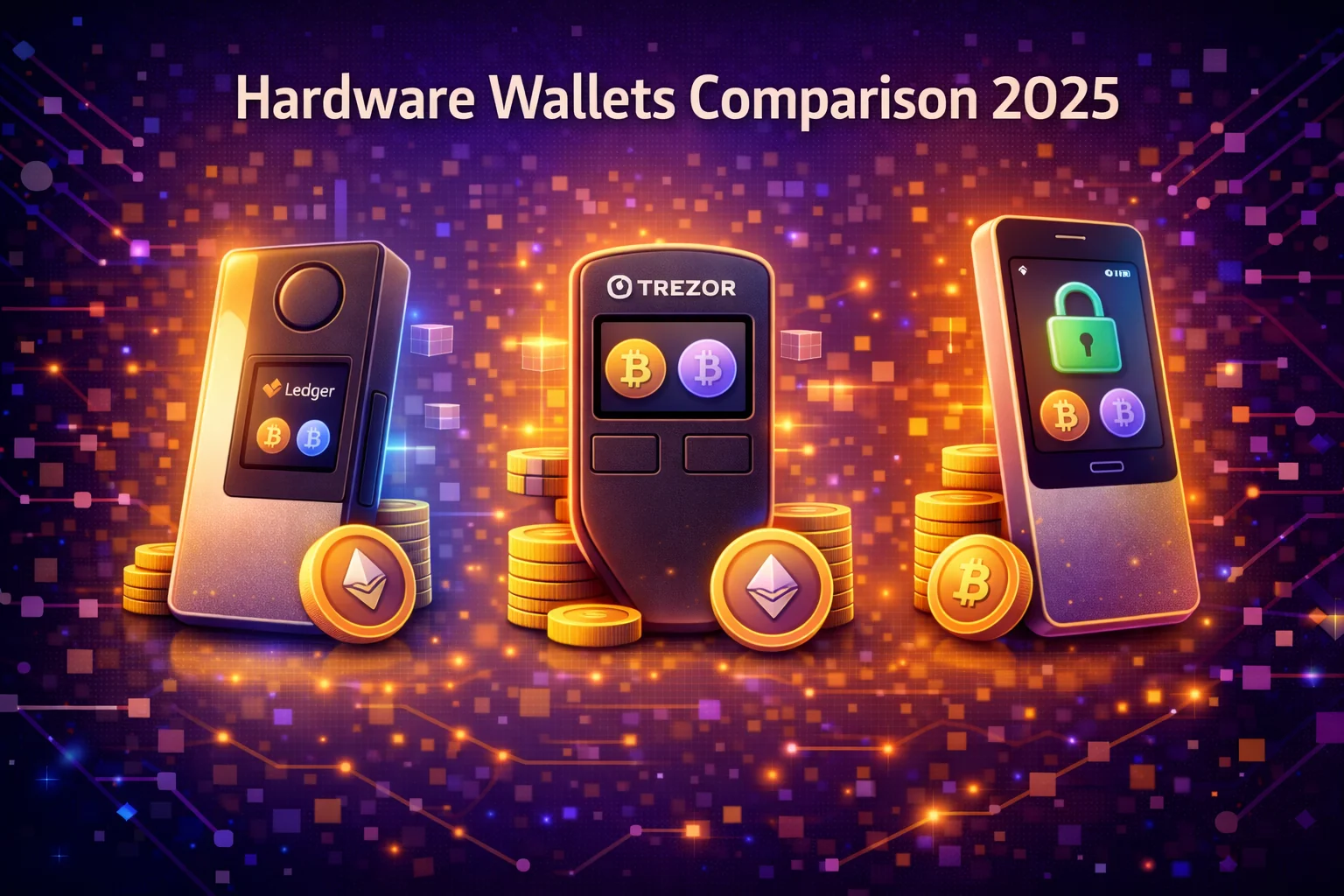
1. Ledger Nano X - The Gold Standard
Cost: $149 | Security Score: 9.5/10 | User-Friendliness: 8.5/10
The Ledger Nano X remains the most popular cold storage device, offering unmatched security through its certified secure element and support for over 5,500 cryptocurrencies. The Bluetooth connectivity makes it convenient for mobile use while maintaining top-tier security.
Key Features:
- Secure Element chip (CC EAL5+ certified)
- 5,500+ supported cryptocurrencies
- Bluetooth connectivity for mobile use
- 100 apps can be installed simultaneously
- Ledger Live companion app
- Battery life: several hours of active use
Best For:
Serious investors with diverse portfolios who want maximum security with mobile convenience.
Get Ledger Nano X with Exclusive Bonuses →
2. Tangem Wallet - Revolutionary Card Design
Cost: $55-75 | Security Score: 8.5/10 | User-Friendliness: 9.5/10
Tangem revolutionises physical device design with its credit card form factor and NFC tap-to-sign functionality. This innovative approach eliminates the need for batteries, screens, and cables while maintaining high security standards.
Key Features:
- Credit card-sized form factor
- NFC tap-to-sign transactions
- No batteries, screens, or cables required
- Certified secure element (CC EAL6+)
- Water and dust resistant
- Backup cards included in sets
Best For:
Users who prioritise portability and convenience while maintaining strong security for major cryptocurrencies.
Get Tangem Wallet with Special Pricing →
3. Trezor Model T - Open Source Leader
Cost: $219 | Security Score: 9.0/10 | User-Friendliness: 9.0/10
The Trezor Model T stands out as the premium open-source cold storage device with a full-colour touchscreen and advanced security features like Shamir Backup. Its transparent development appeals to privacy-conscious users.
Key Features:
- Full-colour touchscreen interface
- 1,600+ supported cryptocurrencies
- Shamir Backup (advanced seed splitting)
- Completely open-source
- Passphrase protection
- MicroSD card slot
Best For:
Privacy advocates who value open-source solutions and want advanced security features.
Best Mobile Wallets 2025
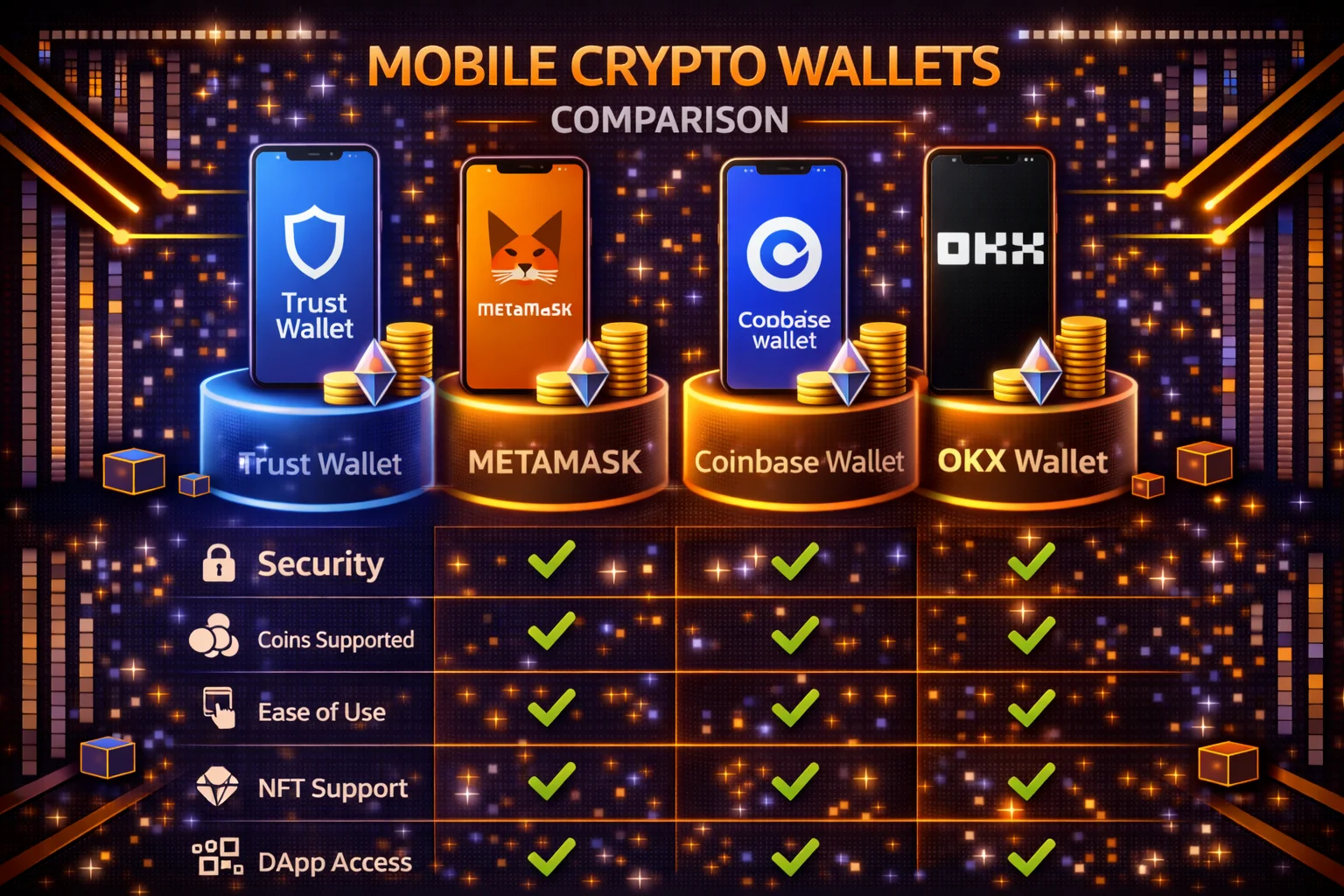
1. MetaMask - DeFi Gateway
Price: Free | Security Rating: 8.0/10 | Ease of Use: 8.5/10
MetaMask is the most popular Ethereum wallet, serving as the gateway to DeFi protocols and dApps. Its browser extension and mobile app provide seamless access to the Ethereum ecosystem.
Key Features:
- Built-in DeFi protocol access
- Browser extension and mobile app
- Hardware wallet integration
- Custom network support
- Token swapping functionality
- NFT support and display
Best For:
Ethereum users who want to interact with DeFi protocols and dApps regularly.
2. Trust Wallet - Multi-Chain Mobile
Price: Free | Security Rating: 8.2/10 | Ease of Use: 9.0/10
Trust Wallet supports over 70 blockchains and offers a user-friendly mobile experience with built-in DeFi browser and staking features. It's owned by Binance but remains decentralised.
Key Features:
- 70+ blockchain support
- Built-in DeFi browser
- Staking for multiple assets
- NFT support and marketplace
- Direct fiat purchases
- WalletConnect integration
Best For:
Mobile-first users who want multichain support with easy DeFi access.
3. Simple Wallet - Beginner Friendly
Price: Free | Security Rating: 8.0/10 | Ease of Use: 9.5/10
Simple Wallet lives up to its name by providing an intuitive, KYC-free mobile wallet experience. It's perfect for beginners learning self-custody without overwhelming complexity.
Key Features:
- KYC-free setup
- Biometric unlock
- Intuitive backup system
- Bitcoin and Ethereum support
- Stablecoin integration
- Simple transaction interface
Best For:
Beginners who want to learn self-custody with a simple, secure mobile wallet.
Best Desktop Wallets 2025
1. Exodus - Beautiful and Functional
Price: Free | Security Rating: 7.5/10 | Ease of Use: 9.5/10
Exodus combines beautiful design with powerful functionality, supporting 260+ assets with built-in exchange and staking features. It's perfect for users who want an all-in-one desktop solution.
Key Features:
- 260+ supported assets
- Built-in exchange functionality
- Staking for multiple cryptocurrencies
- Portfolio tracking and analytics
- 24/7 customer support
- Hardware wallet integration
Best For:
Desktop users who want a beautiful, feature-rich wallet with excellent customer support.
2. Electrum - Bitcoin Specialist
Price: Free | Security Rating: 8.5/10 | Ease of Use: 7.0/10
Electrum is a lightweight Bitcoin wallet focused on speed, security, and advanced features. It's been around since 2011 and remains one of the most trusted Bitcoin wallets available.
Key Features:
- Bitcoin-only focus
- Advanced privacy features
- Multi-signature support
- Cold storage capabilities
- Minimal resource usage
- Plugin system for extensions
Best For:
Bitcoin maximalists who want advanced features and don't need altcoin support.
specialised Wallets for Specific Needs
Cosmos Ecosystem - Keplr Wallet
Keplr is the premier wallet for the Cosmos ecosystem, supporting IBC transfers, staking, and governance participation across Cosmos chains.
Key Features:
- Native Cosmos ecosystem support
- IBC transfer functionality
- Staking and governance participation
- Multi-chain asset management
- DeFi protocol integration
Multi-Signature Security - Gnosis Safe
Gnosis Safe provides enterprise-grade security through multi-signature requirements, perfect for teams and large holdings.
Key Features:
- Customizable signature requirements
- Team-based wallet management
- Transaction approval workflows
- DeFi protocol integration
- Audit trails and reporting
Privacy Focus - Wasabi Wallet
Wasabi Wallet specialises in Bitcoin privacy through CoinJoin mixing, offering enhanced anonymity for privacy-conscious users.
Key Features:
- Built-in CoinJoin mixing
- Tor integration by default
- Advanced privacy features
- Bitcoin-only focus
- Open-source development
Wallet Security Best Practices
Initial Setup Security
- Always download wallets from official sources
- Verify checksums and signatures when possible
- Generate recovery phrases on the device, never use pre-generated ones
- Write backup phrases on paper, never store digitally
- Test recovery process with small amounts first
Ongoing Security Practices
- Keep wallet software updated
- Use strong, unique passwords
- Enable all available security features
- Store recovery phrases in multiple secure locations
- Never share recovery phrases or private keys
- Use cold storage devices for large amounts
Common Security Mistakes to Avoid
- Storing backup phrases in cloud services
- Taking photos of recovery phrases
- Using the same password across multiple services
- Ignoring software updates
- Not testing recovery procedures
- Keeping all funds in one wallet
Choosing the Right Wallet for Your Needs
For Beginners
Recommended Setup:
- Start with Simple Wallet or Trust Wallet for learning
- Use small amounts initially
- Practice sending and receiving transactions
- Learn about seed phrase security
- Upgrade to a cold storage device as holdings grow
For Active Traders
Multi-Wallet Strategy:
- MetaMask for DeFi interactions
- Exchange wallets for active trading
- Cold storage device for long-term holdings
- Mobile wallet for daily transactions
For Long-Term Investors
Security-First Approach:
- Physical device as primary storage
- Multiple backup locations for seed phrases
- Consider multi-signature setups for large amounts
- Regular security audits and updates
For DeFi Users
DeFi-optimised Setup:
- MetaMask for Ethereum DeFi
- Keplr for Cosmos ecosystem
- Cold storage device integration for security
- Multiple wallets for different protocols
Wallet Comparison Matrix
Security Comparison
| Wallet Type | Security Level | Private Key Control | Offline Storage | Best Use Case |
|---|---|---|---|---|
| Hardware Wallets | Highest | Full | Yes | Long-term storage |
| Desktop Wallets | High | Full | No | Regular use |
| Mobile Wallets | Medium-High | Full | No | Daily transactions |
| Web Wallets | Medium | Partial | No | Small amounts |
| Exchange Wallets | Low-Medium | None | No | Active trading |
Feature Comparison
| Wallet | Supported Assets | DeFi Support | Mobile App | Price |
|---|---|---|---|---|
| Ledger Nano X | 5,500+ | Limited | Yes | $149 |
| Tangem | 6,000+ | Basic | Yes | $55-75 |
| MetaMask | Ethereum + EVM | Excellent | Yes | Free |
| Trust Wallet | 4,500+ | Good | Yes | Free |
| Exodus | 260+ | Basic | Yes | Free |
Step-by-Step Wallet Setup Guides
Setting Up Your First Cold Storage Device
Ledger Nano X Setup Process
- Step 1: Unbox and connect device to computer via USB
- Step 2: Download and install Ledger Live application
- Step 3: Initialize device and create new wallet
- Step 4: Write down 24-word recovery phrase on provided cards
- Step 5: Verify recovery phrase by entering words in random order
- Step 6: Set up PIN code (4-8 digits)
- Step 7: Install cryptocurrency apps (Bitcoin, Ethereum, etc.)
- Step 8: Generate receiving addresses and test with small amounts
Critical Security Steps
- Verify Authenticity: Check holographic stickers and packaging
- Secure Environment: Set up in private, secure location
- Offline Backup: Write recovery phrase on paper, never digital
- Multiple Copies: Store backup in 2-3 separate secure locations
- Test Recovery: Practice recovery process with small amounts
Mobile Wallet Setup Best Practices
MetaMask Mobile Setup
- Step 1: Download from official app store only
- Step 2: Create new wallet or import existing
- Step 3: Secure with strong password and biometrics
- Step 4: Back up seed phrase securely offline
- Step 5: Add custom networks (Polygon, BSC, etc.)
- Step 6: Import tokens and test transactions
- Step 7: Connect to physical device for enhanced security
Security Configuration
- Biometric Lock: Enable fingerprint or face unlock
- Auto-Lock: Set short timeout for automatic locking
- Transaction Confirmation: Enable confirmation for all transactions
- Network Verification: Always verify network before transactions
- App Permissions: Review and limit app permissions
Advanced Security Features
Multi-Signature Wallet Implementation
Understanding Multi-Sig
- Concept: Require multiple signatures to authorize transactions
- Common Setups: 2-of-3, 3-of-5, or custom configurations
- Use Cases: Joint accounts, business wallets, inheritance planning
- Security Benefit: No single point of failure
- Platforms: Gnosis Safe, Casa, Unchained Capital
Setting Up Gnosis Safe
- Step 1: Visit safe.global and connect wallet
- Step 2: Choose network (Ethereum, Polygon, etc.)
- Step 3: Add owner addresses and set threshold
- Step 4: Deploy safe contract (requires gas fee)
- Step 5: Test with small transaction
- Step 6: Configure apps and integrations
Professional Security Protocols and Technical Specifications
Hardware Security Module Integration
Professional-grade cryptocurrency wallets integrate with Hardware Security Modules (HSMs) that provide military-grade cryptographic protection through tamper-resistant hardware environments. These specialised processors execute cryptographic operations within secure enclaves that resist physical attacks, electromagnetic interference, and sophisticated extraction attempts. HSM integration ensures that private keys never exist in plaintext outside the secure hardware boundary, providing institutional-level security for high-value cryptocurrency holdings.
Advanced HSM implementations support multiple cryptographic algorithms including ECDSA secp256k1, Ed25519, and post-quantum cryptographic standards that future-proof security against emerging threats. Professional wallets leverage HSM capabilities for secure key generation, digital signature creation, and cryptographic verification processes that meet the highest security standards required by financial institutions and regulatory frameworks.
Secure Element Architecture and Certification Standards
Leading hardware wallets incorporate certified secure elements that meet Common Criteria EAL5+ and EAL6+ security standards, providing verified protection against sophisticated attack vectors including side-channel analysis, fault injection, and invasive physical attacks. These secure elements undergo rigorous testing and certification processes that validate their resistance to known attack methodologies and ensure compliance with international security standards.
Secure element architecture includes dedicated cryptographic processors, secure memory regions, and hardware-based random number generators that provide entropy for cryptographic operations. Advanced implementations feature secure boot processes, firmware integrity verification, and anti-tampering mechanisms that detect and respond to physical manipulation attempts by permanently disabling the device to protect stored keys.
Institutional Custody Solutions and Compliance Frameworks
Enterprise-grade custody solutions implement sophisticated security architectures that combine hardware security modules, multi-signature protocols, and comprehensive audit trails to meet institutional security requirements and regulatory compliance standards. These solutions provide segregated storage, insurance coverage, and professional key management services that enable institutions to safely custody large cryptocurrency holdings while maintaining operational efficiency.
Professional custody platforms integrate with existing financial infrastructure through APIs that support automated trading, portfolio management, and risk monitoring systems. Advanced custody solutions provide real-time reporting, compliance monitoring, and regulatory reporting capabilities that meet the requirements of financial institutions, hedge funds, and corporate treasury operations managing significant cryptocurrency exposures.
Advanced Cryptographic Protocols and Zero-Knowledge Implementation
Next-generation wallet architectures implement zero-knowledge proof systems that enable transaction verification without revealing sensitive information about transaction amounts, participants, or wallet balances. These privacy-preserving protocols utilise advanced cryptographic techniques including zk-SNARKs and zk-STARKs to provide mathematical proof of transaction validity while maintaining complete confidentiality of transaction details.
Professional wallets incorporate threshold signature schemes and distributed key generation protocols that eliminate single points of failure while maintaining operational efficiency. These advanced cryptographic implementations enable sophisticated security models including time-locked transactions, conditional payments, and programmable security policies that adapt to changing risk profiles and operational requirements.
Quantum-Resistant Security Implementation
forwards-thinking wallet developers implement post-quantum cryptographic algorithms that provide protection against future quantum computing threats that could compromise current elliptic curve cryptography standards. These quantum-resistant implementations utilise lattice-based cryptography, hash-based signatures, and multivariate cryptographic systems that maintain security even against quantum adversaries with sufficient computational power to break traditional cryptographic schemes.
Professional quantum-resistant wallets implement hybrid security models that combine current cryptographic standards with post-quantum algorithms to provide immediate security while preparing for future quantum threats. These implementations include migration pathways that enable seamless transition to fully quantum-resistant systems as standards mature and regulatory requirements evolve.
Advanced Privacy Features
CoinJoin and Mixing
- Purpose: Break transaction history links
- Wasabi Wallet: Built-in CoinJoin for Bitcoin
- Samourai Wallet: Advanced Bitcoin privacy features
- Considerations: Legal implications vary by jurisdiction
- Best Practices: Understand local regulations before use
Tor Integration
- Network Privacy: Hide IP address and location
- Supported Wallets: Wasabi, Electrum, Bisq
- Setup: Enable Tor proxy in wallet settings
- Trade-offs: Slower transactions, some compatibility issues
- Security: Additional layer of network anonymity
Enterprise and Institutional Wallets
Institutional Custody Solutions
Coinbase Custody
- Target Market: Institutions with $10M+ in crypto
- Security: Cold storage with insurance coverage
- Compliance: SOC 2 Type II, regulatory reporting
- Features: Staking, lending, OTC trading integration
- Governance: Multi-approval workflows and audit trails
BitGo Institutional
- Multi-Signature: Enterprise-grade multi-sig technology
- Compliance: Built-in AML/KYC monitoring
- API Integration: Custom trading and treasury management
- Insurance: $100M+ coverage for digital assets
- Regulation: Trust company status in multiple jurisdictions
Business Wallet Features
Team Management
- Role-Based Access: Different permissions for team members
- Approval Workflows: Multi-step transaction approval
- Audit Trails: Complete transaction history and logs
- Spending Limits: Daily/monthly limits per user
- Emergency Procedures: Protocols for key recovery
Compliance and Reporting
- Transaction Monitoring: Real-time compliance checking
- Regulatory Reporting: Automated report generation
- Tax Integration: Seamless accounting software integration
- Documentation: Comprehensive record keeping
- Third-Party Audits: Regular security assessments
Wallet Integration with DeFi
DeFi-optimised Wallet Features
Transaction Batching
- Gas optimisation: Combine multiple transactions
- Supported Wallets: Gnosis Safe, DeFi Saver
- Use Cases: Portfolio rebalancing, yield farming
- Cost Savings: Reduce total gas fees significantly
- Complexity: Requires understanding of smart contracts
Yield Farming Integration
- One-Click Farming: Simplified protocol interactions
- Yield Tracking: Real-time APY monitoring
- Auto-Compounding: Automatic reward reinvestment
- Risk Assessment: Built-in protocol risk ratings
- Portfolio Analytics: Comprehensive performance tracking
Cross-Chain DeFi Support
Bridge Integration
- Native Bridges: Built-in cross-chain transfers
- Supported Chains: Ethereum, Polygon, Arbitrum, Optimism
- Bridge Aggregators: Best route selection
- Security Considerations: Bridge risk assessment
- Cost optimisation: Cheapest transfer routes
Multi-Chain Portfolio Management
- Unified View: All chains in single interface
- Asset Tracking: Cross-chain balance monitoring
- Transaction History: Complete multi-chain records
- Tax Reporting: Consolidated reporting across chains
- Risk Management: Diversification across ecosystems
Wallet Recovery and Inheritance
Recovery Planning
Seed Phrase Management
- Metal Backups: Fire and water-resistant storage
- Geographic Distribution: Multiple secure locations
- Shamir's Secret Sharing: Split seed into multiple parts
- Time-Lock Recovery: Delayed access mechanisms
- Regular Testing: Periodic recovery verification
Social Recovery Systems
- Trusted Guardians: Friends/family as recovery helpers
- Threshold Recovery: The Majority of guardians required
- Smart Contract Wallets: Argent, Loopring implementations
- Recovery Delays: Time locks for security
- Guardian Management: Adding/removing trusted contacts
Inheritance Solutions
Digital Estate Planning
- Legal Documentation: Include crypto in will
- Access Instructions: Clear recovery procedures
- Trusted Executors: Tech-savvy estate managers
- Time-Locked Vaults: Automatic inheritance triggers
- Professional Services: Crypto inheritance specialists
Technical Implementation
- Dead Man's Switch: Automated inheritance triggers
- Multi-Sig Inheritance: Gradual key transfer
- Smart Contract Wills: Blockchain-based inheritance
- Encrypted Instructions: Secure access documentation
- Regular Updates: Keep inheritance plans current
Future of Crypto Wallets
The cryptocurrency wallet landscape continues evolving with new technologies and user demands. Key trends shaping the future include improved user experience, enhanced security features, and better integration with DeFi protocols.
Emerging Trends
- Biometric Authentication: Fingerprint and facial recognition integration
- Social Recovery: Seed phrase alternatives using trusted contacts
- Account Abstraction: Simplified user experience with smart contract wallets
- Cross-Chain Integration: Seamless multi-blockchain support
- DeFi Native Features: Built-in yield farming and staking
- Institutional Features: Advanced compliance and reporting tools
- AI Integration: Smart transaction analysis and fraud detection
- Quantum Resistance: Post-quantum cryptography implementation
Security Innovations
- Multi-Party Computation (MPC): Distributed key management
- Hardware Security Modules: Mobile device integration
- Quantum-Resistant Cryptography: Future-proof security
- Advanced Fraud Detection: AI-powered threat prevention
- decentralised Identity: Self-sovereign identity integration
- Zero-Knowledge Proofs: Privacy-preserving authentication
User Experience Evolution
- Simplified Onboarding: Web2-like user experience
- Natural Language Interface: Voice and chat interactions
- Predictive Features: AI-powered transaction suggestions
- Seamless Recovery: Passwordless and seedless wallets
- Integrated Services: Banking, investing, and DeFi in one app
Real-World Wallet Usage: Success Stories
Case 1: Long-Term Holder - Ledger Cold Storage
User: David, 38, software engineer from Canada
Portfolio: $150,000 in BTC and ETH accumulated since 2020
Wallet Choice: Ledger Nano X for cold storage
Strategy: Buy-and-hold strategy with quarterly purchases, all stored on cold storage device
Security Setup:
- 24-word seed phrase split into three parts, stored in 3 different physical locations
- PIN protection on device
- Passphrase (25th word) memorized, not written down
- Regular firmware updates
- Test recovery process annually
Result: Zero security incidents in 5 years. Portfolio grew from $30k to $150k. Peace of mind knowing funds are offline and secure. Cost: $149 one-time investment for Ledger Nano X.
Case 2: DeFi Power User - MetaMask Multi-Wallet Strategy
User: Sarah, 29, crypto trader from UK
Portfolio: $50,000 actively used in DeFi protocols
Wallet Setup: MetaMask with 3 separate accounts
Strategy: Segregated wallets for different risk levels
Wallet Allocation:
- Hot Wallet 1 (Trading): $5,000 - Daily trading, high-risk DeFi
- Hot Wallet 2 (Staking): $20,000 - Established protocols (Aave, Compound)
- Hot Wallet 3 (Holding): $25,000 - Minimal interactions, blue-chip tokens
Result: When a malicious dApp drained Hot Wallet 1 ($5k loss), other wallets remained safe. Segregation limited damage to 10% of the portfolio. Lesson learnt: never connect high-value wallets to experimental protocols.
Case 3: Mobile-First User - Trust Wallet Daily Usage
User: Maria, 25, digital nomad from Spain
Portfolio: $10,000 in various tokens
Wallet Choice: Trust Wallet for mobile convenience
Use Cases: Daily crypto payments, DeFi yield farming, NFT collecting
Monthly Activity:
- 50+ transactions per month
- Staking rewards: $80/month (8% APY on $12k)
- Gas fees: $30/month average
- Convenience: Access crypto anywhere, instant payments
Result: Trust Wallet's mobile-first design enabled Maria to live a crypto-native lifestyle. Built-in dApp browser made DeFi accessible. Security: Biometric unlock, regular backups, never stored seed phrase digitally.
Case 4: Business Owner - Tangem Card for Team Payments
User: Alex, 42, tech startup founder from Germany
Challenge: Pay 5 remote contractors in crypto monthly
Wallet Solution: Tangem cards for each contractor
Setup:
- Company wallet: Ledger for main treasury ($200k)
- Contractor wallets: Tangem cards ($5k each, $25k total)
- Monthly process: Transfer from Ledger to Tangem cards
- Contractors: Tap card to phone, access funds instantly
Results After 12 Months:
- Zero payment delays (vs 3-5 days with traditional banking)
- Saved $2,400 in international wire fees ($200/month × 12)
- Contractors appreciated instant access and low fees
- Tangem cards: Simple for non-technical users, no seed phrase complexity
Key Lesson: Tangem's card format made crypto accessible to non-technical contractors. No apps to install, no seed phrases to manage. Just tap and use.
Case 5: Multi-Chain Investor - Phantom Wallet for Solana Ecosystem
User: James, 31, crypto investor from Australia
Portfolio: $80,000 across multiple blockchains
Challenge: Needed specialised wallet for Solana DeFi opportunities
Wallet Strategy:
- MetaMask: $40k - Ethereum and EVM chains
- Phantom: $30k - Solana ecosystem
- Ledger: $10k - Long-term cold storage
Solana Results (6 months):
- Yield farming: $2,400 earned (8% APY on $30k)
- Gas fees: $15 total (vs $1,200 on Ethereum)
- Transaction speed: Instant vs 15-30 seconds on Ethereum
- NFT trading: 50+ transactions, minimal fees
Key Lesson: Specialised wallets like Phantom provide a superior experience for specific ecosystems. Solana's low fees and fast transactions enabled strategies impossible on Ethereum. Multi-wallet approach maximises opportunities across chains.
Advanced Wallet Security and Technical Analysis
Cryptographic Security Fundamentals
Modern cryptocurrency wallets employ sophisticated cryptographic protocols that ensure the security and integrity of digital asset storage and transactions. Understanding these fundamental security mechanisms enables users to make informed decisions about wallet selection and implementation of appropriate security measures for their specific needs and risk tolerance levels.
Elliptic Curve Digital Signature Algorithm (ECDSA) forms the foundation of most cryptocurrency wallet security, utilising the secp256k1 curve for Bitcoin and Ethereum-compatible networks. This cryptographic standard provides mathematical proof of ownership and transaction authorisation while maintaining computational efficiency and security against current attack vectors and quantum computing threats.
Hierarchical Deterministic (HD) wallet architecture, defined by BIP32 and BIP44 standards, enables the generation of unlimited addresses from a single seed phrase while maintaining complete security and recoverability. This approach enhances privacy through address reuse prevention and simplifies backup procedures through single seed phrase recovery mechanisms.
Hardware Security Module Integration
Advanced hardware wallets integrate with Hardware Security Modules (HSMs) and secure elements that provide tamper-resistant environments for private key storage and cryptographic operations. These specialised chips offer protection against physical attacks, side-channel analysis, and sophisticated extraction attempts that could compromise software-based security measures.
Secure boot processes and firmware verification mechanisms ensure that hardware wallets operate only with authenticated software, preventing malicious firmware installation and maintaining the integrity of the security environment. Regular firmware updates address emerging threats while maintaining backwards compatibility and user accessibility.
Multi-signature integration in hardware wallets enables sophisticated security schemes that require multiple devices or parties to authorize transactions. This approach provides enhanced security for high-value holdings while maintaining operational flexibility through configurable threshold requirements and recovery mechanisms.
Mobile Wallet Security Architecture
Modern mobile wallets leverage device-specific security features including secure enclaves, biometric authentication, and hardware-backed keystores that provide enhanced protection for private keys and sensitive operations. These platform-specific security measures integrate with wallet software to create comprehensive security frameworks that protect against various attack vectors.
Application sandboxing and permission management systems isolate wallet applications from other device software, preventing unauthorised access to sensitive data and cryptographic operations. Advanced mobile wallets implement additional security layers including app-specific PINs, transaction confirmation requirements, and automatic logout mechanisms for enhanced protection.
Remote wipe capabilities and device management features enable users to protect their assets in case of device loss or theft. These security measures include automatic wallet locking, remote key deletion, and emergency recovery procedures that maintain asset security while providing recovery options for legitimate users.
Web Wallet Security Considerations
Browser-based wallets face unique security challenges including cross-site scripting attacks, phishing attempts, and browser extension vulnerabilities. Understanding these risks enables users to implement appropriate security measures including browser security hardening, extension verification, and secure browsing practices that minimise exposure to web-based threats.
Client-side encryption and local key storage mechanisms ensure that web wallets maintain security comparable to desktop applications while providing the convenience of browser-based access. Advanced web wallets implement zero-knowledge architectures that prevent service providers from accessing user keys or transaction data.
Two-factor authentication and multi-device verification provide additional security layers for web-based wallets, requiring multiple authentication factors for sensitive operations. These measures protect against account compromise while maintaining user accessibility and operational convenience.
Cross-Platform Compatibility and Synchronization
Multi-platform wallet solutions enable seamless access across different devices and operating systems while maintaining consistent security standards and user experience. Understanding synchronization mechanisms helps users implement secure multi-device strategies that enhance accessibility without compromising security.
Encrypted backup and synchronization protocols ensure that wallet data remains secure during cross-device transfers and cloud storage operations. Advanced synchronization mechanisms employ end-to-end encryption and zero-knowledge architectures that prevent unauthorised access to sensitive information during transmission and storage.
Device-specific security adaptations ensure that wallets leverage the best available security features on each platform while maintaining consistent functionality and user experience. This approach maximises security while providing optimal performance and usability across different devices and operating systems.
Emerging Technologies and Future Developments
Quantum-resistant cryptography development addresses future threats from quantum computing advances that could compromise current cryptographic standards. Understanding these developments helps users prepare for future security requirements while maintaining current security best practices and staying informed about emerging threats and solutions.
Biometric authentication advances including behavioral biometrics, multi-modal authentication, and continuous verification provide enhanced security while improving user experience. These technologies offer stronger authentication mechanisms that are more difficult to compromise while remaining convenient for regular use.
Artificial intelligence integration in wallet security includes fraud detection, transaction analysis, and behavioral monitoring that can identify and prevent suspicious activities. These AI-powered security features provide proactive protection while learning from user behavior patterns to improve security effectiveness over time.
Regulatory Compliance and Privacy Considerations
Wallet selection must consider regulatory requirements in different jurisdictions, including know-your-customer (KYC) requirements, anti-money laundering (AML) compliance, and data protection regulations. Understanding these requirements helps users select appropriate wallet solutions that meet their compliance needs while maintaining desired privacy levels.
Privacy-focused wallet features including coin mixing, stealth addresses, and transaction obfuscation provide enhanced privacy protection while maintaining regulatory compliance where required. These features enable users to protect their financial privacy while adhering to applicable legal requirements and maintaining operational transparency.
Data sovereignty and jurisdiction considerations affect wallet selection for users in different regions, particularly regarding data storage, processing, and access requirements. Understanding these factors helps users select wallet solutions that align with their privacy preferences and regulatory obligations. Advanced users implement comprehensive privacy frameworks that balance regulatory compliance with personal privacy protection, utilising sophisticated techniques and strategic approaches to maintain optimal security while meeting all applicable legal requirements and operational standards for enhanced cryptocurrency management excellence.
Conclusion
Successful wallet management requires understanding security fundamentals, backup procedures, and recovery mechanisms. Professional users implement multi-layered security approaches including hardware wallet integration, secure seed phrase storage, and regular security audits to protect their cryptocurrency holdings from potential threats and vulnerabilities.
As your holdings and knowledge grow, investing in a cold storage device like Ledger Nano X or Tangem becomes essential for security, particularly when managing significant amounts that represent meaningful portions of your investment portfolio. The transition from hot wallets to cold storage represents a maturation in cryptocurrency security practices that reflects growing understanding of the risks and responsibilities inherent in self-custody.
Remember that no single wallet is perfect for all use cases, and the most successful cryptocurrency users employ a multi-wallet strategy that leverages different technologies for different purposes. This approach typically involves using cold storage devices for long-term storage of significant holdings, mobile wallets for daily transactions and smaller amounts, and specialised wallets for specific activities like DeFi interactions, NFT management, or multi-chain operations.
The most important aspect of any wallet choice is understanding how to use it securely through proper seed phrase management, backup procedures, and operational security practices. The cryptocurrency space remains unforgiving of mistakes, with lost private keys resulting in permanently inaccessible funds and security breaches potentially leading to total asset loss. However, with proper knowledge, appropriate tools, and disciplined security practices, you can safely manage your digital assets for years to come while maintaining the sovereignty and control that make cryptocurrency attractive.
As the cryptocurrency ecosystem continues to mature, wallet technology will become increasingly user-friendly while maintaining and improving security standards through innovations like hardware security modules, biometric authentication, and advanced cryptographic techniques. Staying informed about these developments while maintaining focus on fundamental security principles will help you adapt to new technologies without compromising the safety of your assets.
The future of cryptocurrency wallets points towards greater integration with traditional financial services, improved user experiences that rival conventional banking applications, and enhanced security features that make self-custody accessible to mainstream users. By establishing good security habits and understanding the principles behind different wallet technologies today, you position yourself to take advantage of these improvements while maintaining the security and control that define successful cryptocurrency management.
Sources & References
Frequently Asked Questions
- What is the safest crypto wallet in 2025?
- Cold storage devices like Ledger Nano X and Tangem are the safest options for storing cryptocurrency. They keep private keys offline, protecting against online hacks. For maximum security, use a cold storage device for long-term storage and only keep small amounts on exchanges or hot wallets for trading.
- Should I use a hot wallet or a cold wallet?
- Use both: cold wallets (hardware) for long-term storage of large amounts, and hot wallets (mobile/desktop) for daily transactions and small amounts. This strategy balances security with convenience. Never store more than you can afford to lose in hot wallets.
- Are mobile crypto wallets safe?
- Mobile wallets like Trust Wallet and MetaMask are reasonably safe for small amounts and daily use. They offer convenience but are vulnerable to phone theft or malware. Always enable biometric authentication, use strong passwords, backup seed phrases securely, and avoid storing large amounts.
- What happens if I lose my hardware wallet?
- If you lose your physical device but have your 12-24 word seed phrase backed up, you can recover all funds by importing the seed into a new wallet. This is why securely storing your seed phrase is critical - it is the only way to recover your crypto if the device is lost, stolen, or damaged.
- Can I use multiple wallets at the same time?
- Yes, using multiple wallets is a recommended security strategy. Most experienced users maintain a cold storage device for long-term storage, a mobile wallet for daily transactions, and specialised wallets for DeFi activities. This approach minimises risk by not keeping all assets in one place and allows you to use the right tool for each purpose.
← Back to Crypto Investing Blog Index
Financial Disclaimer
This content is not financial advice. All information provided is for educational purposes only. Cryptocurrency investments carry significant investment risk, and past performance does not guarantee future results. Always do your own research and consult a qualified financial advisor before making investment decisions.