Cryptocurrency for Beginners Guide 2025
Complete beginner's guide to understanding and investing in cryptocurrency safely
Introduction
Cryptocurrency has emerged as one of the most transformative financial innovations of the 21st century, fundamentally changing how we think about money, transactions, and financial systems. For beginners entering this exciting but complex world, understanding the basics of cryptocurrency is essential for making informed decisions and avoiding common pitfalls that can lead to significant financial losses.
The cryptocurrency ecosystem has evolved dramatically since Bitcoin's creation in 2009, expanding from a single digital currency to a vast network of thousands of different cryptocurrencies, each serving unique purposes and offering different investment opportunities. This growth has created unprecedented opportunities for wealth creation, but it has also introduced new risks and complexities that require careful navigation and thorough understanding.
Unlike traditional financial systems controlled by central banks and governments, cryptocurrencies operate on decentralised networks that give users direct control over their digital assets. This fundamental shift in financial architecture offers numerous advantages, including lower transaction fees, faster international transfers, and increased financial privacy. Still, it also places greater responsibility on individual users to secure and manage their investments properly.
The learning curve for cryptocurrency can seem steep initially, with new terminology, technical concepts, and security practices that differ significantly from traditional banking and investing. However, with proper guidance and a systematic approach to learning, anyone can develop the knowledge and skills necessary to participate safely and successfully in the cryptocurrency ecosystem.
This comprehensive guide provides a complete foundation for cryptocurrency beginners, covering everything from basic concepts and terminology to practical steps for buying, storing, and securing your first cryptocurrency investments. We'll explore the most important cryptocurrencies for beginners, explain how blockchain technology works in simple terms, and provide step-by-step instructions for setting up your first cryptocurrency wallet and making your first purchase.
Understanding cryptocurrency security is particularly crucial for beginners, as the decentralised nature of these systems means that lost or stolen cryptocurrency cannot be recovered through traditional means like calling a bank or credit card company. We'll cover essential security practices, common mistakes to avoid, and advanced protection strategies that will help you safeguard your investments throughout your cryptocurrency journey.
The cryptocurrency market operates 24/7 and can be highly volatile, with prices sometimes changing dramatically within hours or even minutes. This volatility creates both opportunities and risks that beginners must understand before investing any money they cannot afford to lose. We'll discuss risk management strategies, investment approaches suitable for beginners, and how to develop a long-term perspective that can help you navigate market fluctuations successfully.
Whether you're interested in cryptocurrency as an investment opportunity, fascinated by the underlying technology, or simply curious about this new form of digital money, this guide will provide you with the knowledge and confidence needed to take your first steps into the cryptocurrency world safely and successfully in 2025.
The cryptocurrency market has reached unprecedented levels of mainstream adoption in 2025, with major corporations, financial institutions, and even governments integrating digital assets into their operations. This institutional adoption has brought greater stability and legitimacy to the market, but it has also increased the importance of understanding proper investment strategies and security practices for individual investors.
Educational resources and user-friendly platforms have made cryptocurrency more accessible than ever before, with intuitive mobile apps, comprehensive learning materials, and simplified onboarding processes that remove many of the technical barriers that previously deterred newcomers. However, this accessibility should not overshadow the importance of thorough education and careful risk management when entering the cryptocurrency space.

What is Cryptocurrency?

Cryptocurrency is digital money that exists only online. Unlike traditional money controlled by banks and governments, cryptocurrency uses blockchain technology to operate independently. Think of it as digital cash that you can send directly to anyone in the world without needing a bank.
The most famous cryptocurrency is Bitcoin, created in 2009. Since then, thousands of different cryptocurrencies have been created, each with unique features and purposes.
How Does Cryptocurrency Work?
Cryptocurrency works on a technology called blockchain. Here's a simple explanation:
- Digital Ledger: All transactions are recorded in a public ledger that everyone can see
- Decentralised : No single authority controls it - it's managed by a network of computers
- Cryptographic Security: Advanced math protects transactions from fraud
- Peer-to-Peer: You can send money directly to others without intermediaries
Popular Cryptocurrencies for Beginners
Bitcoin (BTC)
Bitcoin is the first and most well-known cryptocurrency. It's often referred to as "digital gold" because many people use it as a store of value. Bitcoin has the largest market cap and is accepted by many businesses worldwide.
Ethereum (ETH)
Ethereum is more than just digital money - it's a platform for smart contracts and decentralised applications. Many other cryptocurrencies and DeFi projects are built on Ethereum.
Stablecoins (USDT, USDC)
Stablecoins are cryptocurrencies designed to maintain a stable value, usually pegged to the US dollar. They're perfect for beginners who want to avoid price volatility while learning about crypto.
How to Buy Your First Cryptocurrency
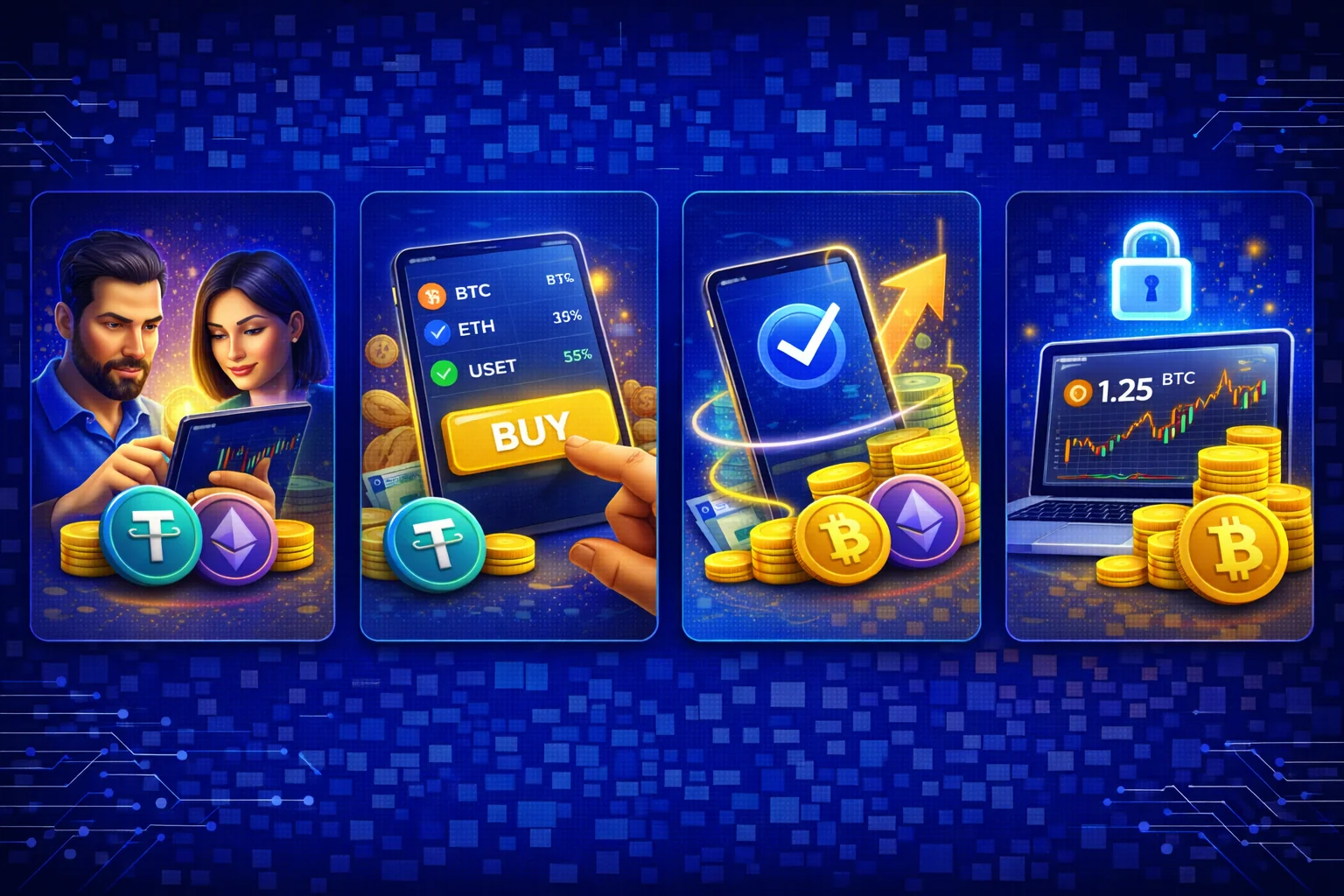
Step 1: Choose a Cryptocurrency Exchange
A cryptocurrency exchange is like a digital marketplace where you can buy and sell crypto. For beginners, we recommend:
- Binance - World's largest exchange with low fees
- Coinbase - Very beginner-friendly with excellent support
- Kraken - Highly regulated and secure
Step 2: Complete Identity Verification
Most reputable exchanges require you to verify your identity by providing:
- Government-issued ID (passport or driver's license)
- Proof of address (utility bill or bank statement)
- Sometimes a selfie for additional verification
Step 3: Add Payment Method
You can usually buy cryptocurrency using:
- Bank transfer (lowest fees)
- Debit/credit card (instant but higher fees)
- PayPal (on some exchanges)
Step 4: Make Your First Purchase
Start small! Buy a small amount (like $50-100) to get familiar with the process. You don't need to buy a whole Bitcoin - you can buy fractions of any cryptocurrency.
How to Store Cryptocurrency Safely
Exchange Wallets (Beginner Level)
When you buy crypto on an exchange, it's automatically stored in your exchange wallet. This is convenient but less secure for large amounts.
Software Wallets (Intermediate Level)
Software wallets are apps you install on your phone or computer. Popular options include:
- MetaMask - Best for Ethereum and DeFi
- Trust Wallet - Mobile-friendly multi-coin wallet
- Exodus - Beautiful desktop and mobile wallet
Hardware Wallets (Advanced Level)
Hardware wallets are physical devices that store your crypto offline. They're the most secure option for large amounts:
Common Beginner Mistakes to Avoid
1. Investing More Than You Can Afford to Lose
Cryptocurrency is highly volatile. Never invest money you need for essential expenses, such as rent, food, or emergency funds.
2. Falling for Scams
Common crypto scams include:
- Fake giveaways promising to double your crypto
- Phishing websites that steal your login credentials
- Pump and dump schemes on social media
- Fake customer support asking for your private keys
3. Not Securing Your Account
Always enable two-factor authentication (2FA) on your exchange accounts and use strong, unique passwords.
4. FOMO (Fear of Missing Out)
Don't chase quick profits or buy during price spikes. Develop a long-term investment strategy instead.
Understanding Cryptocurrency Risks
Price Volatility
Cryptocurrency prices can change dramatically in short periods. Bitcoin, for example, has experienced both 80% crashes and 1000% gains.
Regulatory Risk
Governments worldwide are still developing cryptocurrency regulations. New laws could impact crypto prices and availability.
Technology Risk
Cryptocurrency is still an evolving technology. Bugs, hacks, or technical issues can cause problems.
Loss of Access
If you lose your private keys or forget your wallet password, your cryptocurrency could be lost forever. Always keep secure backups.
Basic Investment Strategies for Beginners
Dollar-Cost Averaging (DCA)
Instead of buying a large amount at once, invest a fixed amount regularly (like $100 every month). This reduces the impact of price volatility.
HODL Strategy
"HODL" means holding your cryptocurrency for the long term, regardless of short-term price movements. This strategy has worked well for Bitcoin and Ethereum historically.
Diversification
Don't put all your money in one cryptocurrency. Consider spreading your investment across different coins and even traditional assets.
Learning Resources for Beginners
Educational Content
- Read our comprehensive cryptocurrency guide
- Learn about blockchain technology
- Understand crypto vs traditional money
Practice with Small Amounts
Start with small investments to learn how exchanges, wallets, and transactions work before committing larger amounts.
Join Communities
Join cryptocurrency communities on Reddit, Discord, or Telegram to learn from experienced users. Always verify information from multiple sources.
Understanding Cryptocurrency Market Cycles
Bull and Bear Markets
Cryptocurrency markets are highly cyclical, experiencing dramatic bull runs followed by significant corrections:
- Bull Markets: Periods of sustained price increases, often lasting 1-2 years
- Bear Markets: Extended downturns that can last 6 months to several years
- Market Cycles: Typically follow Bitcoin halving events every 4 years
- Volatility: Daily price swings of 10-20% are common
Factors Affecting Crypto Prices
- Adoption: Institutional and retail adoption drives demand
- Regulation: Government policies significantly impact prices
- Technology: Upgrades and innovations affect individual cryptocurrencies
- Market Sentiment: Fear and greed drive short-term movements
- Macroeconomic Factors: Interest rates, inflation, and global events
Types of Cryptocurrency Investments
Long-term Holding (HODLing)
The most popular strategy for beginners involves buying and holding cryptocurrencies for extended periods:
- Strategy: Buy quality cryptocurrencies and hold for years
- Benefits: Simple, less stressful, historically profitable
- Risks: Requires patience during market downturns
- Best For: Beginners, long-term investors
Dollar-Cost Averaging (DCA)
Systematic investment approach that reduces timing risk:
- Method: Invest fixed amounts at regular intervals
- Example: $100 every week regardless of price
- Benefits: Reduces impact of volatility, removes emotion
- Platforms: Most exchanges offer automated DCA features
Active Trading
More advanced approach involving frequent buying and selling:
- Day Trading: Multiple trades per day
- Swing Trading: Holding positions for days or weeks
- Requirements: Significant time, knowledge, and risk tolerance
- Warning: 90% of day traders lose money
Cryptocurrency Ecosystem Overview
Layer 1 Blockchains
Base layer protocols that process transactions:
- Bitcoin: Digital gold, store of value
- Ethereum: Smart contracts, DeFi, NFTs
- Solana: High-speed, low-cost transactions
- Cardano: Research-driven, sustainable blockchain
- Polygon: Ethereum scaling solution
Layer 2 Solutions
Scaling solutions built on top of Layer 1 blockchains:
- Lightning Network: Bitcoin scaling solution
- Arbitrum: Ethereum Layer 2 with lower fees
- Optimism: Optimistic rollup for Ethereum
- Polygon: Ethereum sidechain and Layer 2
Cryptocurrency Use Cases
Digital Payments
- Cross-border transfers: Faster and cheaper than traditional banking
- Micropayments: Small transactions enabled by low fees
- Merchant payments: Growing acceptance by businesses
- Remittances: Sending money to family abroad
Store of Value
- Digital gold: Bitcoin as inflation hedge
- Portfolio diversification: Alternative asset class
- Wealth preservation: Protection against currency debasement
- Institutional adoption: Companies adding Bitcoin to balance sheets
decentralised Finance (DeFi)
- Lending and borrowing: Earn interest or access credit
- decentralised exchanges: Trade without intermediaries
- Yield farming: Earn rewards by providing liquidity
- Synthetic assets: Exposure to traditional assets on blockchain
Building Your Cryptocurrency Knowledge
Essential Concepts to Master
- Blockchain fundamentals: How distributed ledgers work
- Cryptographic security: Public/private key pairs
- Consensus mechanisms: Proof of Work vs Proof of Stake
- Smart contracts: Self-executing contracts on blockchain
- Tokenomics: Economic models of cryptocurrencies
Staying Informed
- News Sources: CoinDesk, Cointelegraph, The Block
- Research Platforms: Messari, CoinGecko, CoinMarketCap
- Social Media: Twitter crypto community, Reddit r/cryptocurrency
- Podcasts: Unchained, What Bitcoin Did, Bankless
- YouTube Channels: Educational content creators
Advanced Security Practices
Multi-Signature Wallets
Enhanced security requiring multiple signatures for transactions:
- How it works: Requires 2 of 3 or 3 of 5 signatures
- Benefits: Eliminates single point of failure
- Use cases: Large holdings, business accounts
- Complexity: More complex setup and usage
Cold Storage Best Practices
- Air-gapped devices: Never connected to internet
- Paper wallets: Private keys printed on paper
- Steel backups: Fire and water-resistant seed storage
- Geographic distribution: Backups in multiple locations
Cryptocurrency Regulations Worldwide
United States
- Legal status: Legal but heavily regulated
- Tax treatment: Property for tax purposes
- Exchanges: Must register with FinCEN
- Future outlook: Clearer regulations expected
European Union
- MiCA Regulation: Comprehensive crypto framework
- Legal status: Generally legal with varying national rules
- Tax treatment: Varies by country
- Consumer protection: Strong focus on investor protection
Asia-Pacific
- Japan: Progressive regulation, crypto-friendly
- Singapore: Clear regulatory framework
- China: Banned cryptocurrency trading
- India: Legal but with restrictions
Environmental Impact and Sustainability
Energy Consumption Concerns
- Bitcoin mining: High energy usage for security
- Proof of Work: Energy-intensive consensus mechanism
- Renewable energy: Increasing use of clean energy
- Efficiency improvements: Hardware becoming more efficient
Sustainable Alternatives
- Proof of Stake: 99% less energy than Proof of Work
- Ethereum 2.0: Transition to Proof of Stake
- Carbon-neutral blockchains: Algorand, Tezos
- Carbon offset programs: Neutralizing emissions
Future of Cryptocurrency
Emerging Trends
- Central Bank Digital Currencies (CBDCs): Government-issued digital currencies
- Non-Fungible Tokens (NFTs): Unique digital assets
- Metaverse integration: Virtual world economies
- Web3 development: decentralised internet
- Institutional adoption: Corporate and government adoption
Technological Developments
- Quantum resistance: Preparing for quantum computers
- Interoperability: Cross-chain communication
- Scalability solutions: Handling millions of transactions
- Privacy enhancements: Zero-knowledge proofs
First Purchase Walkthrough: Step-by-Step
Complete Beginner's First Bitcoin Purchase
Here's exactly how to make your first cryptocurrency purchase safely:
Phase 1: Preparation (Day 1)
- Research and choose an exchange: Compare fees, security features, and user reviews
- Gather required documents: Government ID, proof of address, phone number
- Set up secure email: Use a dedicated email with strong password and 2FA
- Download authenticator app: Google Authenticator or Authy for 2FA
Phase 2: Account Setup (Day 2-3)
- Create exchange account: Use strong, unique password
- Enable two-factor authentication: Essential security step
- Complete identity verification: Upload clear photos of documents
- Wait for approval: Usually 24-48 hours for verification
Phase 3: First Purchase (Day 4)
- Add payment method: Bank account (lowest fees) or debit card (instant)
- Start small: Buy $50-100 worth of Bitcoin for your first transaction
- Review transaction details: Check fees, amount, and payment method
- Confirm purchase: Complete your first cryptocurrency transaction
Phase 4: Security Setup (Day 5)
- Download wallet app: Consider Exodus or Trust Wallet for beginners
- Write down seed phrase: Store securely in multiple locations
- Test small transfer: Send $10 worth from exchange to wallet
- Verify receipt: Confirm transaction completed successfully
Common First-Time Mistakes to Avoid
- Buying too much initially: Start with small amounts to learn
- Not enabling 2FA: Essential security feature
- Losing seed phrase: Write it down and store safely
- Panic selling: Expect volatility and stick to your plan
- Sharing private information: Never share keys or passwords
Wallet Setup: Detailed Guide
Choosing Your First Wallet
Your wallet choice depends on your needs and technical comfort level:
Mobile Wallets (Best for Beginners)
- Trust Wallet: User-friendly, supports many cryptocurrencies
- Exodus: Beautiful interface, built-in exchange
- Coinbase Wallet: Separate from exchange, good for DeFi
- MetaMask: Essential for Ethereum and DeFi applications
Desktop Wallets (More Features)
- Exodus Desktop: Full-featured with portfolio tracking
- Electrum: Bitcoin-only, advanced features
- Atomic Wallet: Multi-currency with staking features
Wallet Setup Process
Step 1: Download and Install
- Download only from official websites or app stores
- Verify app developer and read reviews
- Check for security certifications
- Install on secure, updated device
Step 2: Create New Wallet
- Choose "Create New Wallet" option
- Set strong password (12+ characters, mixed case, numbers, symbols)
- Enable biometric authentication if available
- Complete initial security setup
Step 3: Backup Seed Phrase
- Write down all 12-24 words in exact order
- Use pen and paper, never digital storage
- Store in fireproof safe or safety deposit box
- Consider making multiple copies in different locations
- Test recovery process with small amount
Wallet Security Best Practices
- Never screenshot seed phrases: Always write on paper
- Use different passwords: Unique password for each service
- Keep software updated: Install security updates promptly
- Verify addresses: Always double-check recipient addresses
- Start with small amounts: Test everything with minimal funds first
Cryptocurrency Security Checklist
Essential Security Measures
Account Security
- ✓ Strong, unique passwords for all crypto accounts
- ✓ Two-factor authentication enabled on all accounts
- ✓ Secure email account with 2FA
- ✓ Regular password updates (every 6 months)
- ✓ Use password manager for complex passwords
Wallet Security
- ✓ Seed phrase written down and stored securely
- ✓ Multiple backup copies in different locations
- ✓ Hardware wallet for amounts over $1,000
- ✓ Test wallet recovery process
- ✓ Keep wallet software updated
Transaction Security
- ✓ Always verify recipient addresses
- ✓ Start with small test transactions
- ✓ Use reputable exchanges and services
- ✓ Check transaction fees before confirming
- ✓ Keep records of all transactions
Red Flags to Avoid
- ❌ Promises of guaranteed returns
- ❌ Pressure to invest immediately
- ❌ Requests for private keys or seed phrases
- ❌ Unsolicited investment advice on social media
- ❌ Exchanges without proper licensing
- ❌ Projects with anonymous teams
- ❌ "Get rich quick" cryptocurrency schemes
Emergency Procedures
If You Suspect Account Compromise
- Immediately change all passwords
- Enable or update 2FA settings
- Move funds to secure wallet
- Contact exchange support
- Monitor accounts for suspicious activity
If You Lose Access to Wallet
- Locate your seed phrase backup
- Download wallet software on secure device
- Use "Restore Wallet" option
- Enter seed phrase in correct order
- Verify wallet restoration successful
Creating Your Cryptocurrency Action Plan
Step 1: Education Phase (1-2 months)
- Read cryptocurrency basics and blockchain technology
- Understand different types of cryptocurrencies
- Learn about wallets and security practices
- Follow reputable news sources and communities
Step 2: Setup Phase (1 week)
- Choose and create accounts on reputable exchanges
- Complete identity verification
- Set up two-factor authentication
- Download and test wallet software
Step 3: Initial Investment (Start small)
- Start with $50-100 to learn the process
- Buy Bitcoin and Ethereum as foundation
- Practice sending small amounts between wallets
- Document all transactions for tax purposes
Step 4: Gradual Expansion
- Increase investment amounts as comfort grows
- Diversify into other quality cryptocurrencies
- Explore DeFi opportunities cautiously
- Consider hardware wallet for larger amounts
Advanced Cryptocurrency Concepts for 2025
Institutional Cryptocurrency Adoption and Enterprise Integration
Professional cryptocurrency understanding requires comprehensive knowledge of institutional adoption trends, enterprise blockchain integration, and sophisticated financial applications that demonstrate cryptocurrency's evolution from experimental technology to mainstream financial infrastructure. Major corporations like Tesla, MicroStrategy, and Square have added Bitcoin to their treasury reserves, validating cryptocurrency as a legitimate store of value for corporate finance strategies.
Institutional adoption includes corporate treasury management, professional trading strategies, and comprehensive regulatory compliance frameworks that enable large-scale cryptocurrency utilisation while maintaining fiduciary responsibilities and operational transparency. Investment banks like Goldman Sachs and JPMorgan now offer cryptocurrency services to their clients, marking a significant shift in traditional finance's approach to digital assets.
Decentralised Finance (DeFi) Ecosystem Development
The DeFi ecosystem represents a fundamental shift towards programmable money and automated financial services that operate without traditional intermediaries. Smart contracts enable lending, borrowing, trading, and yield farming opportunities that provide higher returns than traditional banking products, though with correspondingly higher risks that require careful evaluation and risk management strategies.
Liquidity mining and yield farming protocols allow users to earn rewards by providing liquidity to decentralised exchanges and lending platforms. These opportunities can generate annual percentage yields (APY) ranging from 5% to over 100%, depending on the protocol, token pair, and market conditions. However, these high yields come with risks including impermanent loss, smart contract vulnerabilities, and token price volatility.
Non-Fungible Tokens (NFTs) and Digital Ownership
NFTs represent unique digital assets that prove ownership and authenticity of digital content, artwork, collectables, and virtual real estate. The NFT market has expanded beyond digital art to include utility tokens for gaming, membership tokens for exclusive communities, and certificates for real-world assets like property deeds and academic credentials.
Understanding NFT marketplaces like OpenSea, Rarible, and Foundation is essential for participating in the digital ownership economy. NFT creation, trading, and collection require knowledge of blockchain networks, gas fees, metadata standards, and intellectual property considerations that affect the value and utility of digital assets.
Layer 2 Solutions and Scalability Improvements
Layer 2 scaling solutions like Polygon, Arbitrum, and Optimism address Ethereum's high transaction fees and slow processing times by handling transactions off the main blockchain while maintaining security through periodic settlement on the main network. These solutions enable faster, cheaper transactions that make DeFi applications more accessible to everyday users.
Understanding how to bridge assets between different blockchain networks and layer 2 solutions is becoming increasingly important as the multi-chain ecosystem develops. Cross-chain protocols and interoperability solutions are creating a more connected blockchain ecosystem, enabling assets and data to move seamlessly between different networks and applications.
Enterprise cryptocurrency integration incorporates advanced custody solutions, sophisticated risk management frameworks, and comprehensive operational procedures that enable systematic cryptocurrency adoption while maintaining security standards and regulatory compliance. Professional enterprise operations utilise advanced analytics, comprehensive reporting systems, and sophisticated optimisation techniques that enable strategic cryptocurrency integration while managing volatility risks and operational complexity through institutional cryptocurrency excellence and professional blockchain management designed for corporate financial optimisation and enterprise cryptocurrency leadership.
Quantitative Cryptocurrency Analysis and Mathematical Frameworks
Advanced cryptocurrency analysis utilises sophisticated quantitative models, including comprehensive valuation frameworks, systematic risk assessment, and mathematical optimisation, that enable informed investment decisions while managing portfolio risks and operational complexity. Quantitative cryptocurrency analysis incorporates advanced statistical techniques, sophisticated correlation modelling, and comprehensive backtesting frameworks that enable systematic cryptocurrency evaluation while maintaining appropriate risk management and strategic positioning through mathematical excellence and professional quantitative analysis designed for institutional cryptocurrency operations and investment optimisation.
Mathematical cryptocurrency frameworks implement advanced algorithms for portfolio optimisation, sophisticated risk measurement, and comprehensive performance attribution to maximise cryptocurrency investment efficiency while maintaining security standards and operational reliability. Professional practitioners utilise advanced econometric models, comprehensive scenario analysis, and sophisticated optimisation techniques that enable continuous improvement in cryptocurrency strategies while managing market volatility through quantitative excellence and professional optimisation designed for institutional cryptocurrency operations and investment performance maximisation.
Technology Integration and Blockchain Innovation
Modern cryptocurrency understanding requires comprehensive knowledge of blockchain technology's evolution, advanced consensus mechanisms, and sophisticated protocol development that drive cryptocurrency innovation and create new opportunities and applications. Technology integration includes smart contract development, decentralised application creation, and comprehensive blockchain infrastructure that enables advanced cryptocurrency utilisation while maintaining security and operational efficiency through technological excellence and professional blockchain development designed for cryptocurrency innovation and technological leadership.
Blockchain innovation encompasses advanced scalability solutions, sophisticated interoperability protocols, and comprehensive security enhancements that enhance cryptocurrency functionality while maintaining decentralisation principles and operational reliability. Professional technology development requires advanced programming knowledge, comprehensive security assessment, and sophisticated operational controls that enable blockchain innovation while maintaining performance and user experience through technological excellence and professional development optimised for cryptocurrency advancement and blockchain ecosystem leadership in the evolving digital asset landscape.
Professional Cryptocurrency Resources and Continuing Education
Educational Resources and Professional Development
Continuing cryptocurrency education requires systematic study of blockchain technology, a comprehensive understanding of market dynamics, and strategic evaluation of emerging trends that influence cryptocurrency development and investment opportunities. Professional education includes participation in cryptocurrency conferences, systematic reading of industry publications, and comprehensive analysis of regulatory developments that impact cryptocurrency markets and investment strategies through continuous learning and professional development excellence.
Advanced education includes understanding of cryptocurrency programming, comprehensive blockchain development, and sophisticated smart contract creation that enables deeper participation in the cryptocurrency ecosystem while maintaining security standards and operational excellence. Professional development utilises advanced technical resources, systematic skill building, and comprehensive practical experience that enables cryptocurrency expertise development while maintaining current knowledge of technological advancement and market evolution through professional education and strategic learning designed for cryptocurrency mastery and professional excellence.
Community Engagement and Professional Networking
Cryptocurrency community engagement includes participation in professional forums, systematic networking with industry experts, and comprehensive involvement in cryptocurrency development projects that enhance knowledge while building professional relationships and strategic partnerships. Community participation includes contribution to open-source projects, systematic sharing of knowledge and expertise, and comprehensive collaboration with other cryptocurrency professionals that advances the ecosystem whilstbuilding professional reputation and strategic positioning.
Professional networking includes participation in cryptocurrency meetups, systematic engagement with industry leaders, and comprehensive involvement in cryptocurrency organisations that enhance professional development while building strategic relationships and business opportunities. Successful community engagement utilises systematic contribution strategies, comprehensive knowledge sharing, and strategic relationship building that enhances professional standing whilstadvancing cryptocurrency adoption and technological development through community leadership and professional excellence designed for cryptocurrency industry advancement and professional success.
Advanced Market Analysis and Investment Psychology
Professional cryptocurrency investment requires a comprehensive understanding of market psychology, systematic analysis of investor behaviour patterns, and strategic evaluation of market sentiment indicators that influence price movements and investment opportunities. Advanced market analysis includes technical analysis methodologies, fundamental evaluation frameworks, and comprehensive sentiment analysis that enables informed investment decisions while managing emotional biases and psychological factors that affect investment performance.
Investment psychology includes understanding of fear and greed cycles, systematic management of emotional responses, and comprehensive development of disciplined investment approaches that maintain strategic focus during market volatility. Professional investors utilise systematic decision-making frameworks, comprehensive risk assessment procedures, and strategic patience that enables optimal investment timing whilstavoiding common psychological pitfalls that reduce investment performance through emotional decision-making and market timing errors.
Regulatory Compliance and Tax optimisation Strategies
Cryptocurrency tax compliance requires a comprehensive understanding of regulatory requirements, systematic record-keeping procedures, and strategic tax optimisation approaches that maximise after-tax returns while maintaining full regulatory compliance across different jurisdictions. Tax optimisation includes understanding of capital gains treatment, systematic loss harvesting strategies, and comprehensive planning approaches that minimise tax liability while maintaining investment objectives and regulatory compliance standards.
Professional tax management includes utilisation of tax-advantaged accounts, systematic timing of transactions, and comprehensive coordination with tax professionals that ensures optimal tax treatment while maintaining investment strategy integrity. Advanced tax strategies include understanding of international tax implications, systematic evaluation of tax-efficient investment structures, and comprehensive planning approaches that optimise long-term after-tax returns while maintaining regulatory compliance and operational efficiency through professional tax management and strategic optimisation designed for cryptocurrency investment excellence.
Risk Management and Portfolio Protection Strategies
Comprehensive risk management for cryptocurrency beginners includes systematic position sizing, strategic diversification across different asset classes, and implementation of stop-loss mechanisms that protect capital while enabling participation in cryptocurrency growth opportunities. Risk management frameworks include understanding of correlation patterns, systematic evaluation of portfolio concentration risks, and comprehensive hedging strategies that minimise downside exposure while maintaining upside potential through professional risk management excellence and strategic portfolio protection designed for beginner cryptocurrency investors.
Next Steps in Your Crypto Journey
1. Start Small and Learn
Begin with a small investment in Bitcoin or Ethereum on a beginner-friendly exchange like OKX.
2. Secure Your Investment
Learn about hardware wallet security and consider getting one for larger amounts.
3. Explore Advanced Topics
Once comfortable with basics, explore:
4. Advanced Investment Strategies and Professional Development
As your cryptocurrency knowledge develops, consider exploring advanced investment strategies, including dollar-cost averaging, portfolio rebalancing, and sophisticated risk management techniques that optimise returns while managing volatility. Advanced strategies include systematic evaluation of cryptocurrency fundamentals, comprehensive technical analysis, and strategic positioning based on market cycles and macroeconomic factors that influence digital asset valuations and investment opportunities.
Professional cryptocurrency development includes an understanding of institutional investment approaches, comprehensive regulatory compliance, and sophisticated tax planning strategies that maximise after-tax returns while maintaining operational efficiency. Advanced practitioners utilise comprehensive analytics, systematic monitoring procedures, and sophisticated optimisation techniques that enable continuous improvement in cryptocurrency strategies while managing market volatility through professional excellence and strategic positioning designed for long-term wealth creation and financial independence through cryptocurrency investment mastery.
5. Building Long-Term Cryptocurrency Wealth
Long-term cryptocurrency wealth building requires systematic investment approaches, comprehensive education, and strategic patience that enables compound growth while managing short-term volatility and market fluctuations. Successful long-term strategies include regular investment schedules, systematic rebalancing procedures, and comprehensive understanding of cryptocurrency technology developments that drive long-term value creation and adoption across different sectors and applications.
Wealth building includes the development of comprehensive investment frameworks, systematic risk management, and strategic diversification across different cryptocurrency sectors and technologies that optimise long-term returns while maintaining appropriate risk levels. Professional wealth creation utilises advanced analytics, systematic monitoring procedures, and comprehensive optimisation techniques that enable sustainable cryptocurrency investment growth while maintaining security standards and operational excellence through professional investment management and strategic cryptocurrency positioning designed for long-term financial success and wealth preservation in the evolving digital asset ecosystem.
Advanced Beginner Strategies and Professional Implementation
Professional Learning Frameworks
Professional cryptocurrency education requires sophisticated learning frameworks that address beginner requirements, systematic skill development, and operational efficiency while maintaining strategic advantages and competitive positioning. Advanced learning strategies include comprehensive educational procedures, systematic knowledge building, and professional development frameworks that enable institutional-grade cryptocurrency understanding while maintaining appropriate oversight and control mechanisms through professional excellence and systematic implementation designed for beginner education and sustainable success.
Enterprise cryptocurrency education utilises advanced methodologies, comprehensive market analysis, and systematic learning approaches that maximise knowledge acquisition while managing complexity and operational requirements. Professional implementation includes sophisticated educational systems, comprehensive progress tracking, and systematic skill assessment procedures that ensure optimal cryptocurrency learning while adapting to changing market conditions and technological requirements through professional excellence and systematic optimisation designed for sustainable competitive advantages and long-term cryptocurrency success in the dynamic digital asset ecosystem.
Technology Integration and Educational Excellence
Professional cryptocurrency education operations require sophisticated technology infrastructure that enables systematic learning, real-time market monitoring, and comprehensive knowledge assessment across multiple platforms and educational resources. Technology integration includes advanced learning management systems, automated progress tracking capabilities, and comprehensive educational tools that support systematic learning and operational requirements while maintaining security standards and educational efficiency through technological excellence and systematic automation designed for professional cryptocurrency education operations and competitive advantages.
Conclusion
Cryptocurrency represents a revolutionary shift in how we think about money, finance, and digital ownership. As a beginner, your cryptocurrency journey should be methodical, educational, and security-focused. The technology is complex, but the basic principles of safe investing apply: start small, diversify, never invest more than you can afford to lose, and prioritise security.
The cryptocurrency space evolves rapidly, with innovations, regulations, and opportunities emerging regularly. Stay curious, keep learning, and remain cautious of get-rich-quick schemes. Focus on understanding the technology, the risks, and the long-term potential rather than short-term price movements.
Remember that cryptocurrency is still in its early stages. Whilst the growth potential is significant, so are the risks. Approach cryptocurrency as you would any speculative investment - with careful research, appropriate risk management, and a long-term perspective.
Your cryptocurrency education doesn't end here. Continue learning about blockchain technology, explore DeFi opportunities, and stay informed about market developments. Compare Bitcoin vs Ethereum to understand which suits your investment goals. The more you understand, the better equipped you'll be to navigate this exciting space.
Ready to start your crypto journey? Begin with a small purchase on a reputable exchange like Kraken, secure your investment with proper wallet management, and remember that patience and education are your best tools for success in cryptocurrency.
The cryptocurrency industry continues to mature with increasing institutional adoption, clearer regulatory frameworks, and improved infrastructure that makes participation safer and more accessible for beginners. Major corporations, financial institutions, and even governments are now embracing cryptocurrency, validating its long-term potential and creating a more stable foundation for future growth.
As you embark on your cryptocurrency journey, remember that success in this space requires continuous learning, disciplined risk management, and a long-term perspective that can withstand the inevitable market volatility. The most successful cryptocurrency investors are those who focus on understanding the underlying technology and its potential applications rather than trying to time short-term price movements.
Building a strong foundation in cryptocurrency knowledge will serve you well as the industry continues to evolve and new opportunities emerge. Stay connected with reputable educational resources, join cryptocurrency communities, and never stop learning about this rapidly advancing field that has the potential to reshape the global financial system in the years to come.
Sources & References
Frequently Asked Questions
- Is cryptocurrency legal?
- Cryptocurrency is legal in most countries, including the United States, Canada, and most of Europe. However, regulations vary by country, so check your local laws. Some countries, like China, have banned cryptocurrency trading, while others, like El Salvador, have made Bitcoin legal tender.
- How much money do I need to start?
- You can start with as little as $10-20. Most exchanges allow you to buy fractions of cryptocurrencies, so you don't need thousands of dollars to begin. For example, you can buy 0.001 Bitcoin instead of a whole Bitcoin. Start small to learn the process before investing larger amounts.
- Is cryptocurrency safe?
- Cryptocurrency can be safe if you follow security best practices: use reputable exchanges, enable 2FA, store large amounts in hardware wallets, and never share your private keys. Blockchain technology itself is highly secure, but user errors and scams are the main risks.
- Can I lose all my money?
- Yes, cryptocurrency investments can lose value, and in extreme cases, you could lose your entire investment. Only invest what you can afford to lose. Cryptocurrency is highly volatile - prices can drop 50% or more in short periods. Never invest money you need for essential expenses.
- How do I pay taxes on cryptocurrency?
- In most countries, cryptocurrency gains are subject to capital gains tax. Keep records of all your transactions and consult with a tax professional. In the US, crypto is treated as property, so every trade is a taxable event. Use tools like CoinTracker or Koinly to track your transactions.
- What's the difference between Bitcoin and Ethereum?
- Bitcoin is primarily digital money designed as a store of value and payment system. Ethereum is a platform for smart contracts and decentralised applications, with its native currency Ether (ETH). Bitcoin is like digital gold, while Ethereum is like a decentralised computer network.
- Should I buy Bitcoin or altcoins first?
- Most experts recommend starting with Bitcoin and Ethereum as they're the most established cryptocurrencies. Once you understand these, you can explore altcoins. Bitcoin and Ethereum make up about 60% of the total crypto market and are generally less risky than smaller cryptocurrencies.
- How do I know if a cryptocurrency project is legitimate?
- Research the team, read the whitepaper, check if the code is open source, look at the community size, and verify partnerships. Avoid projects that promise guaranteed returns or rely on celebrity endorsements. Legitimate projects focus on technology and real-world use cases, not just price speculation.
- What happens if I lose my private keys?
- If you lose your private keys or seed phrase, your cryptocurrency is permanently lost. There's no customer service to call or a password reset option. This is why it's crucial to write down your seed phrase and store it securely in multiple locations. Consider using a hardware wallet for better security.
- Can I mine cryptocurrency as a beginner?
- Bitcoin mining requires expensive, specialised equipment and cheap electricity, making it unprofitable for most individuals. However, you can mine some altcoins with regular computers or participate in staking, which is like earning interest on your cryptocurrency holdings without the energy costs of mining.
← Back to Crypto Investing Blog Index
Financial Disclaimer
This content is not financial advice. All information provided is for educational purposes only. Cryptocurrency investments carry significant investment risk, and past performance does not guarantee future results. Always do your own research and consult a qualified financial advisor before making investment decisions.